Quick answer
Buy your nursing and sleep bra in the third trimester, around 36 to 38 weeks, using your current band measurement and a cup that leaves room for postpartum fullness. Choose a soft, stretchy style with a size range rather than a precise underwire fit, and plan to recheck the band within the first two weeks after birth.
Why a sleep bra can be sized differently from a daytime bra
A sleep bra for breastfeeding at night has to work while you lie down, turn over, and feed in low light. That changes what matters: a soft band that does not dig in, stretch that accommodates night-time fullness, and a closure you can manage half-asleep. A precise contour fit matters less than comfort and easy access.
This is why a maternity sleep bra fit guide should start with movement and rest, not with a rigid cup measurement. If you normally wear a structured bra, expect the sleep bra to feel looser through the cup and more forgiving in the band.
How pregnancy timing affects the size you choose
When to buy a nursing bra in pregnancy depends on how much your ribcage and cup size are still changing. Early pregnancy purchases often become too tight in the band by the third trimester. Waiting until full term can leave you without a comfortable option for the first nights home.
The practical compromise is to buy one sleep bra late in pregnancy and keep one backup in a larger band size. Because sleep bras rely on stretch, a slightly larger band is usually more useful than a cup that is already snug.
What changes postpartum, and what does not
Nursing bra size changes postpartum are real but often temporary. Engorgement can increase cup volume in the first days, then settle as supply regulates. Your ribcage may also feel different after birth, especially in the first week.
Do not assume you need a completely new size immediately. Recheck the band and cup after the first two weeks, when swelling has eased. If the band rides up or the cup spills, adjust then rather than buying several sizes in advance.
Decision rules for choosing your size
- Time your purchase: Buy around 36 to 38 weeks if you are purchasing one sleep bra for the first nights home. If you are earlier than 34 weeks, buy a size that fits your current band without tightness and expect to recheck later. Leave the tags on until you have worn it for a full night.
- Measure the band, not the cup: Use your current underbust measurement as the starting point. For a sleep bra, choose a band that feels snug but not tight when you lie on your side. If you are between sizes, size up in the band.
- Check cup room for night fullness: You should be able to slide a finger under the band and have no breast tissue spilling at the top or sides. If the cup is already full before birth, go up one size rather than waiting.
- Recheck after two weeks postpartum: Once engorgement settles, test the band again. If it rides up or leaves red marks, change sizes. If it still fits, keep the same size for daytime sleep and night feeds. Keep one backup in the next band size for the first month.
Product facts
-
Maternity & Postpartum Nursing & Sleep Bra: Available in Black and Almond, with sizes ranging from S to XL. A simple S–XL range makes it easier to choose a forgiving sleep bra size without matching a precise cup measurement.
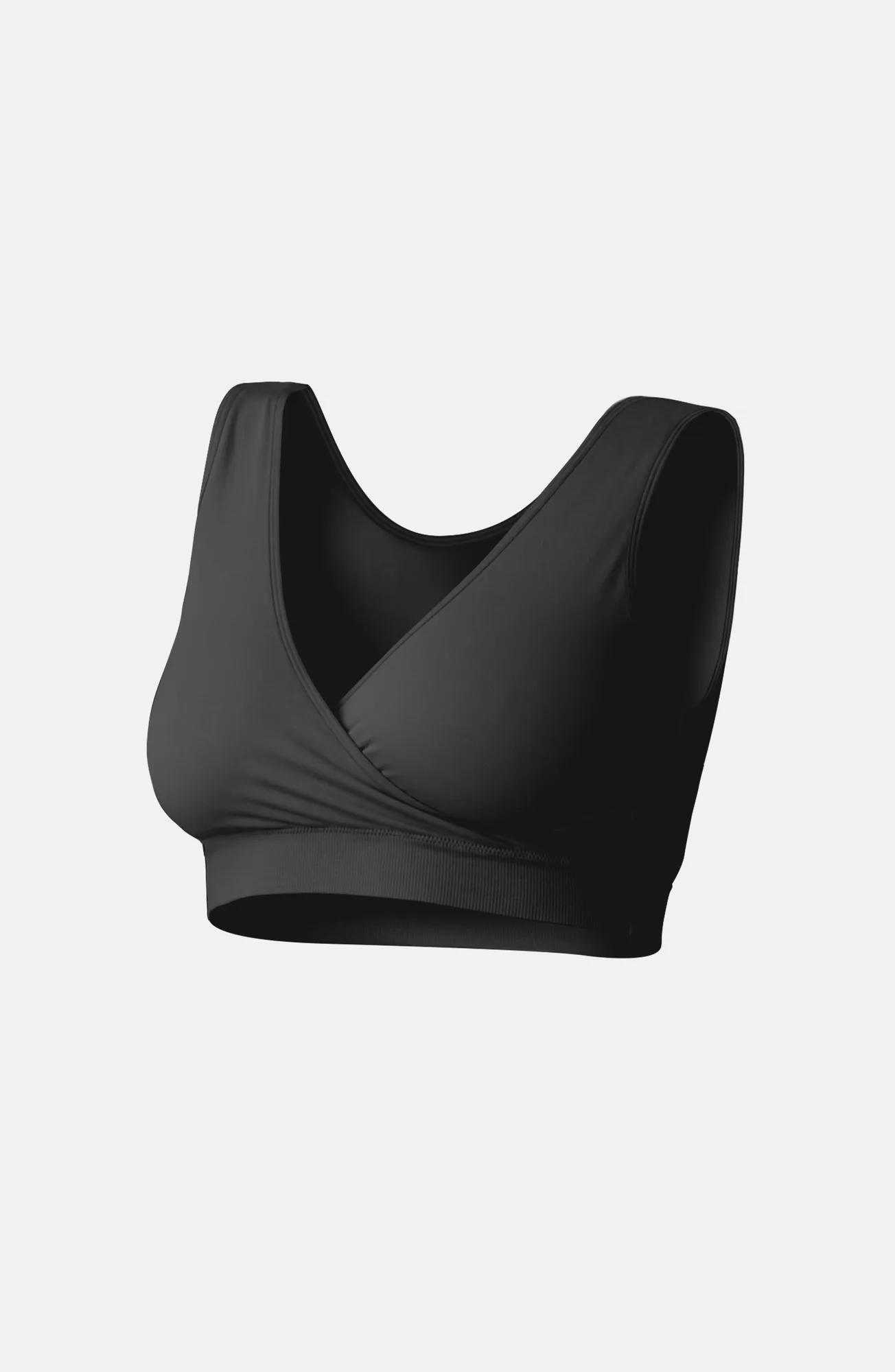
Maternity & Postpartum Nursing & Sleep Bra
Who this sizing approach suits
Best for
- Buying your first nursing and sleep bra in the third trimester
- Night feeding and side-lying rest where a soft band matters
- Anyone who wants a simple S–XL size range instead of a precise cup fit
Not for
- Anyone who needs a structured, high-support daytime bra for running or work
- Shoppers looking for a custom cup-size fit with underwire