Quick answer
Choose nylon for power chewers who destroy softer toys, and rubber for dogs who need flexible, treat-stuffable enrichment. Nylon lasts longer but is rigid; rubber is gentler on teeth but may not survive determined gnawing. Match the material to your dog's chewing style and your willingness to supervise.
Durability: Which material survives a power chewer?
Nylon chew toys are solid and resist breakdown far longer than rubber. They don't flex, so a dog's teeth can't easily puncture or tear them. This makes nylon a practical choice for dogs who routinely shred plush or softer rubber toys. However, nylon can crack or splinter over time, so inspect it regularly and replace it at the first sign of wear.
Rubber chew toys offer some give, which can make them more comfortable for moderate chewers. But softer rubber may not hold up to aggressive chewing. If your dog is a dedicated destroyer, a nylon toy like the SodaPup MOD Wishbone or Nylabone Power Chew Broccoli will likely outlast most rubber options.
Engagement and enrichment: Which keeps your dog busy?
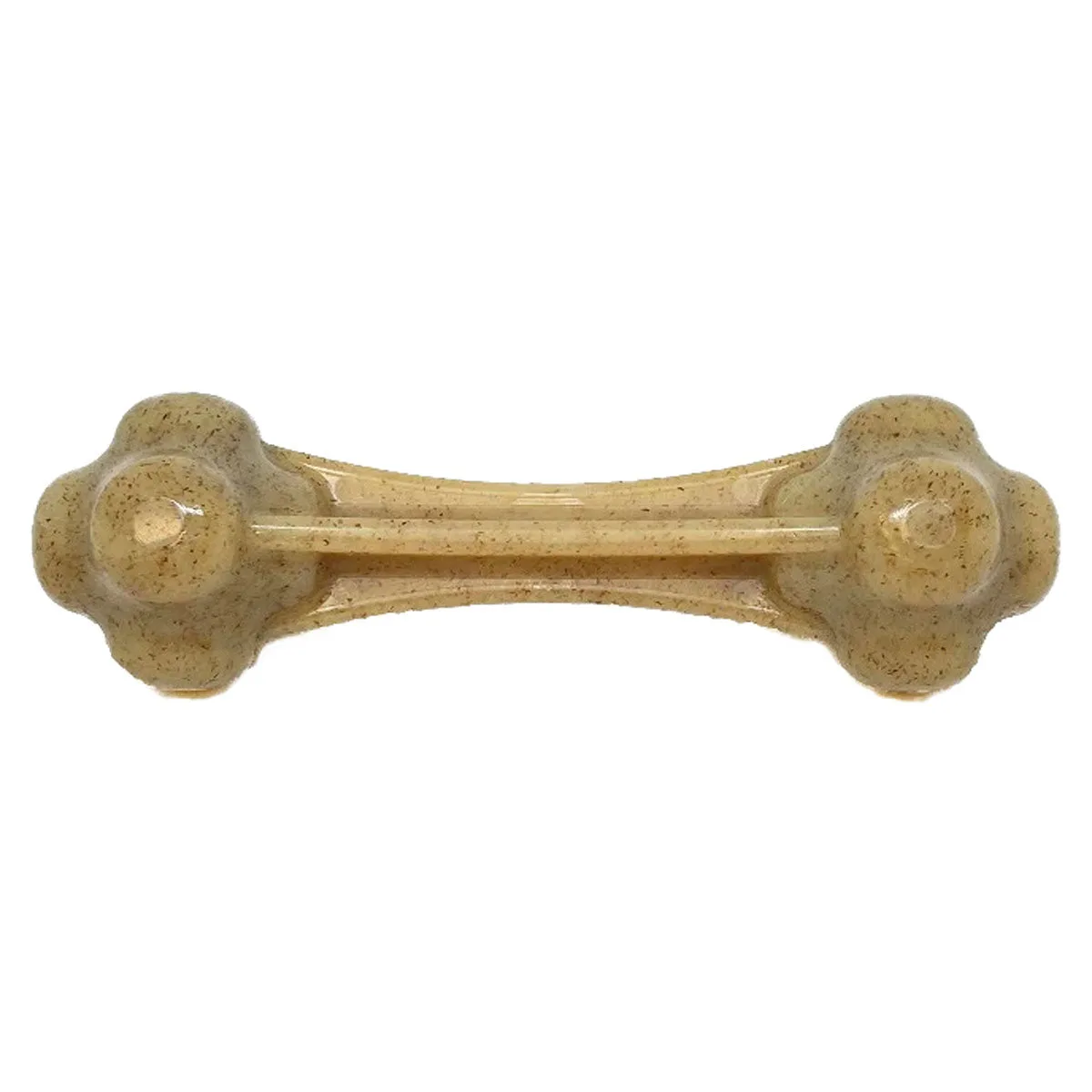
Rubber toys often shine when it comes to interactive play. Many have treat pockets or can be stuffed with peanut butter or kibble, turning chew time into a mental challenge. The SodaPup MOD Wishbone is a nylon toy that also features holes for smearing soft treats, combining durability with enrichment. That makes it a hybrid option for dogs who need both toughness and engagement.
Nylon toys without treat holes can become boring once the initial novelty wears off. If your dog loses interest quickly, look for a nylon toy with built-in treat pockets, or rotate between a nylon chewer and a rubber enrichment toy. The Nylabone Power Chew Broccoli is designed to roll and tumble, adding movement that can keep dogs engaged even without treats.
Safety and wear: What to watch for with each material
Nylon is harder than rubber, so it carries a higher risk of tooth wear if your dog chews aggressively for long periods. Provide nylon toys in supervised sessions and check for sharp edges or cracks. Rubber is softer but can be torn into small pieces that become choking hazards. Always size the toy appropriately and remove it once it shows significant damage.
Neither material is indestructible. The key is matching the toy to your dog's chewing intensity and supervising use. If your dog is a relentless chewer, nylon will generally last longer, but you'll need to monitor for wear. For dogs who chew moderately, rubber may be safer on teeth and still provide plenty of play value.
Trade-offs
- Nylon durability vs. tooth safety: Nylon lasts longer but is hard and can wear down teeth with heavy chewing. Rubber is softer on teeth but may not survive aggressive chewers. Choose nylon for destructive chewers, but limit sessions and inspect regularly.
- Treat stuffing vs. simplicity: Nylon toys with holes, like the SodaPup MOD Wishbone, offer enrichment but require cleaning and refilling. Rubber toys may also be stuffable, but can be harder to clean thoroughly. If you want easy enrichment, pick a nylon toy with treat holes; if you prefer low-maintenance, a solid nylon chew is simpler.
- Engagement vs. longevity: Rubber toys often have more interactive features (squeakers, shapes), but may not last as long. Nylon toys are less varied but typically outlast rubber. Rotate toys to balance engagement and durability.
Product facts
- SodaPup MOD Wishbone Ultra Durable Nylon: SodaPup MOD Wishbone Ultra Durable Nylon is made from ultra-durable nylon and features holes for smearing peanut butter, yogurt, or other soft treats. It is veterinarian-approved and proudly made in the USA. This nylon toy combines toughness with treat-stuffing enrichment, making it a strong choice for power chewers who also need mental stimulation.
- Nylabone Power Chew Broccoli: Nylabone Power Chew Broccoli is a durable nylon chew with savory flavor throughout and a shape that rolls and tumbles during play. The rolling action adds movement and excitement, which can keep dogs engaged longer than a static chew toy. The flavor may also appeal to picky chewers.
Which material fits your dog?
Best for
- Power chewers who destroy plush or soft rubber toys quickly
- Dogs who need durable, long-lasting chew sessions
- Owners willing to supervise and inspect toys regularly
Not for
- Dogs with sensitive teeth or a history of dental issues
- Moderate chewers who prefer softer, flexible toys
- Owners who want a toy that can be left unattended for hours