Oat Hay vs. Orchard Hay: Two Grass Hays for Variety
Rabbits and guinea pigs thrive on a steady supply of grass hay. While Timothy hay is the most common choice, oat hay and orchard hay offer distinct textures and nutritional profiles that can add variety to your pet's diet. This comparison focuses on the key differences between these two grass hays, helping you decide which one—or both—might suit your small pet best.
Texture, Color, and Structure
The physical appearance of oat hay and orchard hay differs noticeably, which can influence how your pet interacts with each type.
- Oat Hay: Oat hay is yellowish in color, stemmy, and has some oat attached. The strands are longer compared to other hay types. The amount of oats and tops varies depending on the crop.
- Orchard Hay: Orchard hay is generally softer and finer-stemmed than oat hay, making it a popular choice for picky eaters or pets that prefer a less coarse texture.
Nutritional Profile: Fiber and Protein
Both oat hay and orchard hay are high in fiber, which is essential for healthy digestion in rabbits and guinea pigs. However, their protein content differs. Oat hay is notably higher in protein and is described as "the complete package for an animal who needs to gain a few ounces." Orchard hay, while still a good source of fiber, is not highlighted for extra protein in the same way. If your pet needs to maintain or gain weight, oat hay may be a more suitable option.
Product Facts: Key Details from the Catalog
-
Oat Hay: Oat hay is high in fiber and protein, and is described as 'the complete package for an animal who needs to gain a few ounces.' This makes oat hay a good choice for underweight pets or those needing extra calories, but it should be balanced with other hays to avoid excessive protein.
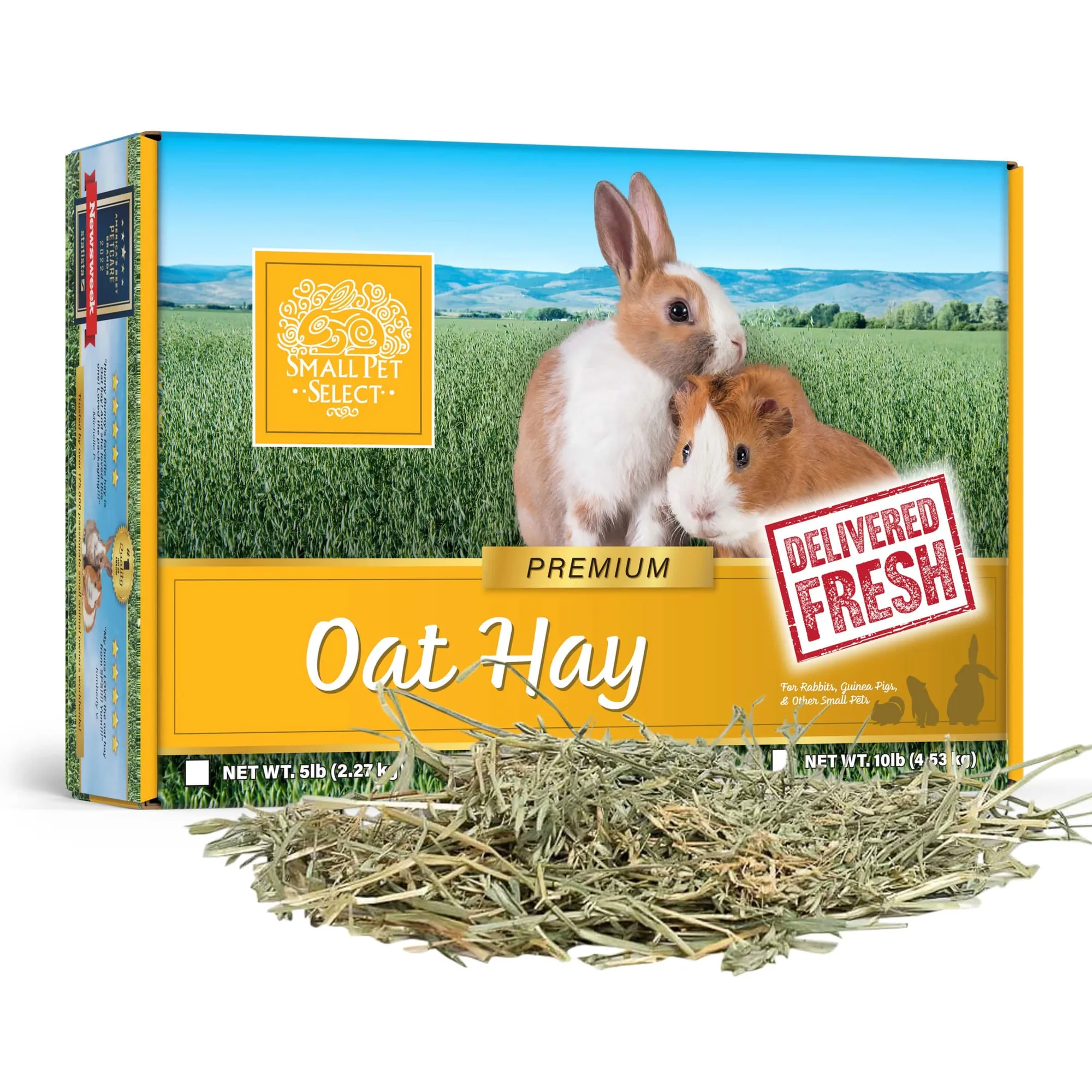
Oat Hay
-
Orchard Hay: Orchard hay is 'terrific for folks who have allergies to Timothy hay' and is a solution to 'hay boredom.' Orchard hay offers a softer, less dusty alternative that can be a staple for allergy-prone owners and a change of pace for pets tired of the same hay.
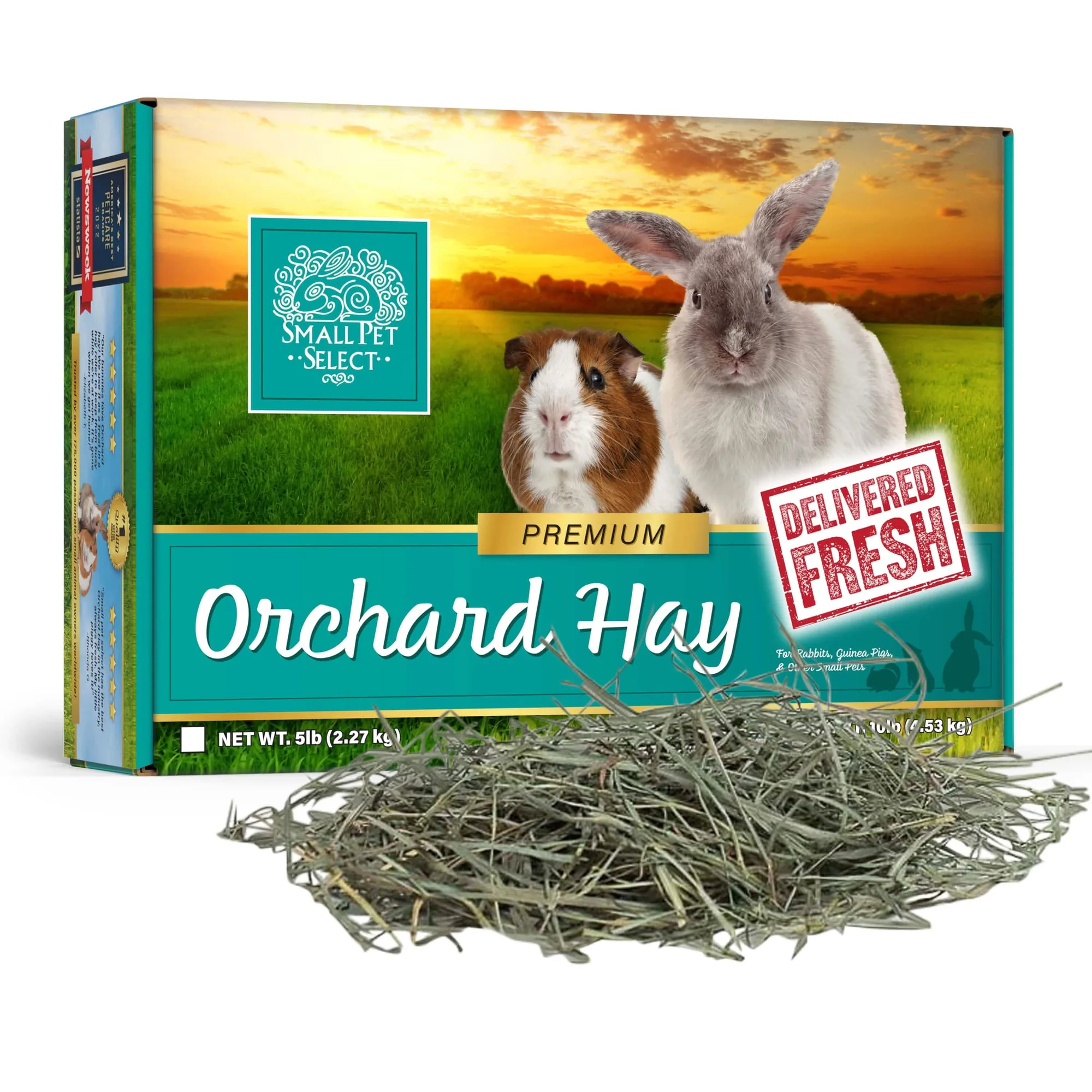
Orchard Hay
Allergies and Sensitivity
One of the standout features of orchard hay is its suitability for people with allergies to Timothy hay. If you or a family member experience sneezing or irritation with Timothy hay, switching to orchard hay can make hay handling much more comfortable. Oat hay, while not specifically marketed as hypoallergenic, may also be less dusty than some Timothy cuts, but this is not confirmed by the supplied information.
Variety and Rotation: Why Both Can Work
Small pets naturally eat a wide variety of grasses in the wild, and offering different hays can keep mealtime interesting. The catalog suggests oat hay as a great addition to a hay rotation: 'Serve by itself, or mix it with Timothy hay.' Orchard hay is also recommended as a change of pace to combat hay boredom. Rotating between oat hay and orchard hay (or mixing them) can provide both nutritional variety and mental stimulation for your pet.
What the Catalog Does Not Tell You
The supplied records do not specify exact percentages of fiber or protein for either hay. While oat hay is described as high in protein, the precise amount is not given. Similarly, the catalog does not provide a direct comparison of dust levels or palatability between the two. These are factors you may need to observe with your own pet. For pets with specific medical conditions (e.g., kidney issues), consult a veterinarian before making hay the primary diet component.