Quick answer
Use light, upward and outward strokes with a well-oiled face, and stop at the first sign of redness or discomfort. The goal is gentle stimulation, not force.
Why obsidian feels different on skin
Obsidian is a volcanic glass with a naturally smooth, cool surface. That coolness can feel soothing, especially around the jaw and temples, but it also means the tool glides easily—so it is easy to press harder than you need. Treat the first few sessions as a pressure-calibration exercise rather than a deep-tissue massage.
The oil layer is not optional
A gua sha tool should never drag on dry skin. Apply a facial oil or a slippery serum before every stroke, and reapply if the tool starts to skip. If you have oily or acne-prone skin, use a lightweight oil and keep strokes away from active breakouts. The Obsidian Gua Sha pairs well with a simple facial oil, but any lubricating product you already tolerate will work.
When to skip gua sha entirely
Avoid gua sha on sunburned, broken, or inflamed skin, and skip it during an active eczema or rosacea flare. If you are prone to broken capillaries, keep pressure feather-light and avoid the nose and cheek areas where vessels are close to the surface. Consult a dermatologist if you are unsure whether gua sha is appropriate for your skin condition.
Obsidian gua sha steps for beginners
- Cleanse and oil: Start with clean skin, then apply a generous layer of facial oil or serum. Test the tool on the back of your hand first—if it drags, add more product. Common mistake: using too little oil and pressing harder to compensate.
- Neck first: Using the flat edge of the tool, stroke gently upward from the collarbone to the jawline, then from the jaw to the ear. Use light, even pressure—about the weight of a soft touch. Checkpoint: your skin should look slightly flushed, not red or sore.
- Jawline and chin: Hook the curved edge under your jaw and glide from the chin to the earlobe, 3–5 times per side. Keep the tool almost flat against the skin. Common mistake: digging the edge into the jaw; the tool should feel like it is sweeping, not scraping.
- Cheeks and under-eyes: Use the flat edge to stroke from the nose outward to the ear, then from the under-eye area toward the temple with feather-light pressure. Avoid pulling the delicate under-eye skin downward. Checkpoint: if you see any new redness or feel stinging, stop and apply a cold compress.
- Forehead and brow: Glide from the center of the forehead outward to the temples, then from the brow bone up to the hairline. Keep the strokes slow and repeat 3 times. Common mistake: rushing; slow strokes are easier to control.
- Finish and clean: Wipe the tool with a soft cloth and warm soapy water after each use. Store it in a dry place. Do this routine 2–3 times per week, or less if your skin feels sensitive. Checkpoint: if your skin stays pink for more than 10 minutes, use less pressure next time.
Product facts
-
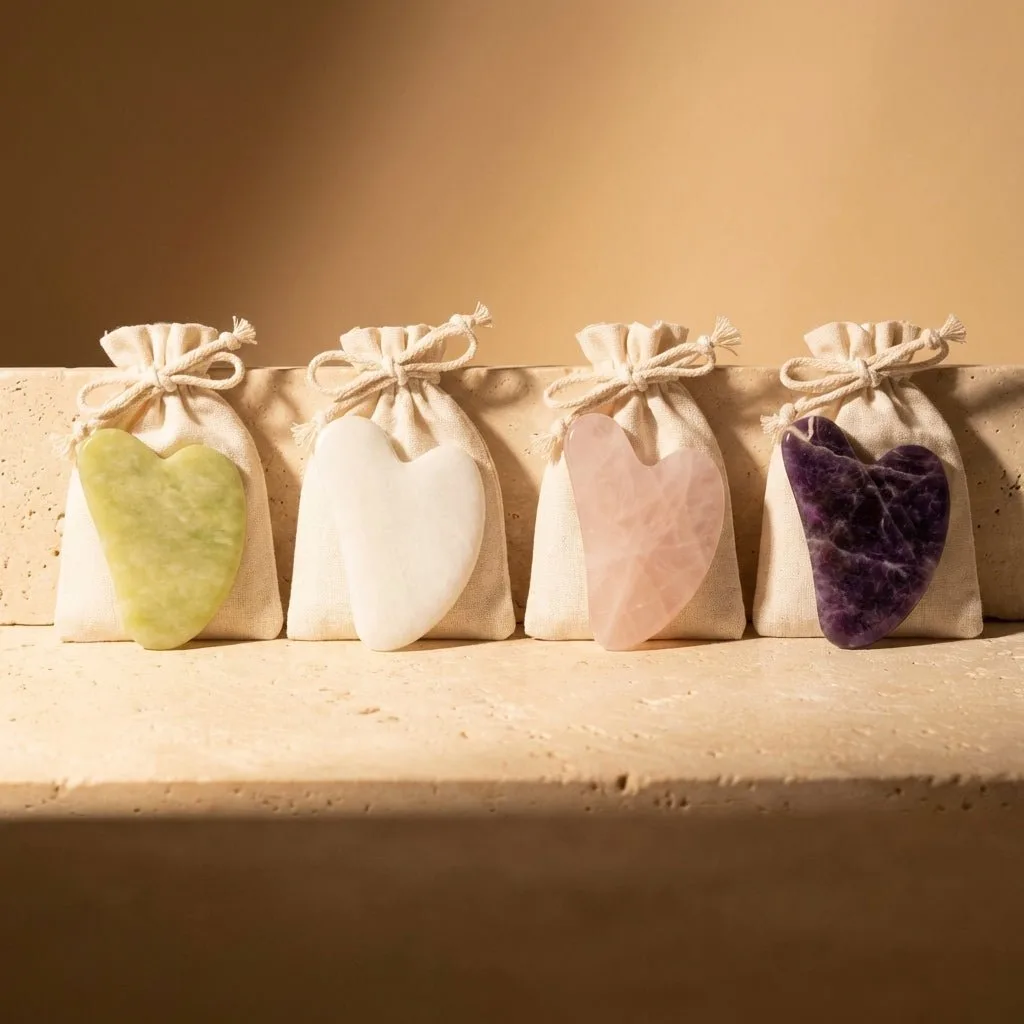
Obsidian Gua Sha: Made from authentic obsidian, a volcanic glass known for its smooth texture and grounding qualities. The smooth surface glides easily over oiled skin, so you can use lighter pressure than you might expect.
Obsidian Gua Sha