Quick answer
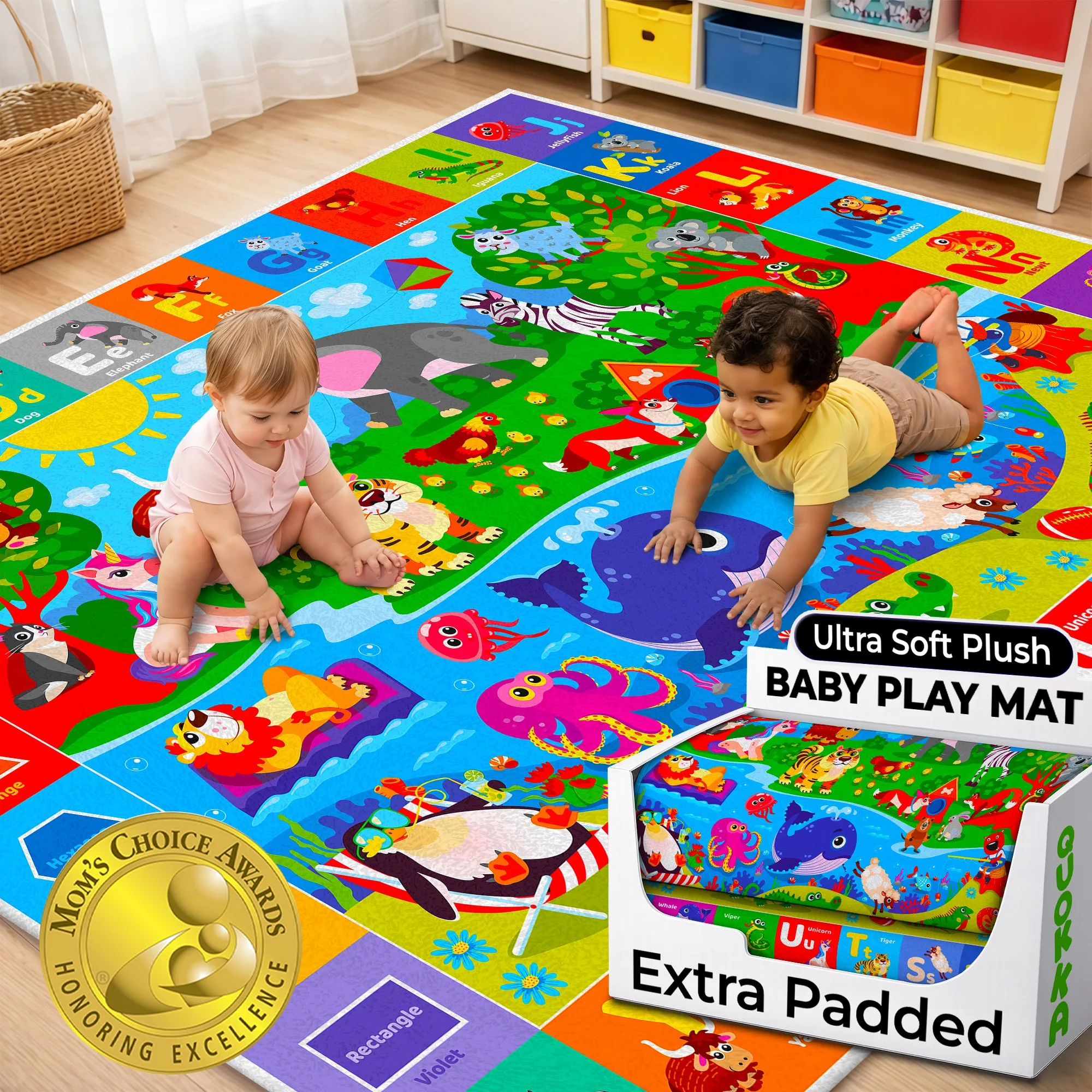
Place the Ocean ABC play mat on a flat, non-slip floor in a low-traffic corner of the playroom, then rotate ABC and ocean-themed toys on and off it to keep the mat interesting. Clean spills promptly with a damp cloth and mild soap, and air-dry fully before the next play session.
Why placement matters more than the mat itself
A plush ABC play mat only works as a learning surface if your toddler can actually reach it and stay on it. Putting it in the middle of a busy walkway invites slips and constant interruptions, while tucking it against a wall or under a low shelf gives your child a defined zone for tummy time, sitting play, and early letter recognition.
The mat is 60 x 41 x 0.8 inches, so it fits most small play areas without dominating the room. Before you commit to a spot, measure the floor space and check that the mat lies flat without curling at the edges.
Tummy time and safety checks
The non-slip backing is designed to keep the mat in place, but it works best on hard, smooth floors or low-pile carpet. Always supervise tummy time, and keep the mat away from stairs, sharp furniture corners, and heat sources.
Because the mat is made from BPA-free, non-toxic materials, it is a reasonable choice for daily floor play. Still, check the mat for wear or loose edges before each use, especially if your toddler is still mouthing toys.
When the mat is not the right fit
This mat is compact and plush, which makes it great for babies and young toddlers, but it is not a padded gym mat for rough-and-tumble play. If your child is already running and jumping, a thicker foam mat may be a better base. Also, the ABC design is printed rather than textured, so it will not replace hands-on letter toys for older toddlers.
Your step-by-step Ocean ABC play mat setup
- Choose a flat, low-traffic spot: Pick a corner or wall-adjacent area in the playroom or living room where the floor is level. Avoid placing the mat on thick carpet with deep pile, as the non-slip backing may not grip as well. Checkpoint: the mat should lie flat without curling at the edges before your child uses it.
- Clear the floor and test the grip: Remove toys, cords, and small objects from the area. Place the mat and press down on each corner. If it slides, try a different floor surface or add a thin non-slip rug pad underneath. Checkpoint: give the mat a gentle push—it should stay in place.
- Set up a simple ABC and ocean toy rotation: Start with one or two toys that match the mat's theme, such as ocean animal figures or letter blocks. Keep the rest stored and swap them every few days to keep the mat feeling new. Checkpoint: limit toys to three or fewer on the mat at a time to avoid overwhelm.
- Introduce tummy time in short sessions: Place your baby on the mat for 3–5 minutes at first, a few times a day, and stay within arm's reach. Use the ABC designs as a talking point to encourage head lifting. Checkpoint: end tummy time if your baby fusses or tries to roll off the mat.
- Clean spills right away: Blot liquids with a dry cloth, then wipe with a damp cloth and mild soap. Avoid soaking the plush surface. Let the mat air-dry completely before folding or using it again. Checkpoint: never put the mat in a washing machine unless the care label explicitly allows it.
- Do a weekly wear check: Look for loose threads, flattened plush, or a backing that has started to peel. If you see damage, remove the mat from play until it is repaired or replaced. Checkpoint: a mat that no longer lies flat is a trip hazard—retire it.
Product facts
-
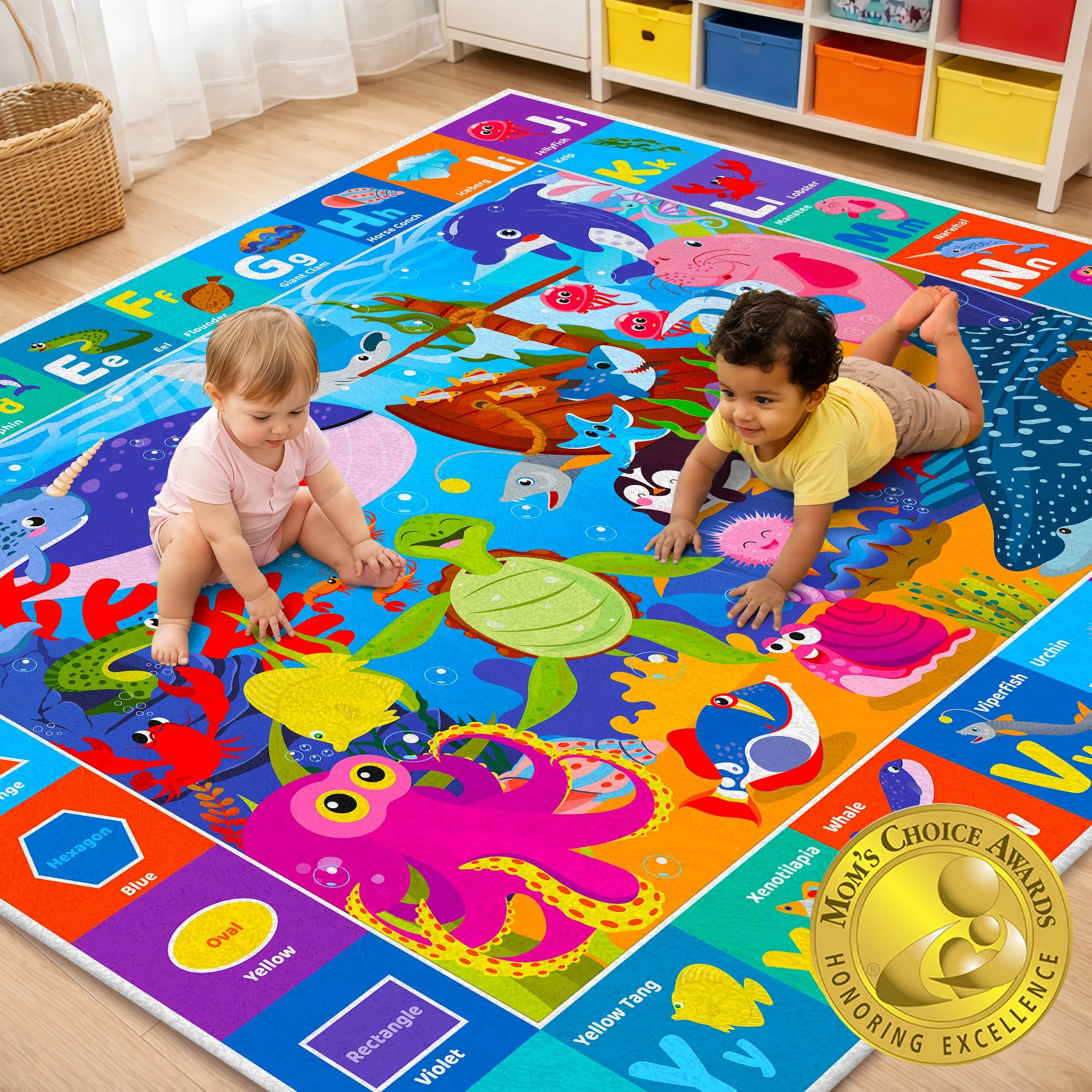
Baby Play Mat for Floor | Ocean ABC Rug for Toddlers: Size 60 x 41 x 0.8 inch with a non-slip backing and soft plush surface. This compact size fits small playrooms and stays put during crawling and tummy time.
Baby Play Mat for Floor | Ocean ABC Rug for Toddlers
-
Baby Play Mat for Floor | Ocean ABC Rug for Toddlers: BPA-free, non-toxic materials with an ABC learning design. Parents can feel comfortable using it daily while toddlers explore letters and ocean themes.