Quick answer
Most Octaroma mug stains and odors come from residue trapped in the lid, gasket, or along the thin lip, and they usually respond to a warm soak with mild dish soap plus a soft bottle brush. If the mug still gets hot or cold on the outside, the vacuum insulation is intact and the problem is surface-level. If the outer wall heats up with a hot drink or the mug sweats with a cold one, the vacuum layer has failed and no cleaning method will restore it.
Octaroma
Symptom: brown or gray film inside the mug
Coffee and tea leave oils and tannins that bond to stainless steel, especially along the seam where the double wall meets the rim. A quick rinse rarely lifts them because the film sits below the water line and above the reach of a sponge.
Fill the mug with warm water and a drop of mild dish soap, let it stand for 10 to 15 minutes, then scrub with a soft bottle brush. Avoid steel wool, abrasive powders, and bleach, which can scratch the interior and make future staining worse. For stubborn film, a paste of baking soda and water applied with a soft cloth is usually enough. Rinse thoroughly and air-dry with the lid off.
Symptom: sour or stale smell that returns after washing
If the odor comes back within a day, the source is almost always the lid rather than the stainless steel body. Milk, cream, or sweetened drinks seep into the gasket groove and the drinking spout, where a normal rinse cannot reach. The lid is the part you should disassemble and soak, not just wipe.
Separate the gasket from the lid if your model allows it, soak both in warm soapy water for 15 minutes, and work a soft brush into the groove. Let every part dry completely before reassembling. If the smell persists after two full cleanings, the gasket has absorbed odor and should be replaced rather than cleaned again.
Symptom: mug no longer keeps drinks hot or cold
The Octaroma body uses double-wall stainless steel with vacuum insulation. That vacuum is sealed at the factory, so there is no user service for it. You can confirm a failure by filling the mug with hot water and feeling the outside wall after a few minutes: if the exterior warms up, the vacuum barrier is gone.
A failed vacuum cannot be repaired, resealed, or restored by cleaning. Continuing to use the mug is safe for room-temperature drinks, but it will no longer perform as an insulated mug. Replace the body rather than spending more time on cleaning routines that cannot address the cause.
Symptom: lid leaks or drips around the seal
Leaks usually trace back to a gasket that is missing, twisted, or seated unevenly after cleaning. Remove the gasket, check for cracks or stretching, and press it back into the groove so it sits flat all the way around. A gasket that has hardened or torn will not seal no matter how carefully you reinstall it.
Also check that the lid threads are clean. Dried residue on the threads can stop the lid from tightening fully, which feels like a seal failure but is really a cleaning issue. If a new or correctly seated gasket still leaks, the lid itself is the problem and should be replaced.
What not to do when cleaning any Octaroma
Do not put the mug body or lid in a dishwasher unless the product documentation for your specific model says it is dishwasher safe, and do not soak the body in water for hours. Do not use bleach, chlorine cleaners, or abrasive scouring pads on the stainless interior or the thin lip. These shorten the life of the finish and can damage the gasket, turning a simple stain into a permanent odor or leak problem.
For daily care, rinse soon after use, wash with mild soap and a soft brush, and leave the lid off to dry. That routine prevents most of the symptoms in this guide from starting.
Diagnosis: match the symptom to the fix
- Interior film or discoloration: Warm soapy soak for 10 to 15 minutes, then a soft bottle brush; baking soda paste for stubborn spots. If the film returns within a day, the lid and gasket are the real source, not the body.
- Odor that returns after washing: Disassemble the lid, soak the gasket and spout, brush the groove, and dry fully before reassembly. If odor survives two full cleanings, replace the gasket instead of cleaning it again.
- Outer wall gets hot or cold: Fill with hot water and feel the exterior after a few minutes; warmth on the outside means the vacuum seal has failed. Stop cleaning routines here. A failed vacuum is not repairable, so replace the mug body.
- Leaks around the lid: Reseat or replace the gasket and clean the lid threads so the lid can tighten fully. If a correctly seated gasket still leaks, replace the lid rather than the whole mug.
Octaroma sizes and what they mean for care
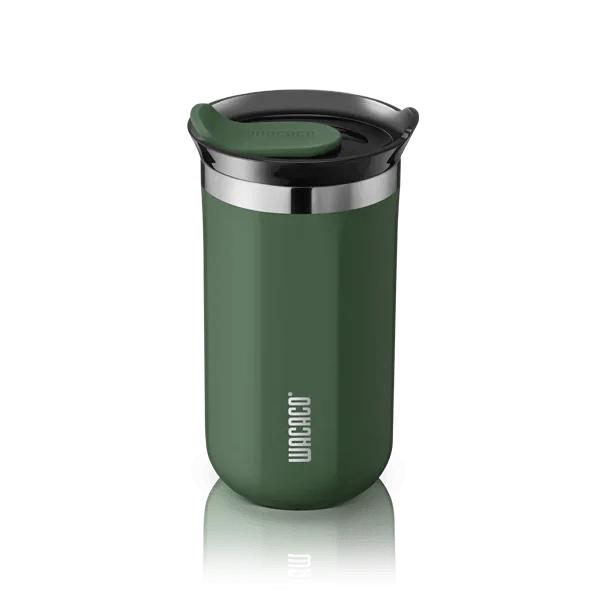
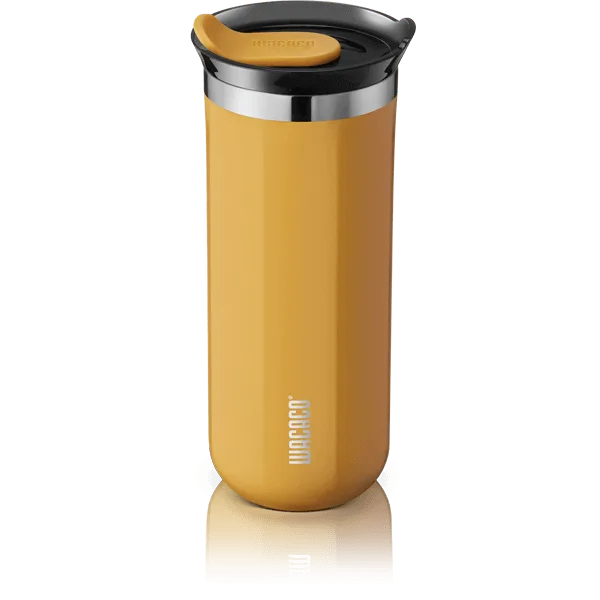
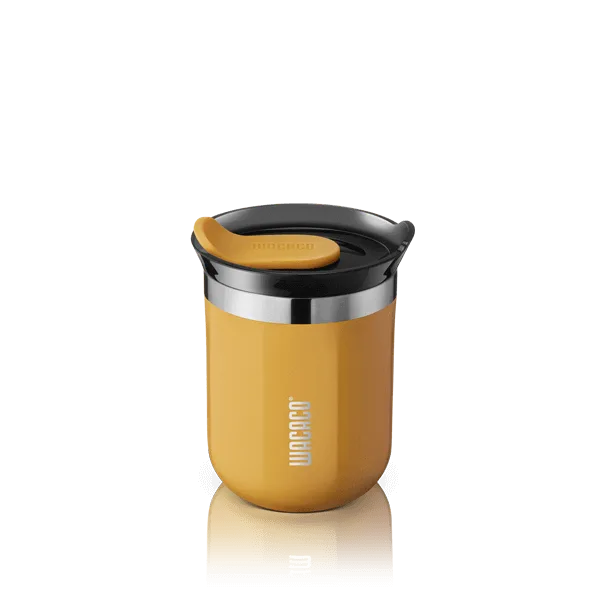
- OCTAROMA LUNGO AMBER YELLOW 300ML: OCTAROMA LUNGO AMBER YELLOW 300ML has a 10 fl oz (300ml) capacity with double-wall stainless steel vacuum insulation, a leak-proof lid, and a thin lip design. The 10 fl oz size is the middle option, so it fits most cup holders and daily coffee routines while still being easy to brush clean by hand.
- OCTAROMA GRANDE AMBER YELLOW 435ML: OCTAROMA GRANDE AMBER YELLOW 435ML has a 15 fl oz (435ml) capacity with double-wall stainless steel vacuum insulation, a leak-proof lid, and a thin lip design. The larger 15 fl oz body takes longer to dry, so leave it open overnight after washing to prevent the stale smell that comes from trapped moisture.
- OCTAROMA CLASSICO AMBER YELLOW 180ML: OCTAROMA CLASSICO AMBER YELLOW 180ML has a 6 fl oz (180ml) capacity with double-wall stainless steel vacuum insulation, a leak-proof lid, and a thin lip design. The 6 fl oz size suits espresso and small milk drinks, where residue is concentrated; rinse it right after use to keep milk film from setting in the base.