Quick answer
If your factory oil cap or engine bay caps are crusty, cracked, or just tired-looking, a direct-replacement billet cap is a low-risk upgrade. Match the cap to your exact engine and model year first, then choose finish. For most Subaru owners, start with the oil filler cap and add the full engine bay set only if you want a matched look.
Engine bay dress-up is one of the few interior-adjacent mods you can see every time you open the hood. An oil cap upgrade is the smallest version of that idea: one part, one minute, no tuning involved. Engine bay caps go further by replacing the faded plastic pieces that collect grime and make an otherwise clean engine look neglected.
This guide covers what actually matters when you buy: fitment, material, finish durability, and how to avoid buying a cap that looks great but does not seal or thread correctly. It is written for people who want a clean engine bay without turning a simple cosmetic swap into a project.
Why the oil cap is the first cap to replace
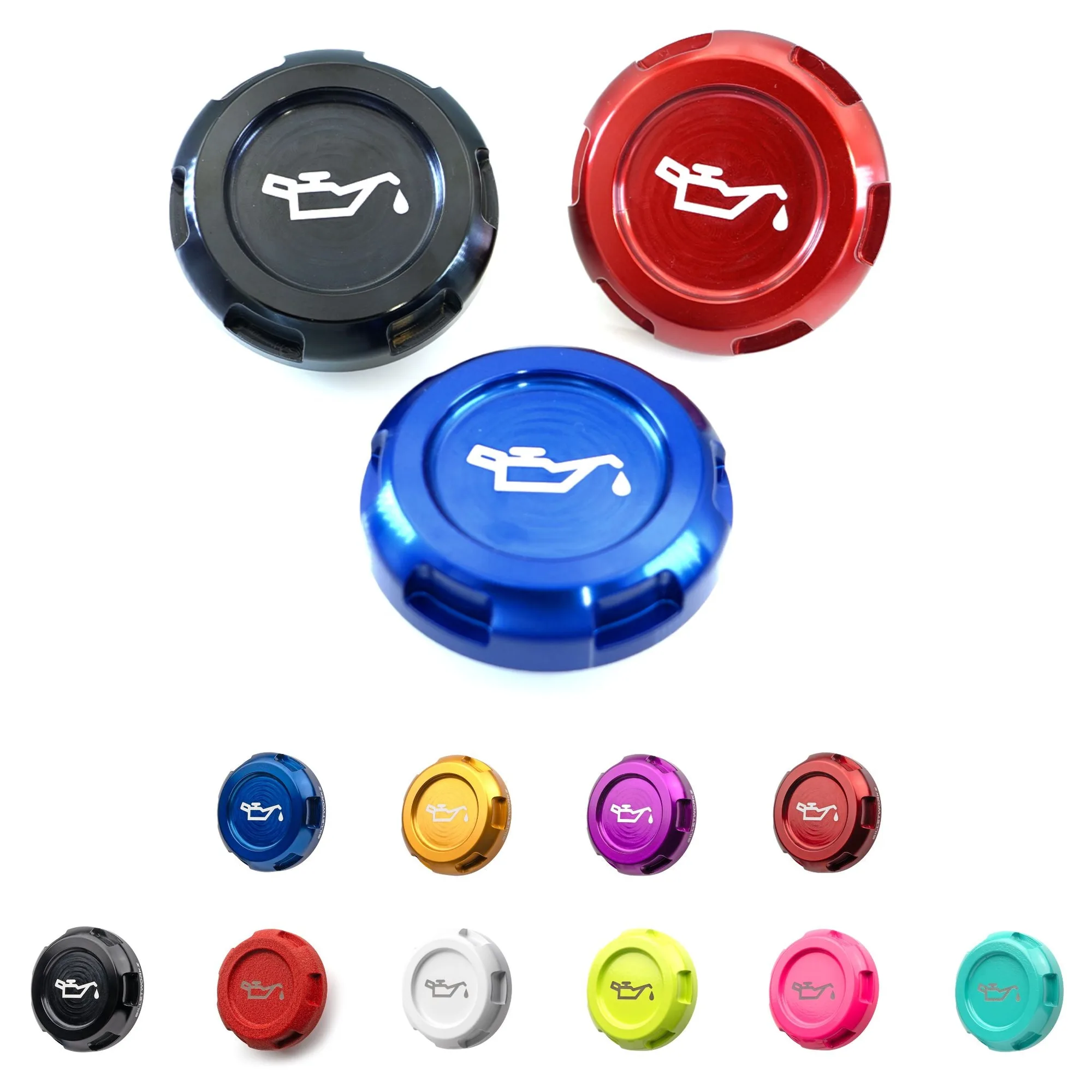
The oil filler cap is the cap you touch most often, which means it shows wear first. Heat cycling, oil residue, and repeated removal make factory plastic caps look chalky and feel loose. A machined replacement solves the cosmetic problem and often feels more substantial in the hand, but the real reason to start here is that it is the easiest cap to verify fitment on.
On most engines, the oil cap is a simple quarter-turn or threaded design with a rubber seal. If you can remove your stock cap by hand, you can install a direct replacement. That makes the oil cap a low-commitment way to test whether you like the billet look before spending on a full set.
- Check the cap style before buying: some engines use a bayonet-style quarter-turn, others use threads.
- Keep the factory cap in a safe place in case you ever want to return the engine bay to stock.
What engine bay caps actually change
Engine bay caps are cosmetic direct replacements for the factory caps on fluid reservoirs and fill points. They do not add power, improve cooling, or change how the car drives. What they change is how cohesive the engine bay looks: a matched set of anodized or powder-coated caps reads as intentional, while a mix of yellowed plastic and one shiny part reads as unfinished.
The trade-off is cost and scope. A single cap is cheap and easy. A full set costs more and takes longer to install because you are swapping several pieces. If your goal is a clean look on a budget, the oil cap alone gets you most of the visual benefit for the least money.
- Decide whether you want one accent cap or a matched set before you buy, so you do not end up with mismatched finishes.
- Clean the surrounding area before installing new caps so old grime does not immediately dull the new finish.
Material and finish: what holds up
Billet aluminum caps are machined from a solid block, which is why they feel denser and hold crisper edges than cast or plastic parts. The finish matters as much as the material. Anodized finishes are colored into the surface and tend to resist fading, while powder-coated finishes can be more textured and may chip if handled roughly. Neither is automatically better; it depends on the look you want and how careful you are with tools around the engine.
Stainless hardware and seals are the details that decide whether a cap stays tight over years of heat cycles. If a listing does not state the seal material or thread specification, treat that as missing information and ask before buying rather than assuming it matches your car.
- Anodized finishes generally hold color well; powder coat offers more texture and color options.
- If a product page does not list thread pitch or seal type, confirm fitment with the seller before ordering.
Fitment: the part that actually matters
Fitment is model- and year-specific, and engine bay caps are no exception. A cap that threads onto a 2015–2021 WRX may not fit a 2022+ car, and vice versa. The safest approach is to buy a cap that explicitly lists your chassis and year range rather than a universal part that claims to fit everything.
For oil caps specifically, check whether the listing calls out your engine family and whether it is a direct factory replacement. If you drive a model with a unique filler neck, or a trim the listing excludes, do not assume it will work. When in doubt, measure your stock cap or ask the seller for the thread specification.
- Match the cap to your exact chassis code and year range, not just the model name.
- If your car is a special trim that is often excluded from fitment lists, verify before ordering.
How to install caps without creating problems
Installation is simple, but a few habits prevent damage. Work on a cool engine so you are not handling hot plastic or metal. Wipe the filler neck and surrounding area clean before removing the old cap, so debris does not fall into the opening. Hand-tighten the new cap until it seats; do not force it past the point where it stops turning.
If a cap does not thread smoothly, stop. Cross-threading a billet cap can damage the filler neck, which is a much bigger repair than the cap is worth. A cap that requires excessive force is the wrong cap or is being installed at the wrong angle.
- Install on a cool engine and clean the mating surface first.
- Never force a cap that does not thread or seat smoothly.
Decision rules for buying engine bay caps
- Start with the oil cap if you are unsure: It is the cheapest and easiest cap to replace, and it lets you judge the finish and fit before committing to a full set. Buy the oil cap first, then decide on the set.
- Buy a set only if you want a matched look: A full engine bay cap set is a cosmetic upgrade, not a performance one. If mismatched finishes would bother you, buy the set together. Match finishes in one order rather than piecing it together.
- Verify chassis and year before ordering: Fitment is specific. A cap listed for 2015–2021 may not fit 2022+, and excluded trims are excluded for a reason. If your exact year or trim is not listed, ask before buying.
- Treat missing specs as a stop sign: If thread pitch, seal material, or fitment range is not stated, do not assume it will work on your car. Confirm the missing detail or choose a listing that states it.
Products that fit this approach
- Billetworkz Oil Filler Cap - Subaru (2002+): Machined from high-quality 6061-T6 billet aluminum and designed as an engine bay cap for Subaru models from 2002 onward. This is the simplest starting point for an oil cap upgrade: a direct replacement that covers a wide year range, so most Subaru owners can verify fitment quickly.
- Billetworkz Engine Bay Caps - Subaru WRX 2015-2021 & 2022+: Direct factory replacements CNC machined from 6061 aluminum with a durable anodized or powder-coated finish, depending on color. If you want a matched set rather than one accent piece, this covers both WRX generations and gives you a consistent finish across the bay.
Who this upgrade is for
Best for
- Owners of a supported Subaru model who want a clean, low-effort engine bay detail
- Anyone whose factory oil cap or engine bay caps are faded, cracked, or visibly worn
Not for
- Drivers expecting a performance gain from caps, since these are cosmetic replacements
- Owners of models or trims not covered by the listed fitment, who should confirm compatibility first
An oil cap upgrade is one of the lowest-risk cosmetic changes you can make, and engine bay caps extend that look across the bay. Check your chassis and year, pick a finish you will still like in a year, and install on a cool engine. If the fitment is not clearly stated for your car, ask before you buy.