Start with the color logic, not the color name
Olive Hazel Green lenses combine the golden warmth of hazel with a gentle green overlay. That mix is why they can flatter a wide range of natural eye colors without looking like a flat green disc. For warm undertones, the golden base does most of the work: it echoes the yellow, peach, or gold tones already in your skin and hair, so the lens reads as an enhancement rather than a costume.
If you have olive skin, the risk with green lenses is usually contrast. A cool, saturated green can look stark against olive or golden undertones. A hazel-green blend with a warm base is easier to wear because it sits closer to the natural warmth in your complexion.
A practical matching routine for warm undertones
Use this sequence to decide whether Olive Hazel Green is the right hazel green colored lens for your coloring. It focuses on what you can check before ordering and what the supplied product record actually confirms.
- 1. Confirm your undertone in daylight: Look at the veins on your inner wrist and the overall cast of your skin in natural light. Warm undertones tend to show golden, peach, or yellow casts. Olive skin can sit between warm and neutral, but it often responds well to golden-based colors. This step is about choosing a lens family, not diagnosing anything.
- 2. Compare the lens base to your natural eye color: Olive Hazel Green is described as balancing golden hazel warmth with a gentle green overlay. If your natural eyes are brown, hazel, or light brown, that golden base is likely to blend more softly than a pure green lens. If your eyes are very dark, expect the green overlay to read more subtly.
- 3. Check the fit numbers against a lens you already wear: The supplied variant record lists a 14.0mm diameter and an 8.5mm base curve. Those are the only fit figures in the product record. Compare them with the specs of a contact lens you already wear comfortably. If you do not know your base curve or have not been fitted, do not guess; ask your eye care professional for your measurements.
- 4. Treat the color as a soft enhancement, not a guarantee: The listing says Fusion Technology helps the color integrate with your iris for a subtle yet noticeable transformation. That is a product description, not a promise of a specific result on your eye. Lighting, your natural iris pattern, and your skin tone will all change how the final look reads.
- 5. Plan for a short first wear: The record confirms HEMA material and 40% water content, but it does not supply a wear schedule or replacement interval. Do not invent one. Follow the instructions that come with the lenses and any advice from your eye care professional. If you are trying colored lenses for the first time, keep the first session short and see how your eyes respond.
What the Olive Hazel Green record confirms
-
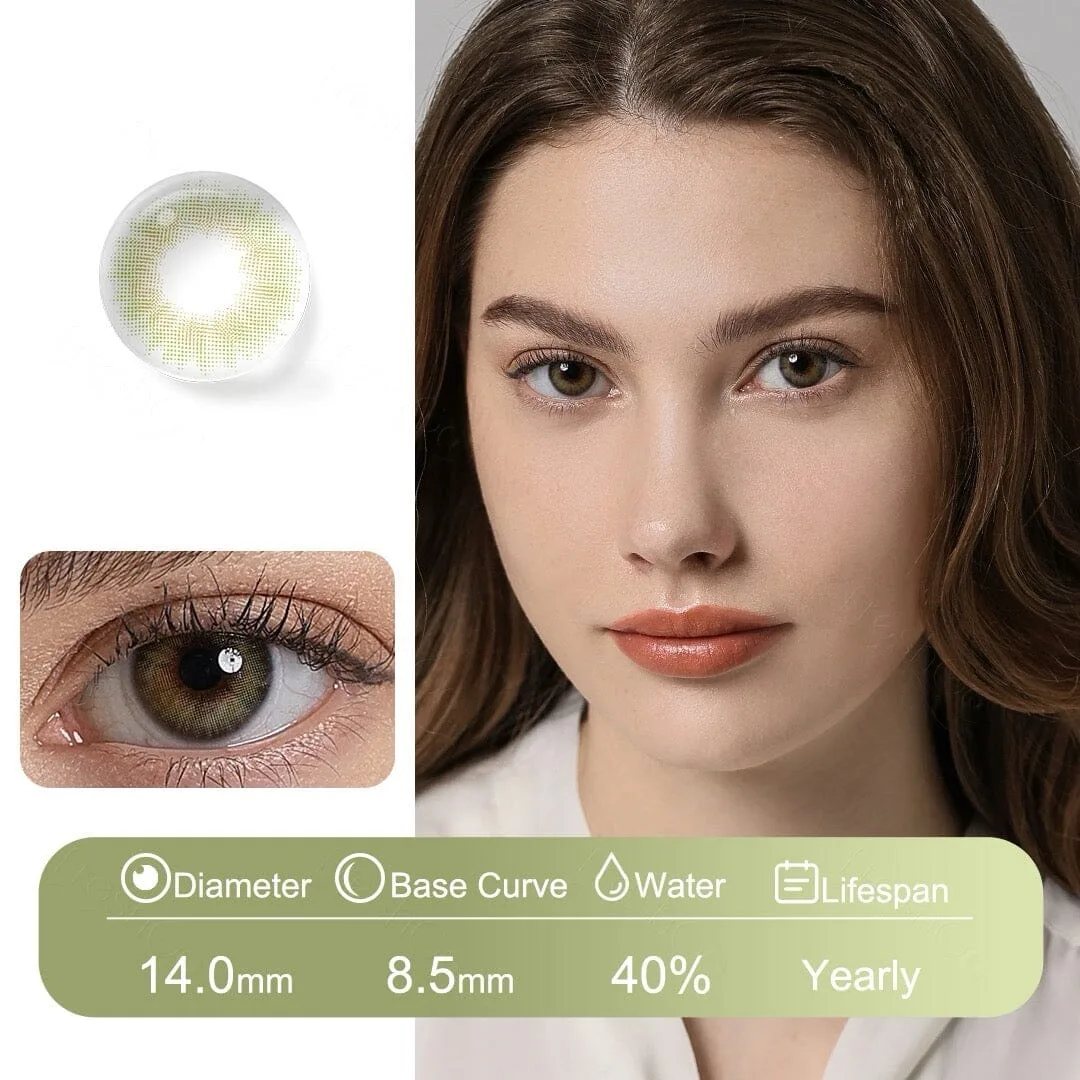
Olive | Hazel Green Colored Contacts Lenses: Olive Hazel Green lenses by Natura Eyes balance golden hazel warmth with a gentle green overlay. That warm base is the main reason this lens suits warm undertones and olive skin better than a cool, saturated green.
Olive | Hazel Green Colored Contacts Lenses
-
Olive | Hazel Green Colored Contacts Lenses: The lenses use HEMA material with 40% water content. These are the confirmed material and hydration figures. They help you compare this lens with others you have worn, but they are not a wear-time recommendation.
-
Olive | Hazel Green Colored Contacts Lenses: The available variant is 14.0mm diameter with an 8.5mm base curve. These are the only fit figures supplied. Check them against a lens you already know fits before ordering.
-
Olive | Hazel Green Colored Contacts Lenses: The listing describes Fusion Technology for color integration and added UV protection. These are the product's stated features. UV protection in a contact lens is not a substitute for sunglasses or a complete sun-protection routine.
Where warm undertone contact lenses can go wrong
The most common mismatch is not the green itself but the temperature of the green. A warm olive-hazel lens can look natural on golden or olive skin. A cool, minty green can look ashy by comparison. If you have spent years avoiding green eye makeup because it made your skin look tired, the issue was probably the undertone of the green, not green as a category.
The second mismatch is expectation. Colored lenses do not replace your natural iris; they layer over it. The listing describes a subtle yet noticeable transformation, which is a fair way to think about it. If you want a dramatic color change, this is probably not the lens for that goal. If you want your own eye color to look warmer and slightly greener, it is aimed at exactly that.
Olive Hazel Green versus a cooler green lens
Use this comparison when you are deciding between a warm hazel-green lens and a cooler green option. It is based on the supplied Olive Hazel Green description and general color logic, not on a side-by-side test.
- Olive Hazel Green: Warm golden-hazel base with a gentle green overlay. A better first choice for warm undertones, olive skin, and natural brown or hazel eyes. The effect is described as subtle yet noticeable.
- A cooler green lens: Can look striking on cool undertones but may clash with golden or olive skin. If you still want to try one, keep the rest of your makeup warm and neutral to reduce the contrast.
What the listing does not tell you
The supplied record leaves some practical questions open. Treat these as gaps to fill with your eye care professional or the lens packaging, not as reasons to guess.
- Wear time and replacement schedule: The record does not state how long these lenses can be worn or how often they should be replaced. Follow the manufacturer's instructions and professional advice.
- Full ingredient and care instructions: HEMA and 40% water content are confirmed, but the record does not include a complete care protocol. Do not assume a cleaning routine from another lens brand applies here.
- Suitability for specific eye conditions: This article cannot diagnose or prescribe. If you have dry eyes, allergies, or a history of contact lens problems, speak to an eye care professional before trying a new colored lens.