A talking companion, not a screen toy
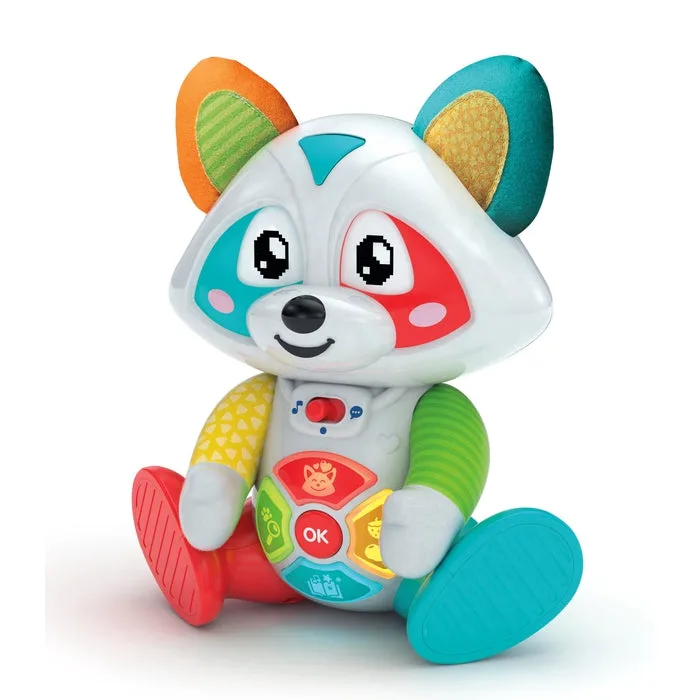
Oliver is a talking raccoon plush from Clementoni that pairs a soft body with an animated eye screen. The screen is the feature that separates it from a standard musical plush: the eyes change to match what Oliver is doing, so the toy can show emotions rather than just play a tune.
That matters if you are looking for a first interactive toy for a toddler. Oliver is designed to be cuddled, put to bed, fed and played with, and the toy responds to those actions through built-in sensors. It is a companion-style toy, not a tablet substitute.
What the catalog confirms about Oliver
-
Oliver, il mio amico interattivo: Oliver is a talking raccoon plush with an interactive eye screen that animates to show emotions. The animated eyes are the core of the toy's appeal and the main reason a toddler stays engaged beyond the first few minutes.
Oliver, il mio amico interattivo
-
Oliver, il mio amico interattivo: It includes more than 100 animations, 300 new words and 10 educational stories. This gives you a concrete sense of the content volume, so you can judge whether it will hold a child's interest over months rather than days.
-
Oliver, il mio amico interattivo: Four illuminated buttons cover four play areas: stories, vocabulary, emotions and food. The button layout tells you what a child can choose on their own, which is useful for judging how independent the play will be.
-
Oliver, il mio amico interattivo: Interactive sensors recognize when the child cuddles it, puts it to sleep, feeds it or plays with it. This is what makes Oliver feel responsive rather than pre-programmed, and it supports pretend-care play.
-
Oliver, il mio amico interattivo: There are two play modes: prime interazioni and prime parole e storie. The two modes let the toy grow with a child, from simple cause-and-effect reactions to word and story play.
How the two play modes change the experience
The first mode, prime interazioni, is built around cause and effect. A child cuddles, feeds or settles Oliver and the toy reacts. For a younger toddler, this is often the part that clicks first, because the reward is immediate and physical.
The second mode, prime parole e storie, leans on the vocabulary and story content. This is where the 300 words and 10 stories come into their own. A child who is already talking will get more from this mode, while a child still exploring cause and effect may stay in the first mode for a while.
The four buttons map to stories, vocabulary, emotions and food, so a child can steer the play themselves. That is a meaningful difference from toys that only cycle through a fixed sequence.
Who gets the most from Oliver
Oliver rewards a child who likes to care for a toy as much as one who likes to listen to it. If your child already carries a stuffed animal around, feeds it or puts it to bed, the sensor-based play will feel natural.
- A toddler who imitates caregiving: The cuddle, sleep and feed sensors turn everyday pretend play into a response from the toy, which reinforces the routine.
- A child beginning to build vocabulary: The vocabulary button and the 300-word content give a talkative toddler something to repeat and practice.
- A child who needs a calm wind-down: The story content and the sleep interaction suit a quieter bedtime routine better than a fast, noisy toy.
- A child who prefers active, physical play: Oliver is a companion toy, so a child who wants to run and build may lose interest faster than one who likes nurturing play.
What the supplied information does not confirm
The catalog details do not state a recommended age range, battery type or battery life, or the language of the 300 words and 10 stories. Those are practical questions worth checking on the packaging or product page before you buy, especially if you are choosing this as a gift.
No care or washing instructions are included in the supplied information either. Since Oliver is a plush with an eye screen and sensors, treat cleaning guidance as something to confirm with the manufacturer rather than assume.
A quick way to decide
- Choose Oliver if: You want a first interactive toy that responds to cuddling and pretend care, and you like the idea of a companion that grows from cause-and-effect play into words and stories.
- Look elsewhere if: You need a confirmed age range or washable plush, or your child prefers active physical play over nurturing a toy.
- Check before buying: Confirm the recommended age, battery requirements and language of the content on the product page, since the supplied catalog facts do not cover them.