Three boxes' worth of game in one purchase
The One Hundred Torii + Expansions Bundle is a single listing that collects the base game plus both mini-expansions: Koi and Toku. If you are weighing whether to start with the base game or jump straight to the bundle, the useful question is not how much stuff is in the box, but whether the two mini-expansions match how you like to play.
The base game is a tile-laying and set-collection game for 1-4 players, ages 8 and up, with a listed playing time of 45-60 Mins. You expand a Japanese garden each turn, walk through torii gates between matching landmarks, and earn journey points by visiting landmarks and interacting with characters such as poets, samurai, gardeners, vendors, and geishas.
The bundle at a glance
-
The One Hundred Torii + Expansions Bundle: This bundle includes the base The One Hundred Torii game, the Koi Mini-Expansion, and the Toku Mini-Expansion. Confirms you are getting all three components in one purchase rather than the base game alone.
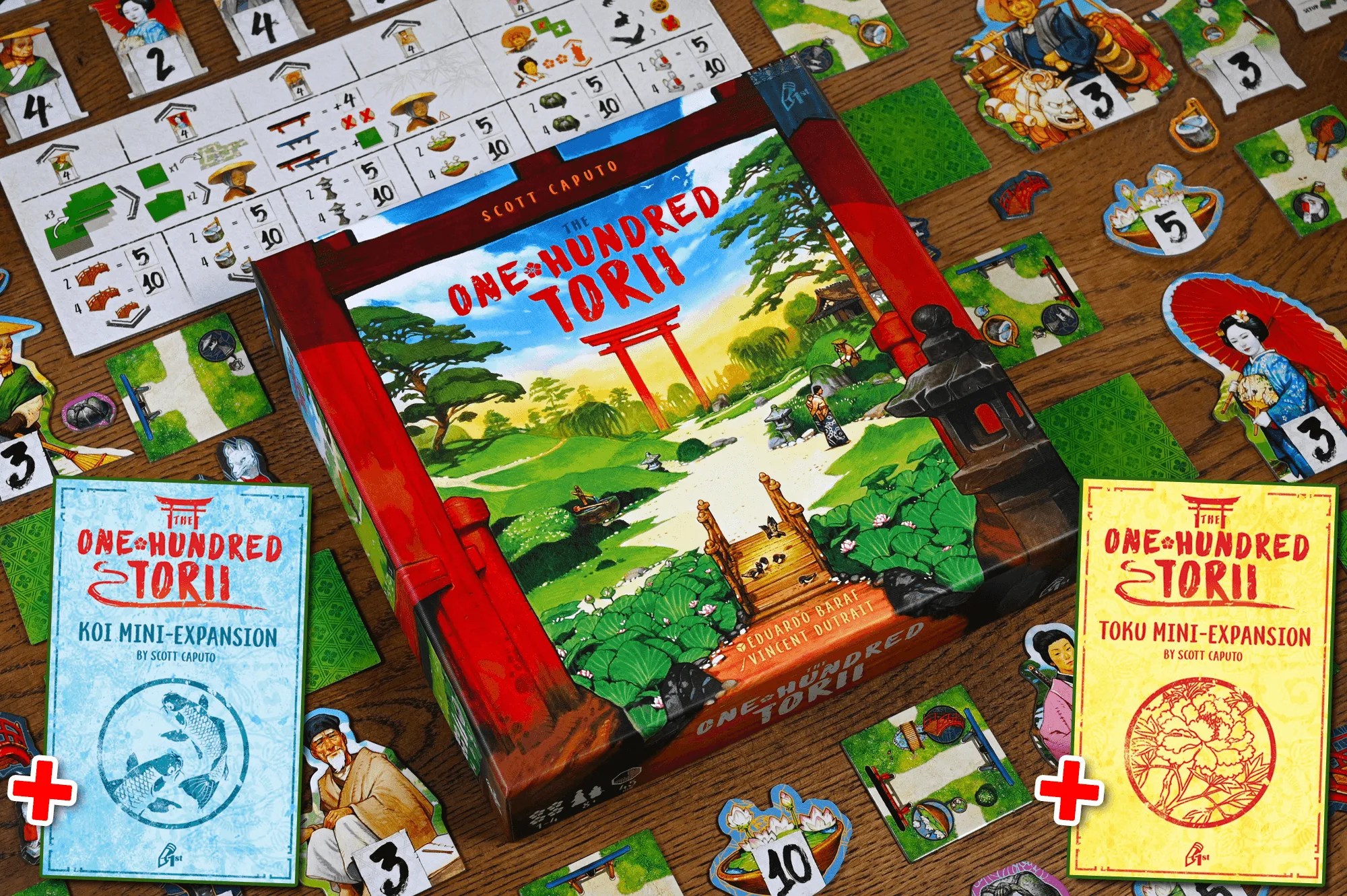
The One Hundred Torii + Expansions Bundle
-
The One Hundred Torii + Expansions Bundle: Players: 1-4; Playing Time: 45-60 Mins; Ages: 8+. These are the base game's listed constraints, so check them against your table before buying.
-
The One Hundred Torii + Expansions Bundle: The Koi mini-expansion contains 18 cards. Tells you the physical size of the Koi addition so you can plan storage.
What Koi adds: action cards for advanced players
Koi is described as a second expansion for advanced players. At the start of the game, each player is dealt a set of action cards. Those Koi cards are worth one journey point if kept until the end of the game, or they can be spent as special actions for extra tokens, using multiple characters, and similar effects. The expansion gives players extra flexibility and creates big scoring opportunities as the game progresses.
That trade-off, hold the card for a point or spend it for a bigger turn, is the heart of Koi. It rewards players who can read the board and time their spending. If your group is still learning the base game's tile-laying and set-collection rhythm, Koi is the piece to add later rather than on the first night.
What Toku adds: bonus reward cards on the token piles
Toku is a set of bonus reward cards. Some of them are randomly placed on top of the large token piles each game. The first player to earn a given Large Landmark token, Geisha bonus token, or Enclosure bonus token also gains the Toku card on top.
Toku cards are worth one journey point if kept until the end of the game, or they can be spent for a one-time special use, such as free landmarks, changing torii gates, or discounts when using the different game characters. In some cases, that could mean being able to use the vendor or samurai for free. Toku is easier to fold into a first play than Koi because it sits on top of rewards you were already chasing.
Koi versus Toku: which one changes your game more
Both mini-expansions give you cards worth one journey point if held, and both let you spend those cards for a special effect. The difference is when the decision happens and how much planning it asks for.
- Koi: Dealt at the start, spent for extra tokens or multi-character plays. Described as for advanced players. Best if your group already knows the base game and wants more flexibility and bigger scoring turns.
- Toku: Placed on top of large token piles and won by being first to earn the token underneath. Spent for one-time effects such as free landmarks, changing torii gates, or character discounts. Easier to introduce alongside a first or second play.
Is the bundle right for new players?
The bundle is a reasonable starting point if you expect to play The One Hundred Torii more than a handful of times. You get the base game and both mini-expansions in one purchase, and the catalog lists a bundled price of USD 33.99 against a comparison price of USD 49.99. The base game alone is enough for a first session, and the supplied information does not state that either mini-expansion is required for play.
A practical approach for a new group: learn the base game first, add Toku once the reward tokens feel familiar, and bring in Koi when players are comfortable planning multi-step turns. That order follows the expansions' own descriptions, with Koi flagged for advanced players and Toku tied to rewards you already earn.
What the supplied information does not settle
A few buying questions are not answered by the catalog record. Treat these as open rather than as negative features.
- Exact component counts for the base game: The record describes tiles, tokens, and character interactions but does not list tile or token quantities.
- Storage and box size: The record does not describe how the three components are packed or whether the mini-expansions fit in the base box.
- Sleeve compatibility: Card sizes and counts beyond the Koi expansion's 18 cards are not given, so sleeve fit cannot be confirmed from the supplied information.