Quick answer
Inspect open box shears in this order: look for cosmetic wear, check blade alignment against a backlight, test tension and pivot play, feel the edge for nicks, and confirm the return policy. If any step fails, walk away—no discount justifies a shear that will pull or fold coat.
Why open box shears need a different inspection
Open box shears have usually been handled, stored, or returned, so they may show cosmetic wear even when the cutting edge is sound. The goal is not to find a flawless finish but to confirm the blades meet correctly and the pivot feels stable.
A shear can look clean and still fail on alignment or tension. That is why the checks below focus on function first and appearance second.
When to walk away
Skip the pair if you see a visible gap between the blades at the pivot, a nick you can feel with a fingernail, or a pivot that rocks side to side. These are not cosmetic issues and usually mean the shear will need professional service before it cuts cleanly.
If the listing does not state that the shears were cleaned and sharpened, ask before buying. A seller who cannot confirm the edge condition is a bigger risk than minor scuffs.
Step-by-step open box shear inspection
- Check the listing for sharpening and cleaning notes: Before you handle the shears, confirm the seller states they were professionally cleaned and sharpened. If that information is missing, ask directly. No sharpening confirmation is a reason to pause, not a detail to overlook.
- Look for cosmetic wear that hints at misuse: Inspect the handles, pivot screw, and blade faces for deep scratches, dents, or rust. Light scuffs are normal on open box shears; heavy damage near the pivot or edge is not. Wear at the pivot or edge matters more than wear on the handles.
- Perform a blade alignment check against a backlight: Hold the shears partially open and look through the blades toward a light. The cutting edges should meet evenly along their length with no visible gap or overlap at the pivot. A gap you can see at the pivot will usually show up as folding or pulling in the coat.
- Test tension and pivot play: Open and close the shears slowly. They should move smoothly without wobble. Then hold one handle steady and try to rock the other blade side to side; any noticeable play means the pivot is loose or worn. Smooth resistance is good; rattling or side-to-side movement is a fail.
- Feel the edge for nicks or rough spots: Run a fingernail gently along the inside of the cutting edge, not across it. A nick or burr will catch. Do this only on a clean, dry blade and never slide your finger along the sharp edge. A nick you can feel will leave a visible line in the coat.
- Confirm the return policy before you pay: Ask whether open box shears can be returned if they fail your inspection after arrival. Get the answer in writing if you are buying online. A clear return window turns a risky open box purchase into a manageable one.
Product facts
-
9in Straight: Clearance shears that have been professionally cleaned and sharpened, with possible minor cosmetic wear from handling or prior use. The sharpened edge is the main functional checkpoint; cosmetic wear is secondary if the blades align and the pivot is tight.
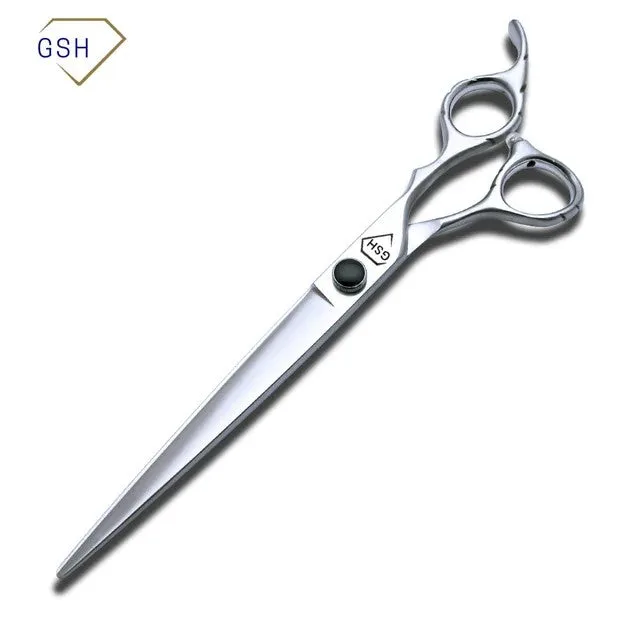
9in Straight