In the world of Montessori education, the environment is often called the third teacher. The way a child's space is organized can significantly influence their ability to learn, focus, and grow independently. One of the most powerful tools in this approach is open shelving – a simple yet transformative storage solution that puts toys and materials within easy reach.
Unlike traditional toy boxes where items are hidden and chaotic, open shelving Montessori systems invite children to see, choose, and return their belongings with purpose. This guide explores why this storage method is a cornerstone of child development and how you can implement it in your home.
The Montessori Philosophy Behind Open Shelving
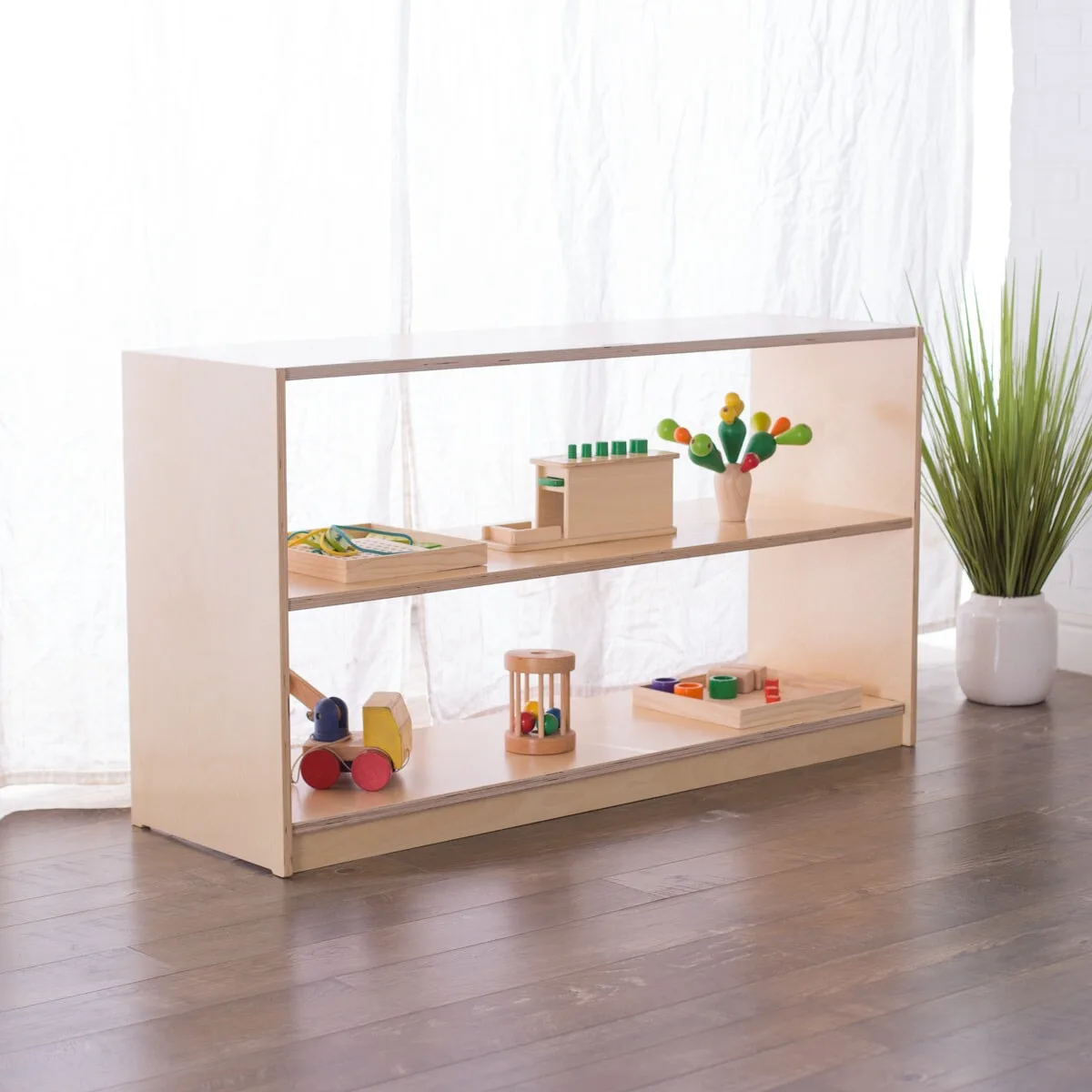
Dr. Maria Montessori observed that children thrive in prepared environments where order and accessibility are prioritized. Open shelving aligns perfectly with this by allowing children to visually scan their options and make independent choices. When toys are displayed on a low, accessible shelf, the child feels empowered to engage without adult assistance, building confidence and decision-making skills.
Furthermore, open shelving reduces visual clutter and promotes a sense of calm. A tidy, well-organized space helps children focus on one activity at a time, which is essential for developing concentration. The key is to rotate toys regularly, keeping only a few items out at once to avoid overwhelming the child.
- Practical tip: Limit the number of toys on the shelf to 8-12 items and rotate weekly to maintain interest.
Key Benefits of Accessible Toy Storage for Kids
When children can easily reach their toys, they are more likely to engage in self-directed play. This fosters creativity and problem-solving skills. A well-designed Montessori shelf also teaches responsibility: children learn to return items to their designated spots after use, reinforcing order and discipline.
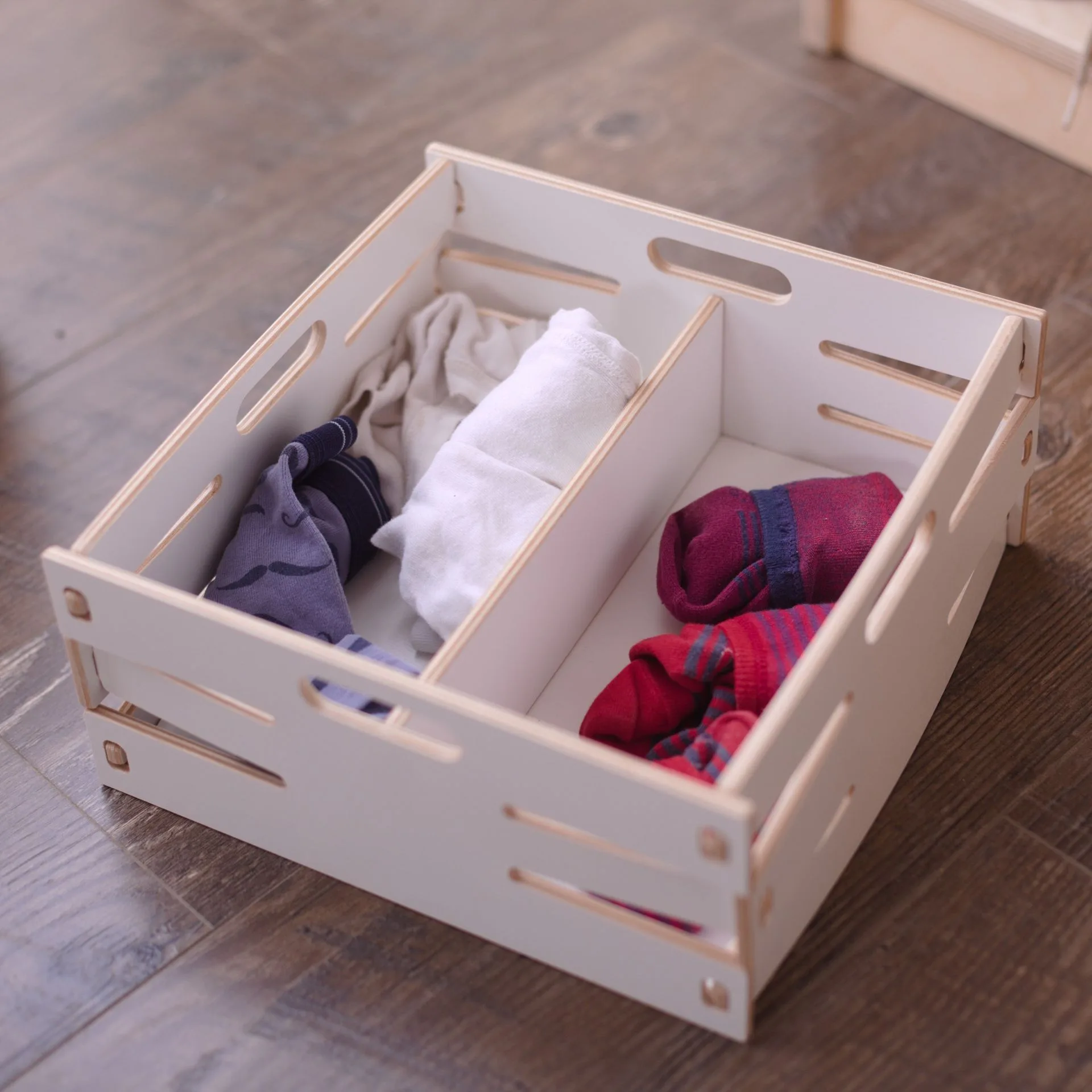
Additionally, open shelving supports language development. By seeing and naming objects, children build vocabulary. The clear presentation of materials also encourages categorization and sorting – foundational math skills. For instance, a simple organizer like the Adjustable Toy Organizer can be used to group blocks, puzzles, or art supplies, making cleanup a learning activity in itself.
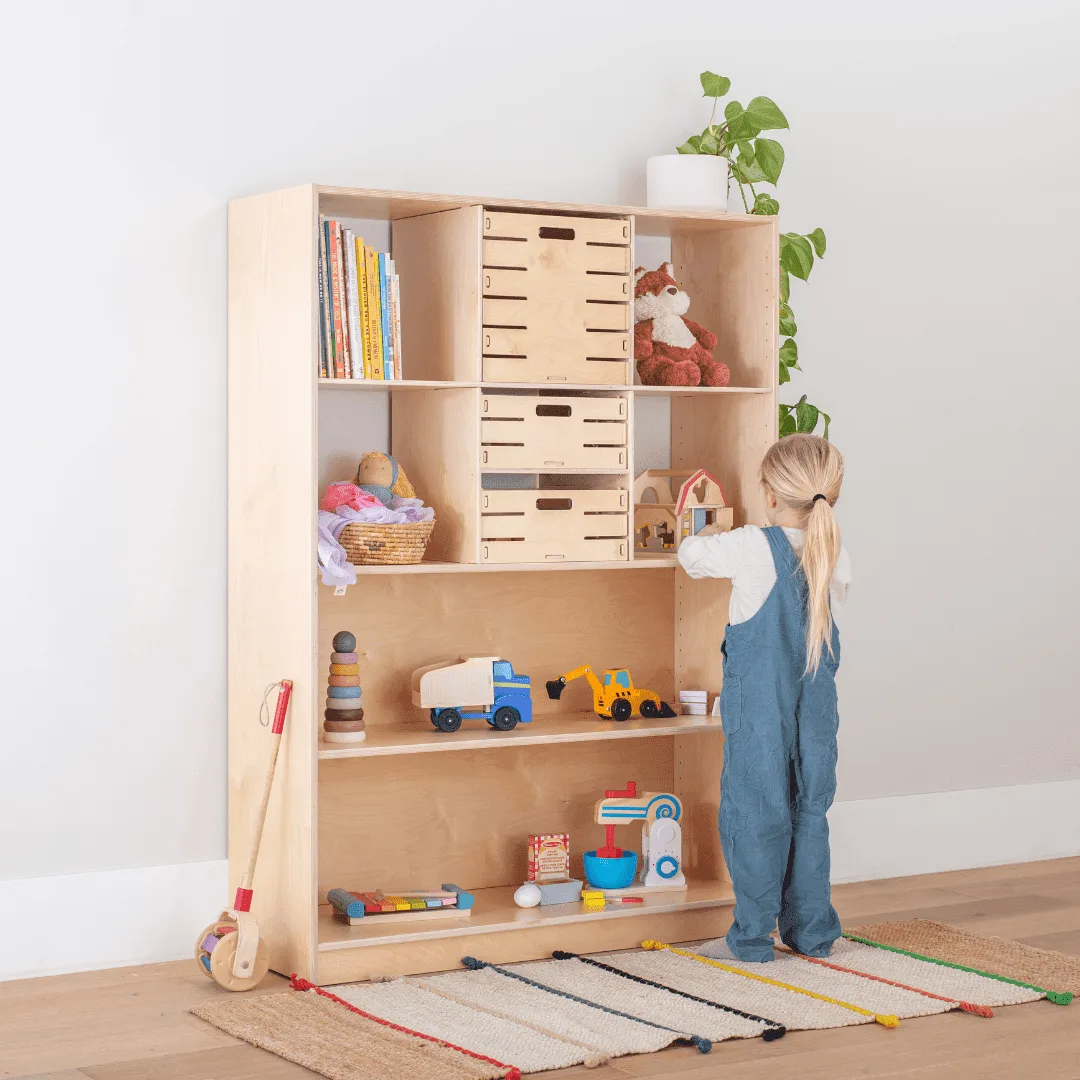
Adjustable Toy Organizer
- Practical tip: Use low, sturdy shelves that are at the child's eye level to maximize accessibility.
Choosing the Right Montessori Shelf for Your Home
Not all shelves are created equal for a Montessori setup. The ideal shelf is low to the ground, stable, and made of natural materials like wood. It should have a simple design without distracting colors or patterns. Many parents opt for a dedicated Montessori shelf that offers multiple tiers for displaying toys and books.
For infants and toddlers, a Birch Montessori Infant Shelf provides a safe and inviting space for sensory objects and board books. As children grow, you can add storage boxes or bins to keep smaller items organized. The goal is to create a space that evolves with your child's needs.
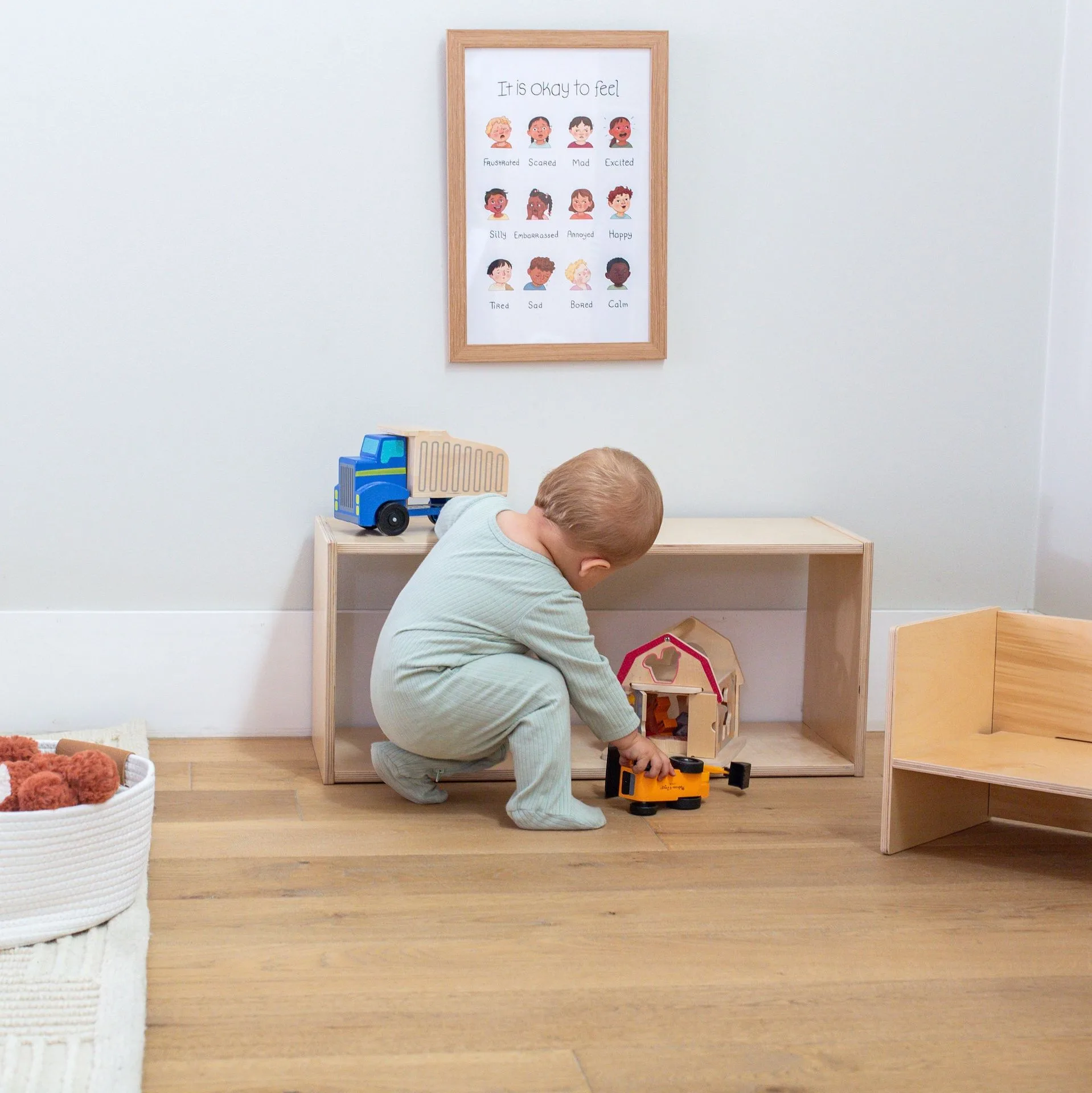
Birch Montessori Infant Shelf
- Practical tip: Anchor large shelves to the wall for safety, especially in active play areas.
How to Set Up a Toy Rotation System with Open Shelving
Toy rotation is a core Montessori practice that prevents boredom and overstimulation. Start by dividing your child's toys into several groups. Keep one group on the open shelf and store the rest out of sight. Every week or two, swap the groups to renew interest. This approach also makes cleanup manageable and teaches children to care for their belongings.
Using storage boxes like Wovewood 13" Storage Box Sets can help you categorize and rotate toys effortlessly. These natural woven baskets add warmth to the room while keeping small pieces contained. Label each box with a picture or word to encourage matching and literacy.
- Practical tip: Involve your child in the rotation process to build ownership and excitement.
Integrating Open Shelving Beyond the Playroom
Open shelving isn't just for toys – it can be used throughout the house to promote independence. In the kitchen, a low shelf with child-safe dishes and cups allows toddlers to set the table. In the entryway, hooks and cubbies at child height encourage self-dressing. The principles remain the same: accessibility, order, and beauty.
Even in the bedroom, a small shelf for books and a few quiet toys can create a calming bedtime routine. The versatility of open shelving makes it a long-term investment in your child's development.
- Practical tip: Keep a small basket for items that don't have a designated spot to maintain order.
Open shelving is more than a storage trend – it's a developmental tool that empowers children to explore, learn, and grow. By creating an accessible and organized environment, you nurture independence and focus. Start your Montessori journey today with a quality shelf that grows with your child. Explore the Adjustable Toy Organizer to create a beautiful, functional play space your child will love.