Two daily tools, two different jobs
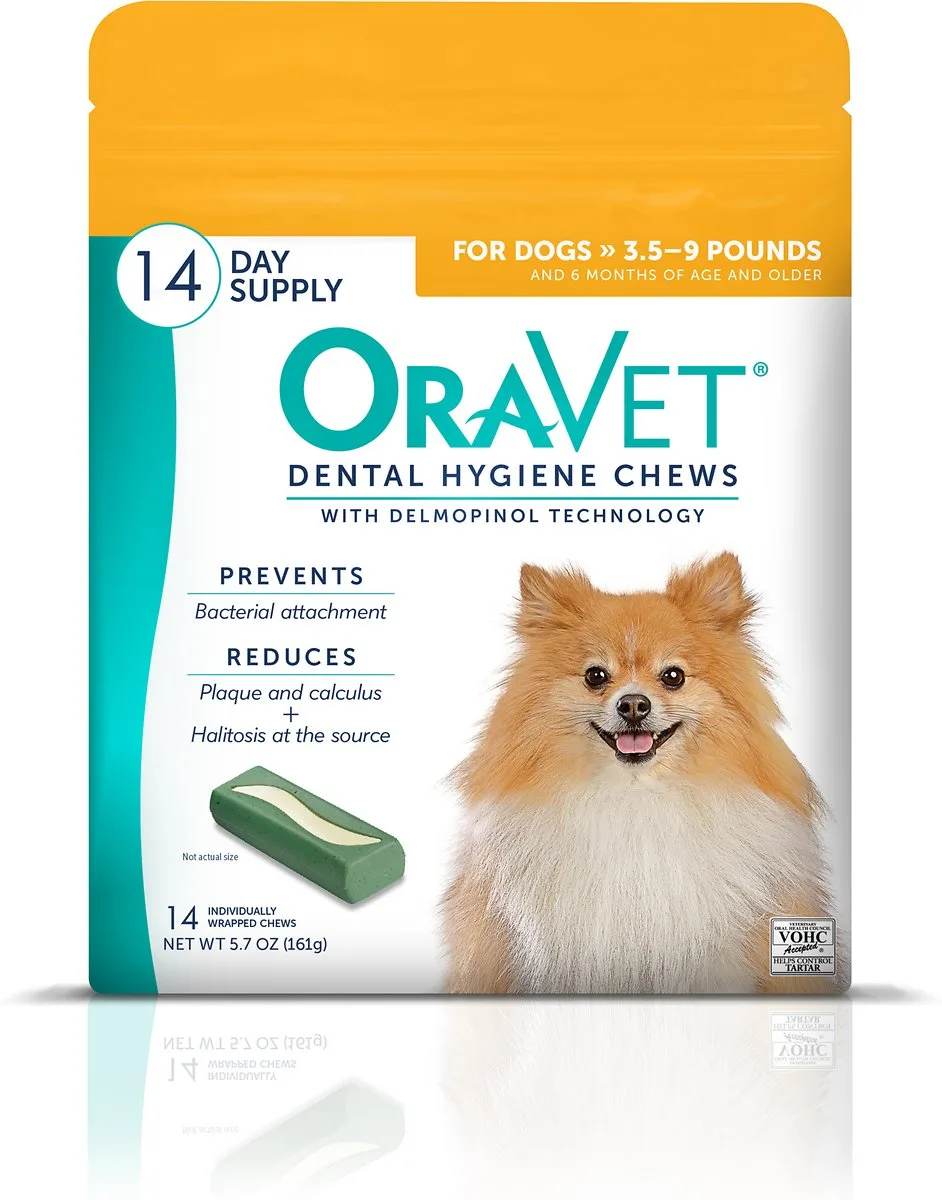
Brushing and dental chews are both home dental-care tools for dogs, but they work in different ways. Brushing physically disrupts plaque on tooth surfaces, while OraVet Dental Hygiene Chews combine chewing action with Delmopinal, an ingredient the label says forms a protective barrier that blocks bacteria and the future formation of plaque and tartar. The label describes the chews as a dual-action approach: clean, then protect, when used daily.
That difference matters when you decide what your dog’s daily routine should include. If your dog tolerates brushing, it can be a direct way to clean teeth. If brushing is difficult or inconsistent, a daily dental chew may help fill part of the gap—but only if you follow the label’s sizing and safety rules. Many owners use both, with brushing as the hands-on clean and a chew as the daily protective step.
Brushing vs. OraVet chews at a glance
- How it works: Brushing uses a toothbrush to physically clean tooth surfaces. OraVet chews rely on chewing plus Delmopinal, which the label says forms a barrier against bacteria and future plaque and tartar.
- Frequency: The OraVet label instructs giving one chew per day. Brushing frequency is not specified in the supplied OraVet information; ask your veterinarian for a brushing schedule that fits your dog.
- Species and age: OraVet chews are for dogs six months of age and older and are not for use in cats. Brushing is a hands-on method that can be adapted to many pets, but your vet can advise on the right approach for yours.
- Owner effort: Brushing requires handling and cooperation from your dog. OraVet chews require correct size selection, daily monitoring while your dog chews, and keeping the chews out of reach of children.
- Label cautions: OraVet: do not underdose (choking risk), do not give more than one chew per day, and monitor your dog until the chew is fully consumed. Brushing carries its own technique considerations; your vet can show you how to brush safely.
What the OraVet label confirms
-
OraVet Dental Hygiene Chews: OraVet Dental Hygiene Chews have a unique dual-action approach that doesn't just clean teeth and freshen breath. Each chew contains Delmopinal, which works to form a protective barrier that blocks bacteria and the future formation of plaque and tartar. This is the core difference from brushing: the chew is designed to clean and then protect, while brushing is a manual cleaning method.
OraVet Dental Hygiene Chews
-
OraVet Dental Hygiene Chews: Used daily they work to clean, then protect. Daily use is part of the label’s design, so consistency matters if you choose chews as part of your routine.
-
OraVet Dental Hygiene Chews: For dogs six (6) months of age and older. Puppies younger than six months should not use these chews, so brushing may be the only home option for very young dogs.
-
OraVet Dental Hygiene Chews: Not for use in cats. Do not give to cats. If you have both dogs and cats, keep OraVet chews strictly for the dog and store them where cats cannot reach them.
How to use OraVet chews correctly
The label gives clear instructions for using OraVet Dental Hygiene Chews. Following them helps reduce choking risk and supports the daily routine the product is designed for.
- Weigh your dog: Use an accurate weight to choose the correct chew size. The label says to weigh your dog to ensure you give the appropriately sized chew.
- Match the weight range: Available sizes are Under 10lbs, 10lbs-24lbs, 25lbs-50lbs, and 50lbs+. Pick the size that matches your dog’s weight range.
- Give one chew per day: The label instructs giving your dog one OraVet Chew per day. Do not give more than one chew per day to each dog.
- Monitor while chewing: The label says to monitor your dog until the chew is fully consumed. This helps you spot any choking or swallowing issues.
- Do not underdose: The label warns not to underdose, as this may present a risk of choking. Use the correct size for your dog’s weight.
- Keep out of reach of children: Store the chews where children cannot get to them.
Building a daily dental routine that fits your dog
The best routine is one you can do consistently. If your dog accepts brushing, you might brush on some days and give an OraVet chew on others, or use both as part of the same daily session. The OraVet label supports daily use of one chew, so you can make it a predictable part of your dog’s day—for example, after a meal or before bed.
If brushing is a struggle, a daily dental chew can be a practical alternative for the chew’s labeled purpose, but it does not replace professional dental exams. The OraVet label notes the chews are ideal for a home dental routine in conjunction with regular dental exams. Your veterinarian can help you decide how often to brush, whether chews are appropriate for your dog’s dental health, and how to combine home care with professional checkups.
Choosing between brushing and chews
There is no single right answer for every dog. Consider these practical points when deciding what to include in your dog’s daily dental care.
- If your dog tolerates brushing well: Brushing gives you direct control over cleaning. You can pair it with OraVet chews for the protective barrier the chew provides, as long as you follow the one-chew-per-day limit.
- If brushing is difficult: A daily OraVet chew may be easier to stick with, but it still requires correct sizing and monitoring. It is not a substitute for veterinary dental care.
- If you have a puppy under six months: OraVet chews are labeled for dogs six months and older, so brushing (with vet guidance) may be your main home option until your puppy is old enough.
- If you have cats: OraVet chews are not for cats. Keep them away from cats and choose cat-specific dental care with your veterinarian.
What the label does not decide
The supplied OraVet information does not specify how often to brush your dog’s teeth or give a complete brushing protocol. It also does not state whether OraVet chews can replace brushing entirely. Those decisions belong to you and your veterinarian, who can assess your dog’s individual dental health and recommend a home-care plan.
For dogs that fit the label’s criteria—six months or older, correct weight-based size, and one chew per day—OraVet Dental Hygiene Chews offer a structured way to support daily dental hygiene. Brushing remains a hands-on cleaning method that many vets recommend. Used together with regular exams, either or both can be part of a thoughtful home routine.