Why prunes earn a spot in your pantry
Dried prunes are a versatile ingredient that can be eaten straight from the bag, added to breakfast bowls, or used in both sweet and savory cooking. They keep for a long time and provide a concentrated sweetness that pairs well with many foods. If you want a reliable pantry staple that works for snacks and recipes alike, prunes are worth considering.
This guide focuses on what to look for when buying dried prunes, how to store them, and practical ways to use them. We'll also look at Forest Feast Orchard Prunes as a specific option so you can see how the general advice applies to a real product.
What to check when choosing dried prunes
- Ingredient list: Check the ingredients to see if the prunes are simply dried plums or if preservatives or added sugars are included. Fewer ingredients often means a more straightforward product.
- Texture and moisture: Prunes can range from soft and plump to firmer and chewier. The texture you prefer depends on how you plan to use them—softer prunes are easier to blend or chop, while firmer ones hold up in cooking.
- Origin and processing: Some products specify where the plums are grown and how they are dried. This information can help you gauge freshness and quality, though it is not a guarantee of taste.
- Packaging and quantity: Consider how quickly you will use the prunes. Larger bags offer better value if you eat them regularly, but smaller packs stay fresher if you use them occasionally.
- Price and value: Compare the price per unit weight rather than just the total price. A higher upfront cost may be worth it if the quality is better or if you use prunes often.
How to store dried prunes for lasting freshness
Proper storage keeps prunes moist and flavorful. Keep them in an airtight container in a cool, dark place, away from direct sunlight and heat. A pantry shelf works well. If you live in a hot or humid climate, storing prunes in the refrigerator can help extend their shelf life, but let them come to room temperature before eating for the best texture.
Always check the package for specific storage instructions. Once opened, reseal the bag tightly or transfer the prunes to a glass jar with a lid. Avoid storing them near strong-smelling foods, as they can absorb odors.
A closer look at Forest Feast Orchard Prunes
-
Orchard Prunes: Forest Feast Prunes are grown in plum orchards where trees take four to six years to bear fruit, and the unique climate means they reach perfect ripeness in August. This slow growth and specific harvest timing suggest a focus on quality, which can translate to better flavor and texture in the final product.
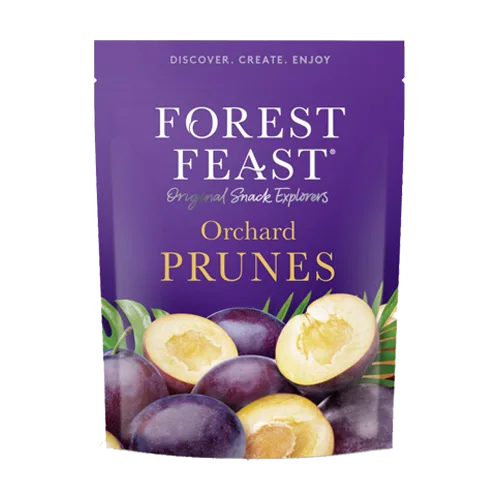
Orchard Prunes
-
Orchard Prunes: They are harvested, pitted, and slow dried to lock in their intense flavor and rich purple color. Slow drying helps preserve the natural sweetness and moisture, giving you a prune that is both flavorful and pleasant to eat.
-
Orchard Prunes: 30g of dried fruit equates to one of your five-a-day. This gives you a handy reference for portioning, whether you are snacking or adding prunes to a meal.
Ways to use prunes in everyday cooking and snacking
- Straight from the bag: Prunes are ready to eat as a sweet snack. Pair them with nuts or cheese for a balanced bite.
- Breakfast boost: Chop prunes and stir them into oatmeal, yogurt, or smoothies for natural sweetness and texture.
- In baked goods: Add chopped prunes to muffins, breads, or cookies. They add moisture and a deep fruit flavor.
- Savory dishes: Prunes work well in tagines, stews, and sauces, where they balance rich meats with their sweet-tart taste.
- DIY trail mix: Combine prunes with nuts, seeds, and other dried fruits for a homemade snack mix.
Is Forest Feast Orchard Prunes right for you?
If you are looking for a prune that is carefully grown and slowly dried to preserve flavor, Forest Feast Orchard Prunes are a strong candidate. They come pitted, which saves prep time, and their rich color and intense flavor make them suitable for both snacking and cooking. The 30g serving guideline helps you incorporate them into your daily routine without guesswork.
However, if you prefer a different texture or need a specific certification (such as organic), you may want to check the label or explore other options. Also, note that the product is sold as a standard variant; check the packaging for the exact net weight and any allergen information. As with any dried fruit, enjoy them as part of a varied diet.