Two surfaces, two different jobs
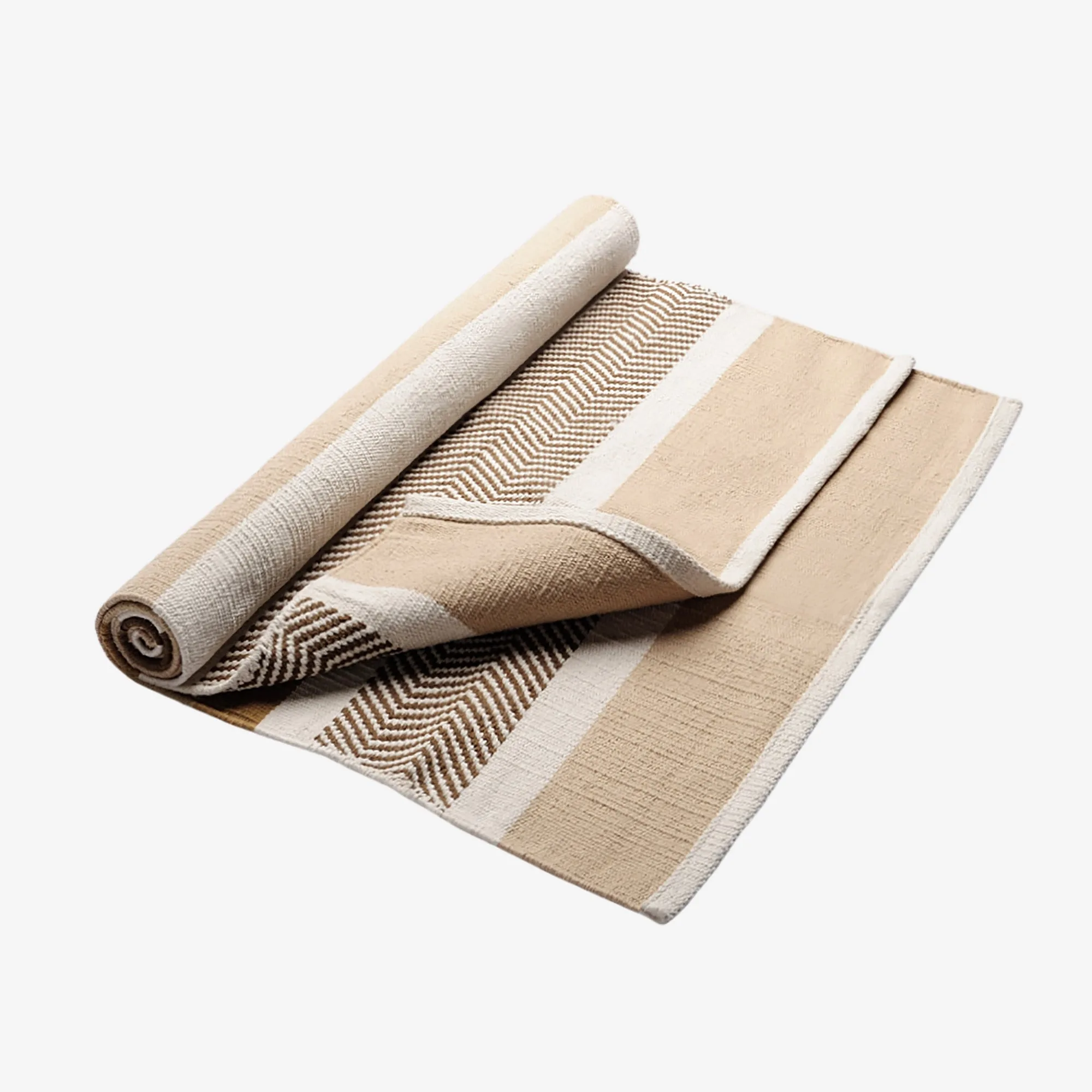
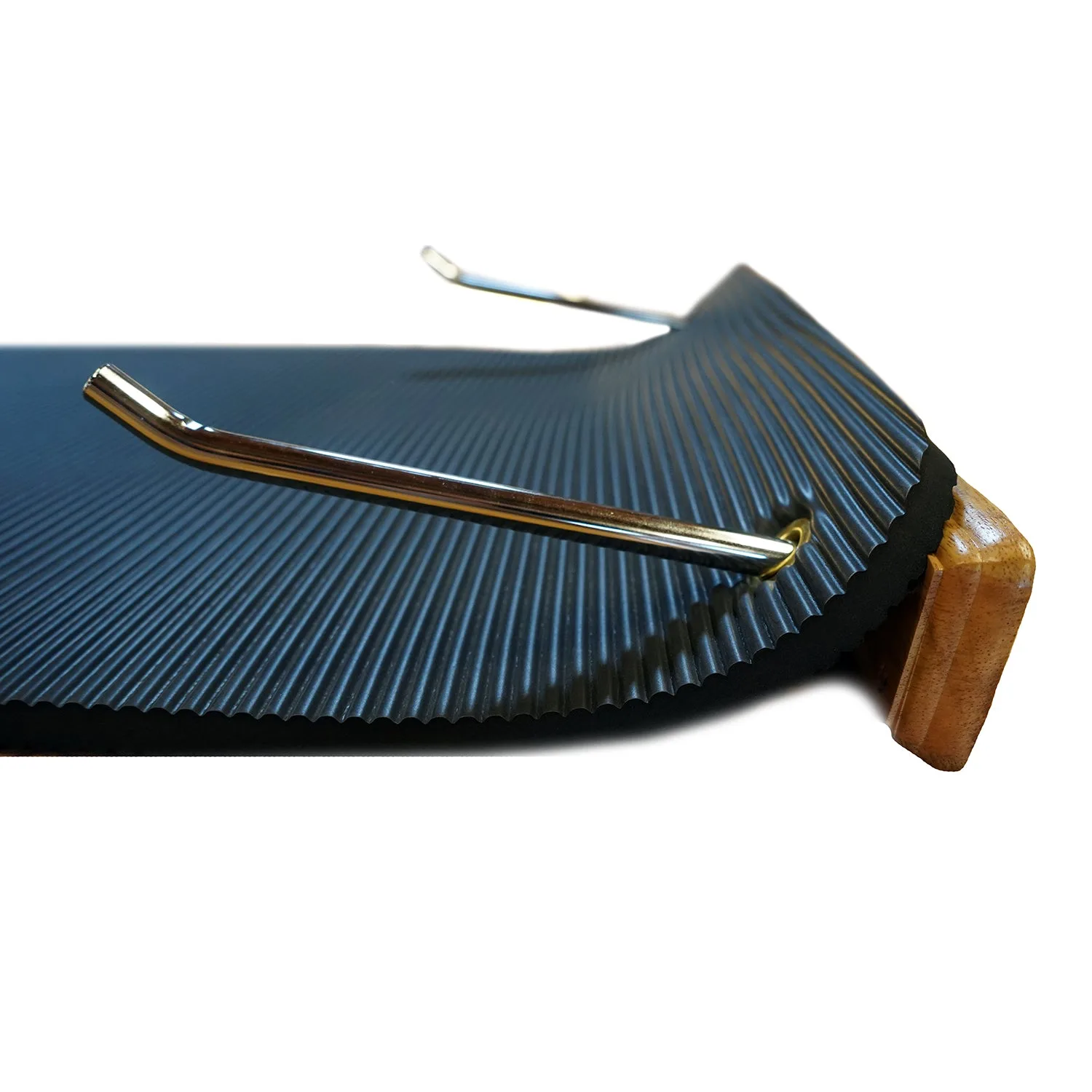
A yoga mat and an organic cotton yoga rug are not interchangeable versions of the same thing. A mat is usually a closed, anti-slip surface you place directly on the floor. A cotton rug is a woven textile that can be used on its own or on top of a mat, and its behaviour changes with sweat, surface and how you load your weight.
The practical question is not which is 'better' but which surface supports the practice you actually do. If you sweat heavily, practise outdoors, or use communal studio mats, the differences matter more than the label.
Grip: how sweat changes the equation
With many standard mats, the surface is designed to stay grippy as moisture builds up. The Ekotex Organic Cotton Yoga Rug works differently: the rug wicks sweat away as you become sweaty, but the grip does not increase as you sweat. That is a genuine trade-off, not a flaw to work around.
For a cotton yoga rug for hot yoga, this means you should expect the rug to feel drier against your skin rather than tackier. Some practitioners prefer that; others rely on the extra tack of a mat. If your practice depends on maximum slip resistance in a heated room, a mat may remain the more predictable choice.
Stability: flat floors versus uneven ground
On a flat studio floor, a mat gives you a consistent, cushioned base. Outdoors, the picture changes. The surface of the earth is rarely naturally flat, and a yoga mat will exaggerate bumps, leaving pockets where it does not lie flat and making practice uneven.
The Organic Cotton Yoga Rug is designed to adapt to the ground's contours, providing a flexible yet sturdy foundation. On grass or sand, the rug's weave incorporates the surface, which the maker describes as supporting a comfortable, slip-free session. That makes it a stronger candidate for outdoor practice than a mat that fights every dip in the ground.
What the rug is built for
-
Organic Cotton Yoga Rug: Spacious dimensions: 75 cm x 200 cm. A long, wide practice area gives you room to move without feeling confined, which matters more on a textile surface than on a compact mat.
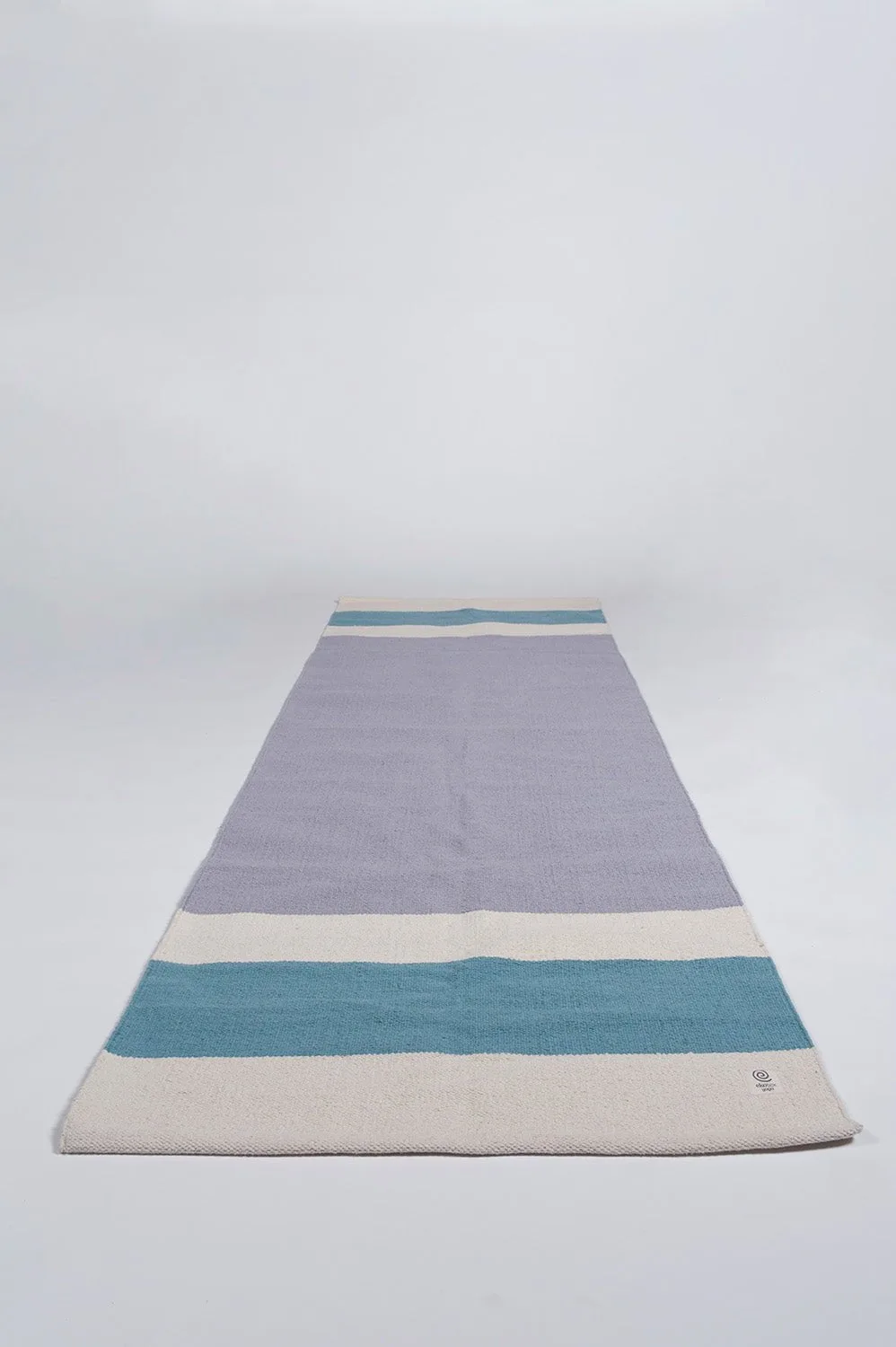
Organic Cotton Yoga Rug
-
Organic Cotton Yoga Rug: Use on top of a standard yoga mat, which is especially useful when using communal mats in the studio or gym. This is the clearest way to combine the two: the mat provides a base, the rug provides a clean, personal surface.
-
Organic Cotton Yoga Rug: Perfect for yoga sessions outside. Outdoor use is where the rug's contour-adapting weave has the biggest practical advantage over a mat.
The learning curve: core engagement
A woven cotton surface does not distribute your weight the way an anti-slip mat does. Depending on your current mat and practice style, you will need to support your weight more in some postures when practising on a rug. The maker notes that it can take a little getting used to, and that you will need to support yourself from your core.
For regular practitioners, that transition is described as easy and rewarding. If you are new to yoga or recovering from an injury, be honest about whether you want that added demand. A mat is the more forgiving starting point; a rug asks more of your stability.
Care: washing versus wiping
Mats are usually wiped down and air-dried. The Organic Cotton Yoga Rug is machine washable at 30C and should be air dried. After outdoor sessions, shake off sand at the end of practice and wash the rug when you get home.
That is a different maintenance rhythm: less frequent wiping, more occasional full washing. If you want a surface you can simply wipe and forget, a mat is simpler. If you are comfortable with a washable textile, the rug is straightforward to care for. The full care instructions supplied with the product should be your reference for anything beyond these basics.
Side-by-side: which surface fits your practice
- Hot, sweaty practice: The rug wicks sweat but does not become grippier as you sweat. A mat is often the more predictable choice for maximum slip resistance; the rug suits those who prefer a drier feel.
- Outdoor practice on grass or sand: The rug adapts to ground contours and its weave incorporates the surface, while a mat can exaggerate bumps and leave pockets. The rug is the stronger outdoor option.
- Communal studio mats: The rug is designed to sit on top of a standard mat, giving you a clean personal layer over a shared surface.
- Core engagement and weight support: The rug asks you to support your weight more in some postures and engage your core; a mat distributes weight differently and is easier to start with.
- Care routine: The rug is machine washable at 30C and air dried; mats are typically wiped. Choose based on whether you prefer washing to wiping.
Materials and sourcing at a glance
- Organic Cotton Yoga Rug: Made with organic cotton and supplied with a free organic cotton tote bag. The material choice is central to the rug's feel and care, and the tote adds practical value for carrying it to class or outdoors.
- Organic Cotton Yoga Rug: Made by a long-term partner in India, independently inspected to ensure fair pay and good working conditions; packaged in recyclable, plastic-free brown paper and paper tape. These are the sustainability and sourcing details the maker provides, relevant if those factors weigh in your comparison.
When a mat is still the better buy
If your practice is studio-based, you sweat heavily and want a surface that grips more as it gets wet, or you are new to yoga and want the most forgiving base, a standard mat remains the sensible default. The rug does not claim to replace that.
The Organic Cotton Yoga Rug makes most sense as an addition: a top layer for communal mats, a washable surface for outdoor sessions, or a different feel for practitioners who want to engage their core more. If you already own a mat, the rug extends what you can do rather than duplicating it.