Start with the right leaf-to-water ratio
Organic Ginger Lemon Black Tea is a loose leaf blend built on Assam black tea from South India, with ginger, lemongrass, natural lemon flavouring and lemon peels. Because the base is a full-flavoured black tea, the amount of leaf you use has a direct effect on how much of the lemon and ginger comes through in the cup.
The supplied preparation guidance is straightforward: use 5–7 grams of tea per 330 ml cup and steep in water at 100°C. That range gives you room to adjust. Start at 5 grams if you want a lighter, more lemon-forward cup; move toward 7 grams if you prefer the Assam backbone and ginger warmth to lead.
What the blend contains
-
Organic Ginger Lemon Black Tea: Ingredients: Black Tea Assam, South India*, ginger* (12%), lemongrass*, natural lemon flavouring, lemon peels* (3%). *Certified Organic. Knowing the proportions helps you predict the cup: ginger is a substantial 12% of the blend, while lemon peel is 3%, with natural lemon flavouring carrying the citrus note.
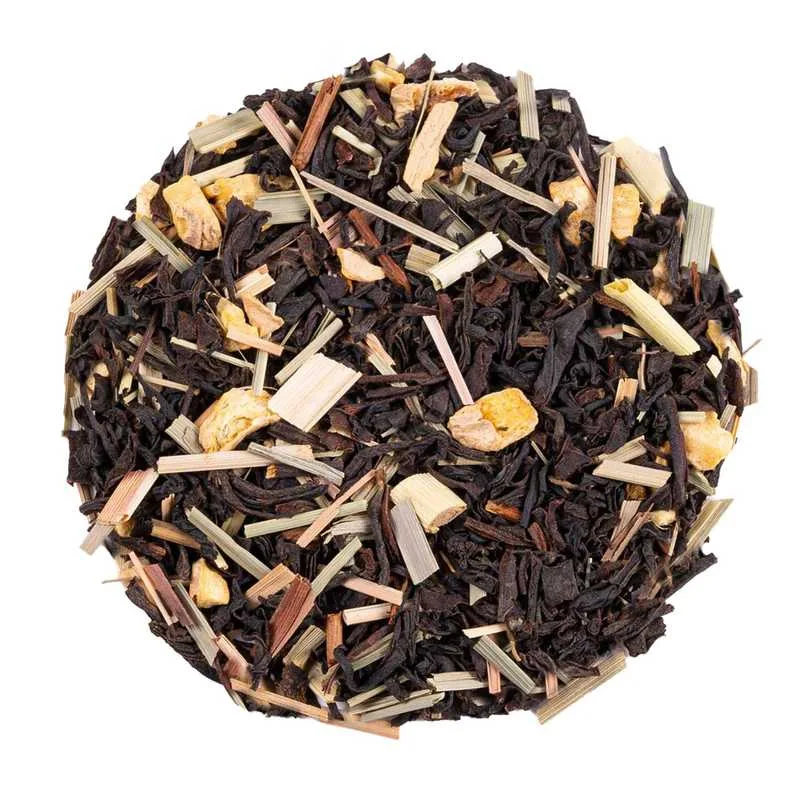
Organic Ginger Lemon Black Tea
-
Organic Ginger Lemon Black Tea: Water temperature: 100°C. Use 5 - 7 grams per 330ml cup. These are the two measurements that most affect your brew, so it helps to keep them visible while you steep.
How to brew a hot cup
The blend is designed for fully boiling water, so there is no need to cool the kettle before pouring. The main variable you control is steep time.
- Measure 5–7 g of loose leaf: Use a scale for accuracy. For a 330 ml cup, 5 g gives a lighter cup and 7 g a stronger one.
- Heat water to 100°C: Pour the water over the leaves in your infuser or teapot.
- Steep for approximately 5–10 minutes: The supplied guidance says to steep for approx. 5–10 minutes to find your ideal strength and flavour. Taste at 5 minutes, then decide whether to continue.
- Remove the leaves and serve: Separate the leaf from the liquor once the cup tastes right to you, so the brew does not keep intensifying.
Adjusting strength without losing the balance
If the cup tastes too sharp or tannic, shorten the steep rather than adding more leaf. If it tastes thin, increase the leaf weight toward 7 g before extending the time. The ginger and lemon are already fixed in the blend, so changing the ratio shifts the overall intensity rather than isolating one flavour.
The natural lemon flavouring and real lemon peel give the citrus note, while ginger and lemongrass sit behind the Assam base. A shorter steep tends to keep the lemon brighter; a longer steep pulls more of the black tea's strength forward.
Serving ideas for ginger lemon tea
The blend works hot, but its ginger-lemon profile also carries well into cold drinks. These serving suggestions use the brewed tea as a base.
- Serve hot with a slice of lemon: A fresh lemon slice reinforces the citrus note already in the blend without adding sweetener.
- Make an iced ginger lemon black tea: Brew a stronger cup using the upper end of the leaf range, then cool it and pour over ice. The Assam base holds up well to chilling.
- Add a light sweetener if you like: Honey or sugar can soften the ginger's warmth, but taste first — the natural lemon flavouring already gives the cup a distinct character.
- Pair with a meal: The robust Assam flavour and citrus edge make this a useful tea alongside breakfast or a savoury snack.
Choosing a size and storing the leaf
Organic Ginger Lemon Black Tea comes in two sizes: 125 g (approx. 20 cups) and 250 g (approx. 40 cups). At 5–7 g per 330 ml cup, the 125 g pouch is a reasonable starting point if you want to try the blend before committing to a larger amount, while the 250 g size suits a regular daily cup.
The supplied information does not include a specific storage method or shelf life. As a practical starting point, keep the leaf in a sealed container away from heat, light and moisture, and check the packaging for any further guidance. Do not assume a best-before date that is not printed on the pack.
Size options at a glance
- Organic Ginger Lemon Black Tea: Available sizes: 125g (Approx 20 Cups) and 250g (Approx 40 Cups). The cup estimates assume a standard serving, so your actual yield depends on whether you brew closer to 5 g or 7 g per cup.