The real fork in the road: caffeine and grind
These two Organic Perform coffees look like siblings, but they differ on two points that decide most purchases. The whole bean is a dark roast sold as whole bean, so you control the grind. The decaf is a ground medium roast processed with Swiss Water® Process, so it arrives ready for a brewer that takes ground coffee. Neither difference is a quality ranking; they simply fit different routines.
If your question is which one to buy, start with when you drink coffee and what equipment you own. The rest of the choice follows from those two facts.
Side-by-side on the facts that are supplied
The table below uses only supplied catalog details. Where a detail is not in the record, it is marked as not confirmed rather than guessed.
- Caffeine: Whole bean: caffeinated coffee with functional ingredients. Decaf: Swiss Water® Process decaf for those who want to skip caffeine.
- Roast and form: Whole bean: dark roast, whole bean. Decaf: medium roast, ground.
- Grind control: Whole bean lets you grind for your method. Decaf comes pre-ground, so the grind is fixed by the supplier.
- Size: Both are listed in a 12oz size.
- Suggested pairing from the catalog: Whole bean is paired with Sweet and Creamy Creamer. Decaf is paired with Mocha Creamer for a caffeine-free chocolatey drink.
What each bag actually contains
-
Organic Perform Functional Mushroom Whole Bean Dark Roast Coffee: Organic Perform Functional Mushroom Whole Bean Dark Roast Coffee is described as bold, smooth, and infused with functional ingredients beyond caffeine. This is the choice for a full-caffeine cup where you also want the functional mushroom blend.
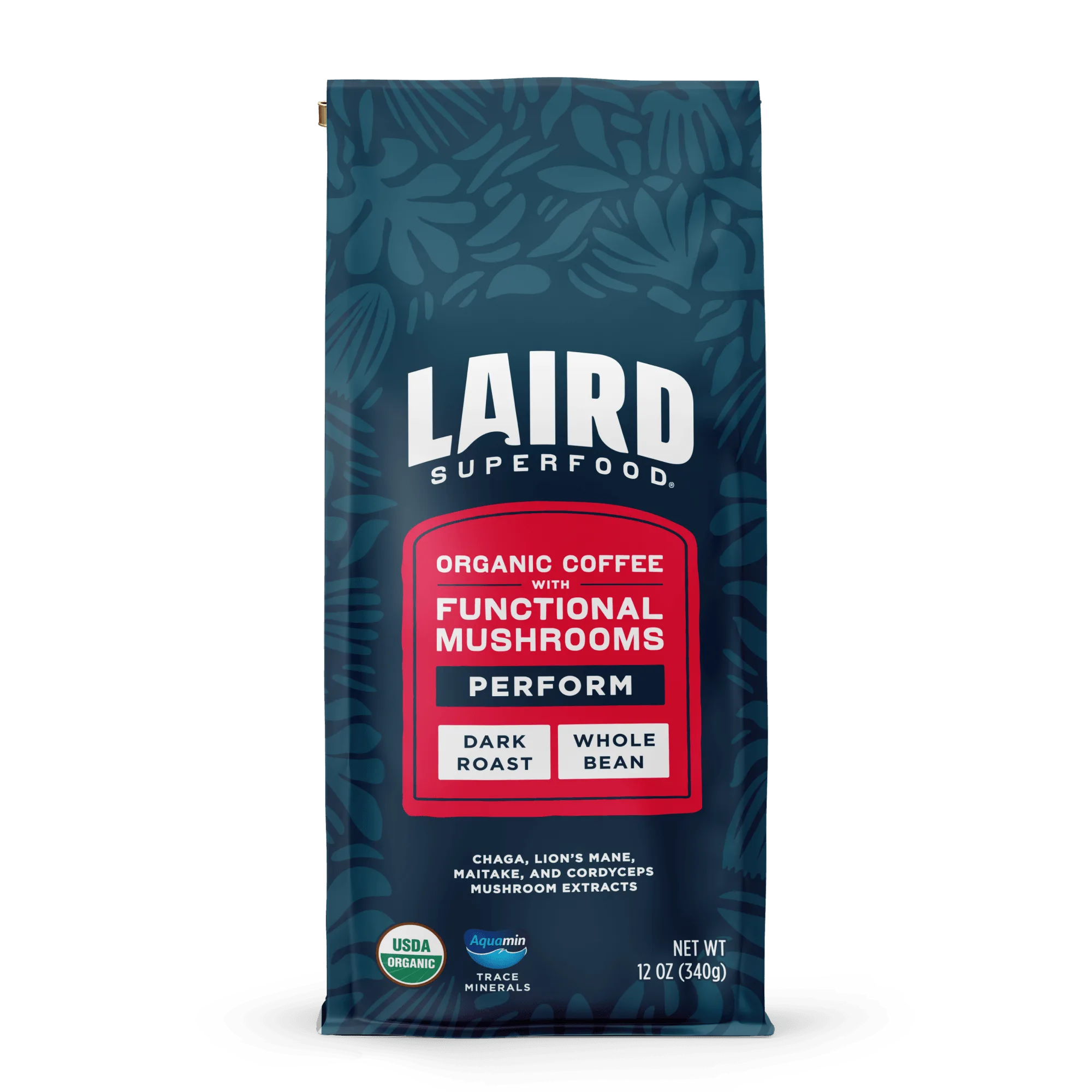
Organic Perform Functional Mushroom Whole Bean Dark Roast Coffee
-
Organic Decaf Perform Functional Mushroom Ground Medium Roast Coffee: Organic Decaf Perform Functional Mushroom Ground Medium Roast Coffee uses Swiss Water® Process, described as a premium, chemical-free decaffeination method that retains the coffee flavor profile. This is the choice when you want the Perform format without caffeine, including later in the day.
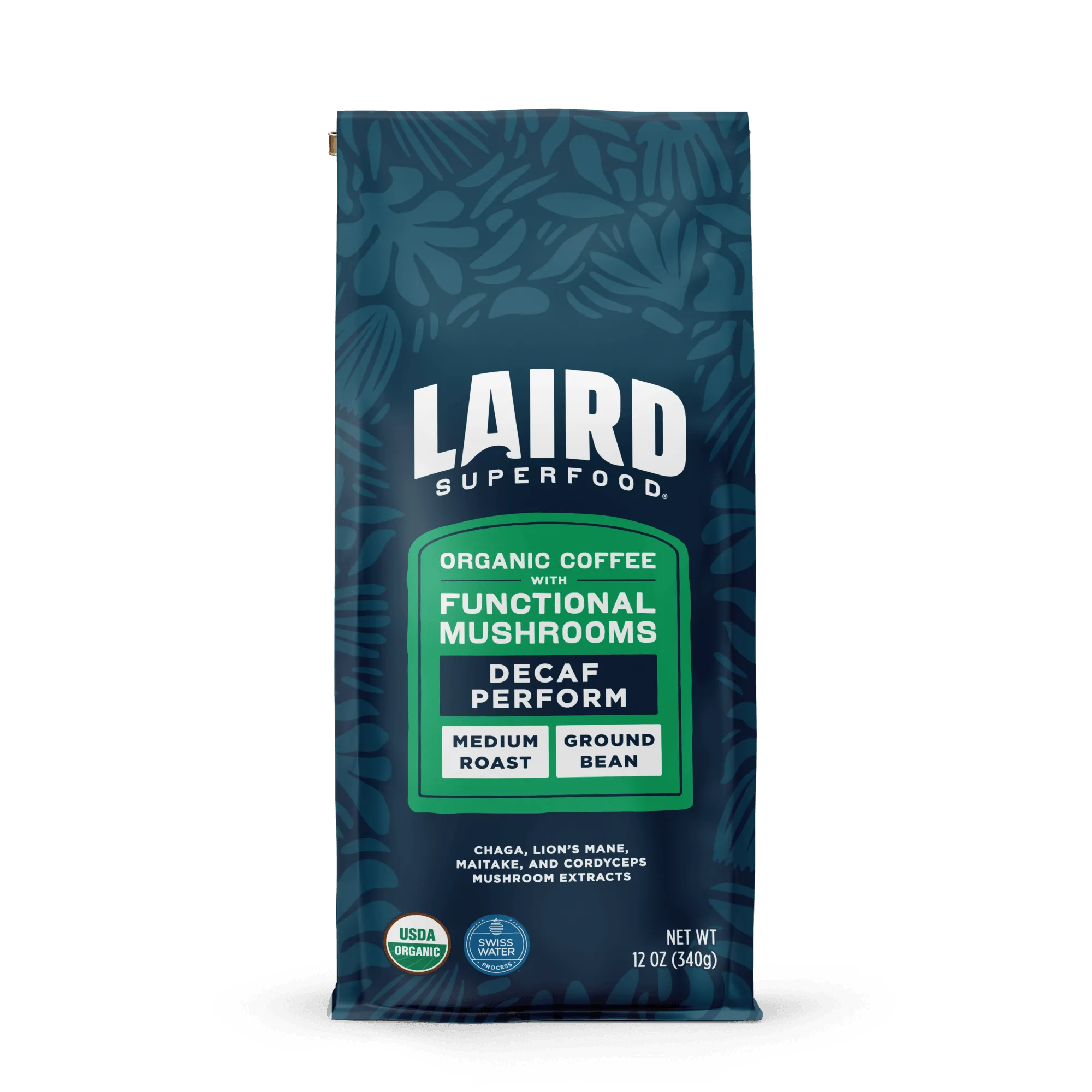
Organic Decaf Perform Functional Mushroom Ground Medium Roast Coffee
When whole bean dark roast is the better buy
Choose the whole bean if you already own a grinder and enjoy adjusting grind size for different brewers. Because the bag is whole bean, you are not locked into the supplier's grind. That matters if you switch between a drip machine, pour-over, or press at home.
The dark roast profile also suits drinkers who like a bolder cup and plan to add a creamer. The catalog pairs it with Sweet and Creamy Creamer, which suggests a straightforward, dessert-adjacent cup rather than a subtle one. If you drink coffee in the morning and want caffeine, this is the direct match.
The tradeoff is prep: you need a grinder and a little more time. If you do not own a grinder, whole bean is the wrong format no matter how good the roast sounds.
When decaf ground medium roast makes more sense
Choose the decaf if caffeine keeps you up, if you limit caffeine for health reasons, or if you want a coffee after dinner. The Swiss Water® Process detail matters to shoppers who prefer to avoid chemical decaffeination methods, though the catalog does not list every step of the process.
Because it is pre-ground, it fits a standard drip brewer or any method that accepts a medium grind without extra equipment. The medium roast is also a reasonable base for the Mocha Creamer pairing the catalog suggests, giving you a caffeine-free chocolatey option.
The tradeoff is flexibility: you cannot change the grind for a different brewer. If you own an espresso machine or a brewer that demands a specific grind, check whether the pre-ground format suits it before buying.
Grind and brew notes for the whole bean bag
The supplied record does not include a grind chart or brewing recipe, so treat any specific grind size as your own starting point rather than a manufacturer instruction. A practical approach is to grind a small amount, brew one cup, and adjust finer or coarser based on how the cup tastes and how long the water takes to pass through the bed.
For the decaf, the grind is already set. If the cup runs too fast or too slow in your brewer, the grind is not adjustable, so adjust your dose or contact the brewer guidance instead. The catalog does not confirm which brew methods the pre-ground decaf is optimized for, so a first test batch is the honest way to find out.
A quick decision path
Use these questions in order; the first one that applies usually settles it.
- Do you want caffeine?: Yes: whole bean dark roast. No, or not after a certain hour: decaf ground medium roast.
- Do you own a grinder and enjoy dialing in a brew?: Whole bean gives you that control. No grinder: choose the decaf ground format or another pre-ground option.
- Are you shopping for evenings or a caffeine-free dessert cup?: The decaf is the direct fit, especially with the Mocha Creamer pairing named in the catalog.
- Do you want the boldest, simplest morning cup?: The whole bean dark roast is the bolder of the two roasts in the supplied details.
What the supplied information does not settle
The records do not list ingredient panels, allergen statements, exact caffeine amounts, or storage instructions for either coffee. They also do not confirm whether the functional mushroom blend is identical across the two bags. If you have a specific allergy or dietary requirement, check the packaging label rather than relying on this comparison.
Both are listed at 12oz, and the catalog shows comparison prices, but prices can change. Treat the price as a snapshot and confirm at checkout.