Brewing Organic Pure Relief Tea
What water temperature should I use for Organic Pure Relief Tea?
The supplied specifications list 90–100°C. That range covers everything from just-off-boil water to a full boil, so you do not need a thermometer to get close. If you boil water and let it sit for a moment, it will fall into that range.
How much loose leaf tea goes into a cup?
Use 4–5 grams per 330ml cup. A kitchen scale is the most accurate way to measure; if you do not have one, start with the lower end of the range and adjust after tasting. The 125g pouch is listed as approximately 30 cups, and the 250g pouch as approximately 60 cups, which can help you plan how long a bag will last.
How long should I steep it?
The supplied product record mentions steeping in its preparation notes but the selected evidence does not include a specific steeping time. Rather than guess, taste the tea every minute or so after the first few minutes and stop when the flavor suits you. Because the blend includes liquorice root, a longer steep will taste sweeter and more intense.
Does this tea contain caffeine?
The ingredients are nettle, birch leaves, rose hip, horsetail, anise, fennel, verbena, and liquorice root — all herbs, with no tea leaves (Camellia sinensis) listed. The supplied information does not state a caffeine content, so treat it as an herbal blend rather than a confirmed caffeine-free product if you are sensitive to caffeine.
What the label tells you
-
Organic Pure Relief Tea: Ingredients: nettle*, birch leaves*, rose hip*, horsetail*, anise*, fennel*, verbena*, liquorice root*. *Certified Organic. Knowing the full blend helps you judge the flavor — anise and fennel bring a sweet, aromatic note, while liquorice root adds sweetness — and lets you check for anything you prefer to avoid.
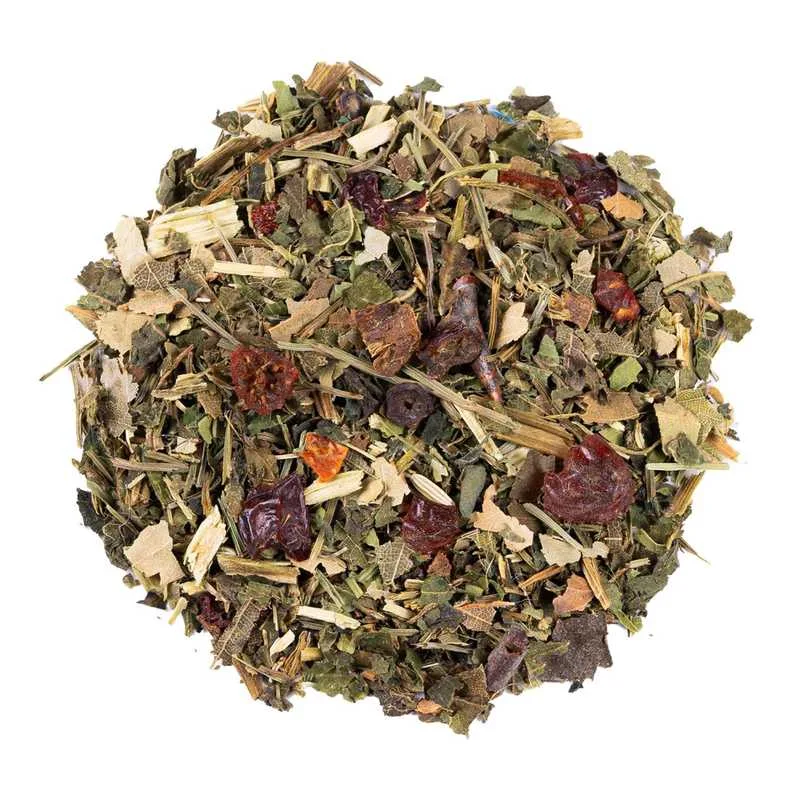
Organic Pure Relief Tea
-
Organic Pure Relief Tea: Water temperature: 90–100°C; use 4–5 grams per 330ml cup. These are the two measurements that most affect your cup, so start here before adjusting anything else.
-
Organic Pure Relief Tea: Available in 125g (Approx 30 Cups) and 250g (Approx 60 Cups). If you plan to drink it regularly, the larger size saves you from reordering as often; the smaller size is a lower-commitment way to try the blend.
-
Organic Pure Relief Tea: The tea is unflavoured and made only with organic ingredients. If you want a herbal tea without added flavorings, this is a relevant detail to weigh against blends that include natural or artificial flavors.
When to drink it and how to fit it into your day
When is the best time to drink Organic Pure Relief Tea?
The product description frames it as a tea for unwinding after a tiring day, so evening or late afternoon is a natural fit. Because the blend is herbal and the supplied information does not list caffeine, it is a reasonable choice if you want a warm drink later in the day. If you are sensitive to caffeine or to any herb, check with a healthcare professional before making it a daily habit.
Can I drink it every day?
The supplied information does not set a daily limit or recommended frequency. The blend includes liquorice root, and some people prefer to moderate how much liquorice they consume; if that applies to you, ask a healthcare professional. Otherwise, treat it as you would any herbal tea and pay attention to how you feel.
Is it a good choice before bed?
The description emphasizes relaxation and unwinding, which makes it a sensible evening option. That said, the supplied information does not make any sleep-related claims, so think of it as a comforting ritual rather than a sleep aid.
Buying and storing questions
How should I store the loose leaf tea?
The supplied information does not include specific storage instructions. As a general habit, keep loose leaf tea in an airtight container away from light, heat, and strong odors. The 125g and 250g pouches are sized for regular drinking, so decanting into a smaller tin can help if you open the bag often.
Does it contain any common allergens?
The ingredient list includes anise, fennel, and liquorice root, but the supplied information does not state whether the product is free from any specific allergen or produced in an allergen-free facility. If you have a known allergy, read the packaging or contact the seller before buying.
What does it taste like?
The blend is unflavoured, so the taste comes from the herbs themselves. Anise and fennel give a sweet, aromatic character, and liquorice root adds sweetness. Nettle, birch, rose hip, horsetail, and verbena round out the blend with a more grassy, tart background. If you prefer a sweeter cup, a longer steep will draw out more of the liquorice; if you prefer it lighter, use the lower end of the 4–5 gram range.