Start with what you want from a cup
If you're looking for a caffeine-free alternative to coffee or black tea, organic rooibos tea is a natural choice. Its gentle earthy flavor with hints of vanilla and honey makes it a comforting, warm beverage that fits well into a relaxing routine. But not all rooibos is the same — understanding grades, quality signs, and what the label actually tells you can help you pick the right bag.
This guide focuses on the practical decisions you'll face when buying organic red bush tea, so you can choose with confidence.
Understanding rooibos tea grades and quality
Rooibos is typically graded by the length and consistency of the cut leaves. The main grades are:
Superior grade — long, uniform needle-like cuts with a deep red color. This grade brews a smooth, rich cup with less dust at the bottom of your pot.
Standard grade — shorter cuts with more variation. It still brews a flavorful cup but may have more fine particles.
Chopped or fine grade — small pieces and some dust. This is often used in tea bags and brews quickly, though the flavor can be less complex.
When you buy organic rooibos, the grade affects both the taste and how much sediment you’ll find in your cup. Loose-leaf superior grade gives you more control over strength and clarity.
What the organic label really means
An organic certification means the rooibos was grown without synthetic pesticides or fertilizers. For this tea, the supplied catalog confirms it is 100% organic, so you can trust that the plant was cultivated under those standards.
However, organic does not automatically mean a specific grade or flavor profile. Always check the product description for details on taste and cut size to match your preference.
Flavor profile: what to expect
According to the supplied catalog, this organic rooibos tea features a reddish color with a gentle earthy flavor and hints of vanilla and honey. That natural sweetness means many drinkers enjoy it without added sugar or sweeteners.
If you prefer a stronger, more robust cup, you can steep a bit longer or use more leaf. For a lighter infusion, reduce the steep time or leaf quantity. The absence of caffeine makes it a good choice for evening relaxation.
Product facts for your buying decision
-
Organic Rooibos Tea: Premium ORGANIC ROOIBOS TEA. Caffeine free, it makes a great alternative to coffee, green or black tea. It features a redish colour with a gentle earthy flavour with hints of vanilla and honey. This confirms the tea is caffeine-free and gives you a clear flavor expectation — important if you're switching from caffeinated drinks or want a naturally sweet cup.
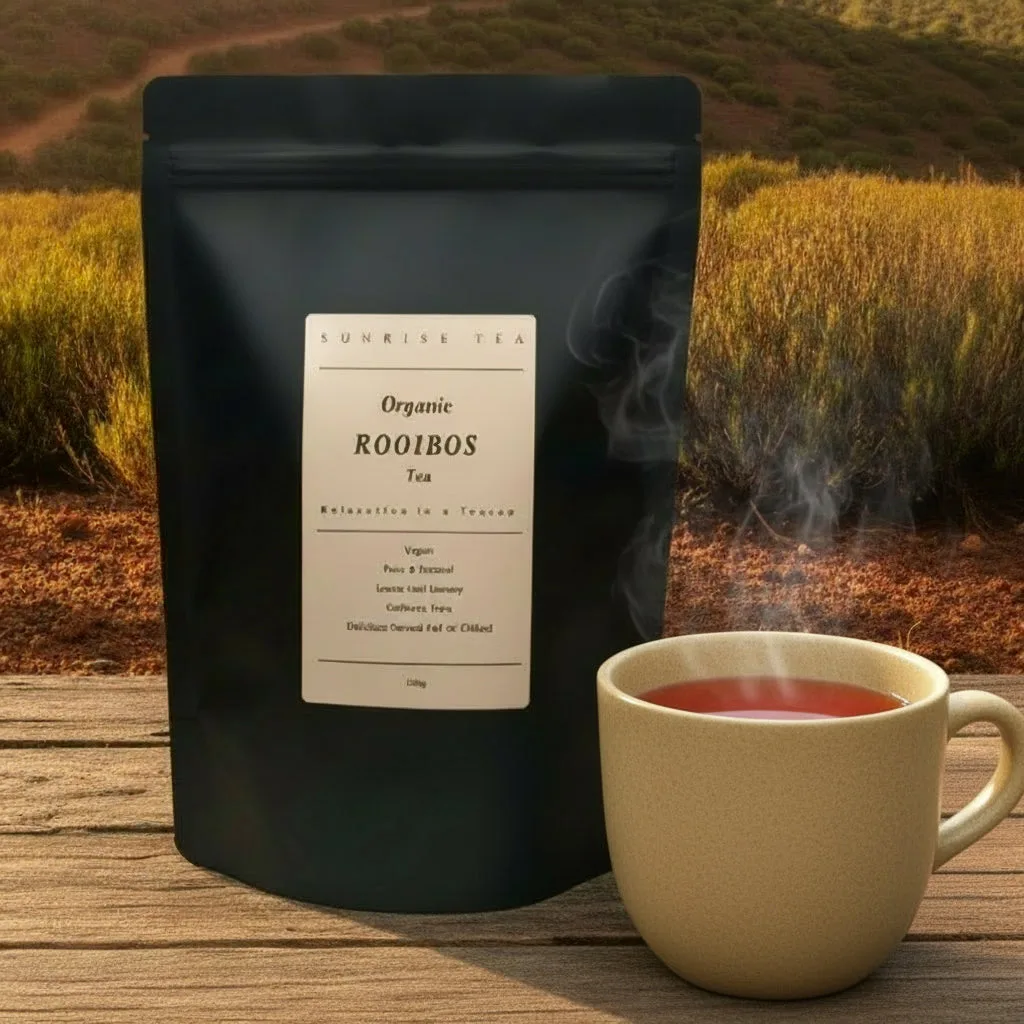
Organic Rooibos Tea
-
Organic Rooibos Tea: ✔ 100% Organic The organic certification is verified, so you can be confident no synthetic chemicals were used during cultivation.
-
Organic Rooibos Tea: Available sizes: 50g, 100g, 200g Choosing the right size depends on how often you drink rooibos. A 200g bag suits daily drinkers, while 50g is good for trying it out.
Choosing the right size for your routine
The supplied catalog shows three size options: 50g, 100g, and 200g. If you're new to rooibos, start with a smaller bag to see if the flavor fits your taste. Regular drinkers will find the larger sizes more economical and convenient.
Rooibos stores well in a cool, dark place, so buying a larger quantity is practical if you drink it daily.
Caffeine-free and traditional uses
Rooibos is naturally caffeine-free, making it a suitable choice for anyone avoiding stimulants. The catalog notes it has been traditionally regarded as an antioxidant-rich, stress-relieving tea and may contribute to heart health.
Important: These are traditional uses, not medical claims. Always consult a healthcare practitioner before using herbs for health purposes, especially if you are pregnant, on medication, or have health concerns.
Practical trade-offs to consider
The main trade-off when buying organic rooibos is between grade and price. Superior grade loose-leaf costs more but delivers a cleaner, more refined cup. Standard or fine grades are more budget-friendly and still flavorful, though you may get more sediment.
Another trade-off is bag size versus freshness. A larger bag is more economical per gram, but if you drink rooibos infrequently, a smaller bag ensures you finish it while the flavor is at its peak.