Quick answer
Start by emptying the desk surface completely, then sort every loose sheet into three piles: action, archive, and recycle. Give the action pile a document wallet, attach a pen loop to the cover or planner you carry most, and put back only what you used this week. A document wallet controls paper; pen loops stop pens from migrating. Together they remove the two biggest sources of desktop clutter.
Most desks do not fail because of too much stuff. They fail because paper and pens have no fixed home, so every surface becomes a temporary landing spot. A document wallet gives loose pages one destination, and pen loops keep your most-used pen attached to whatever you carry, rather than rolling across the desk.
This is an ordered process, not a shopping list. Work through the steps in sequence over one sitting, and you will finish with a desk you can reset in about five minutes a day.
Step 1: Empty the desk and sort paper into three piles
Clear the entire surface, including the drawer you never open. As you pick up each item, ask one question: did I use this in the last seven days? Anything paper-based goes into one of three piles: action, archive, or recycle. Do not read documents during this pass. Reading is how a twenty-minute tidy becomes an afternoon.
The action pile is the only one that stays within reach. Archive goes into a document wallet or box and leaves the desk entirely. Recycle goes out of the room immediately. If you hesitate on an item, it belongs in archive, not action.
- Common mistake: sorting into more than three piles. Four categories or more stalls the process.
- Checkpoint: your action pile should fit inside one document wallet. If it does not, you are keeping too much within reach.
Step 2: Choose and load your document wallet
A document wallet works best when it holds only current, active paperwork, not your whole filing history. Load the action pile in order of when you will need it, with the most urgent item at the front. If your wallet has multiple compartments, use one for bills and forms, one for notes you are still writing on, and one for items you need to hand to someone else.
Position the wallet where you sit, not where you stand. If it lives on a shelf across the room, paper will drift back onto the desk within a week. A wallet that stays within arm's reach is the one that gets used.
- Common mistake: treating the wallet as permanent storage. Clear it weekly so it stays a working file.
- Checkpoint: you should be able to open the wallet and find any active document in under ten seconds.
Step 3: Decide where pen loops should live
Pen loop organisation is about matching the loop to the object you actually carry. Put a loop on your notebook, planner, or document wallet if that is what leaves the desk with you. If your pen stays at the desk, a loop on the inside cover of a jotter keeps it from rolling under paper.
Limit yourself to two loops in active use: one for your everyday pen, one for a backup or a different ink colour. More than that and you will spend time deciding which pen to grab, which defeats the purpose.
- Common mistake: looping a pen that is too thick for the loop, which stretches it and shortens its life.
- Checkpoint: pick up your notebook or wallet and shake it gently. The pen should stay put.
Step 4: Return only what you used this week
Before anything goes back on the desk, apply the seven-day test again. If you did not touch it this week, it does not earn surface space. That includes chargers, cables, spare notebooks, and the second pen cup you have been meaning to deal with.
What remains should be the tools for your current work: your document wallet, one notebook or jotter, one or two pens, and whatever device you use daily. Everything else moves into a drawer, a box, or out of the room.
- Common mistake: keeping a decorative item that has become a resting place for keys and receipts.
- Checkpoint: you should be able to see at least half of the desk surface when you are not working.
Step 5: Build a five-minute daily reset
A desk stays organised because of a short, repeatable routine, not because of a big annual clean. At the end of each working day, return loose paper to the document wallet, clip your pen back into its loop, and put anything that does not belong on the desk into one small tray or drawer.
Once a week, empty the wallet of anything completed and move it to archive. This single habit is what stops the wallet from becoming a second clutter pile, and it keeps document wallet organisation working long after the initial tidy.
- Common mistake: doing the reset only when the desk is already messy. Five minutes daily beats an hour monthly.
- Checkpoint: if the reset takes longer than five minutes, something on the desk does not have a home yet.
Your desk reset, step by step
- Clear everything: Remove all items from the desk surface and the main drawer, then sort paper into action, archive, and recycle. Checkpoint: the action pile fits inside one document wallet.
- Load the document wallet: Place active paperwork in the wallet in order of urgency, with the most needed item at the front, and keep the wallet within arm's reach. Checkpoint: any active document is findable in under ten seconds.
- Attach your pen loops: Fit a loop to the notebook, planner, or wallet you carry most, and limit active loops to two pens. Checkpoint: shake the item gently and the pen stays in place.
- Return only this week's tools: Put back the wallet, one notebook or jotter, one or two pens, and your daily device. Everything else leaves the surface. Checkpoint: at least half the desk surface stays visible.
- Reset daily and clear weekly: Spend five minutes each evening returning paper to the wallet and pens to their loops, then empty completed paperwork from the wallet once a week. If the reset runs long, an item on the desk still has no home.
Products that support this routine
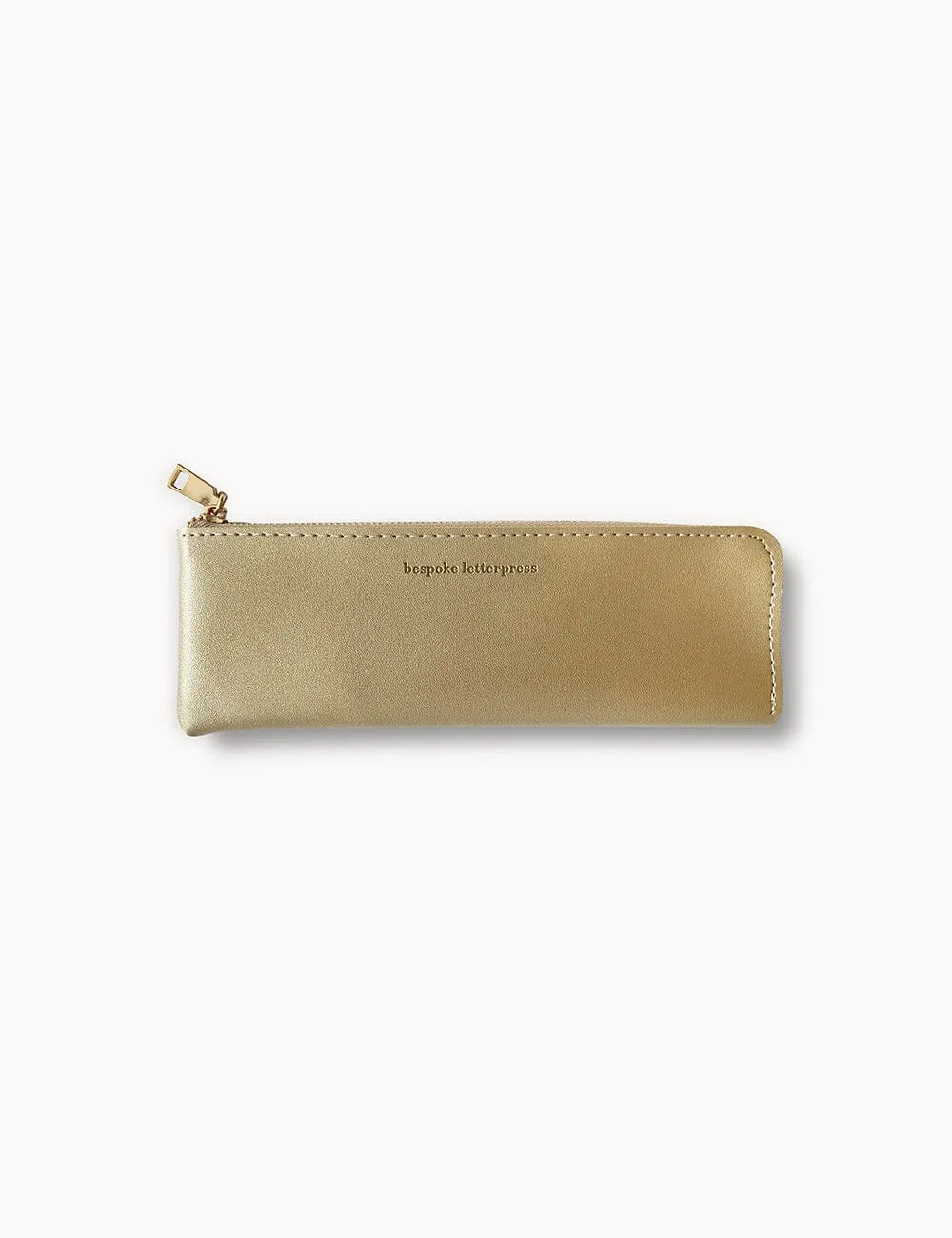
- Pencil Case Slim - Gold: A slimline case in PU vegan leather, sized 210 x 70mm. Its slim profile fits inside a document wallet or bag pocket, so pens and small tools travel with your paperwork instead of scattering across the desk.
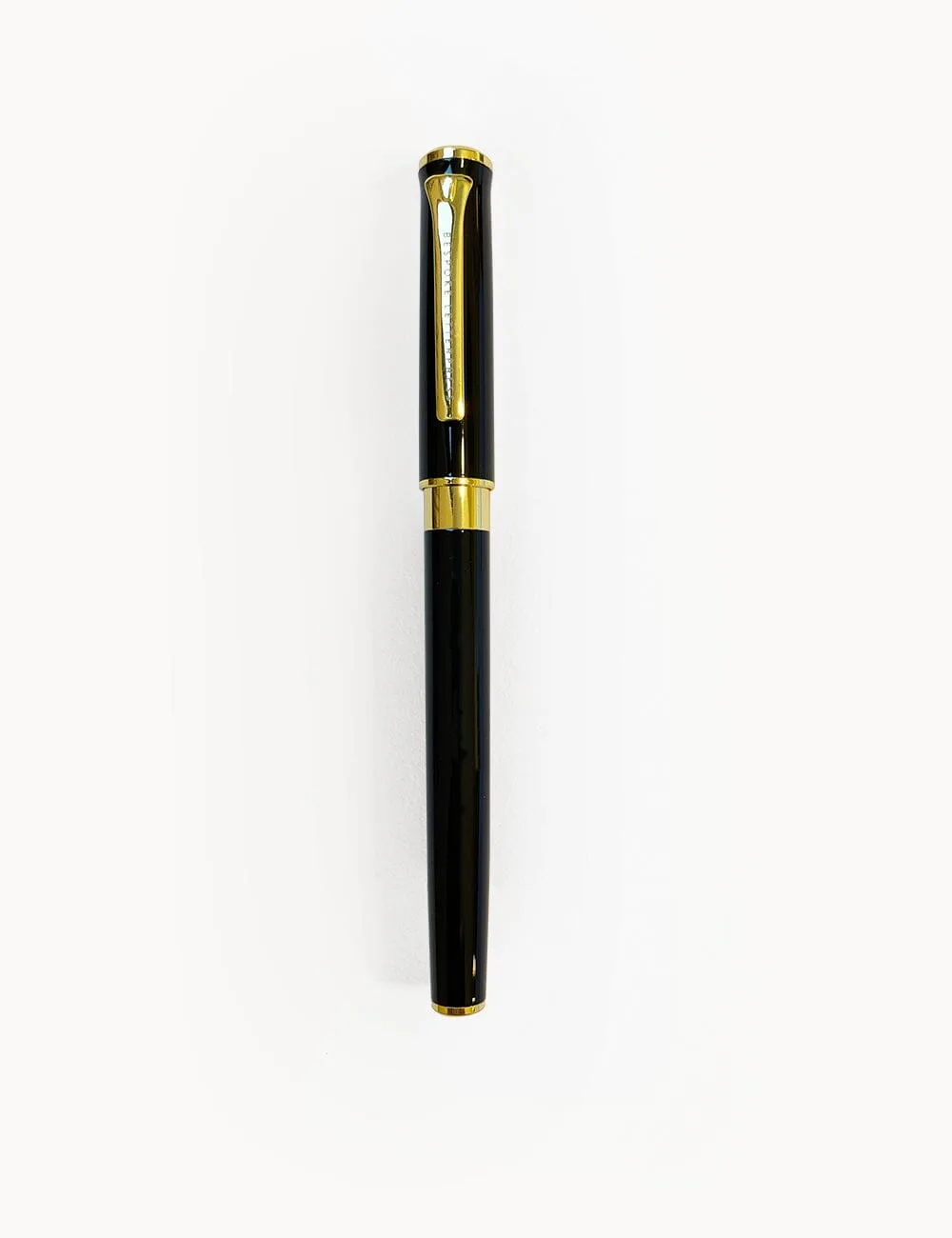
- Black Executive Gel Ink Pen (Boxed): A metal roller ballpoint gel ink pen, 135mm long, with inlaid gold detailing and a clip cap, and it fits the Bespoke No. 112 ink refills. The clip cap and pen clip give you a reliable anchor point for a pen loop, and the refill compatibility means the pen you loop in stays in service rather than being replaced.
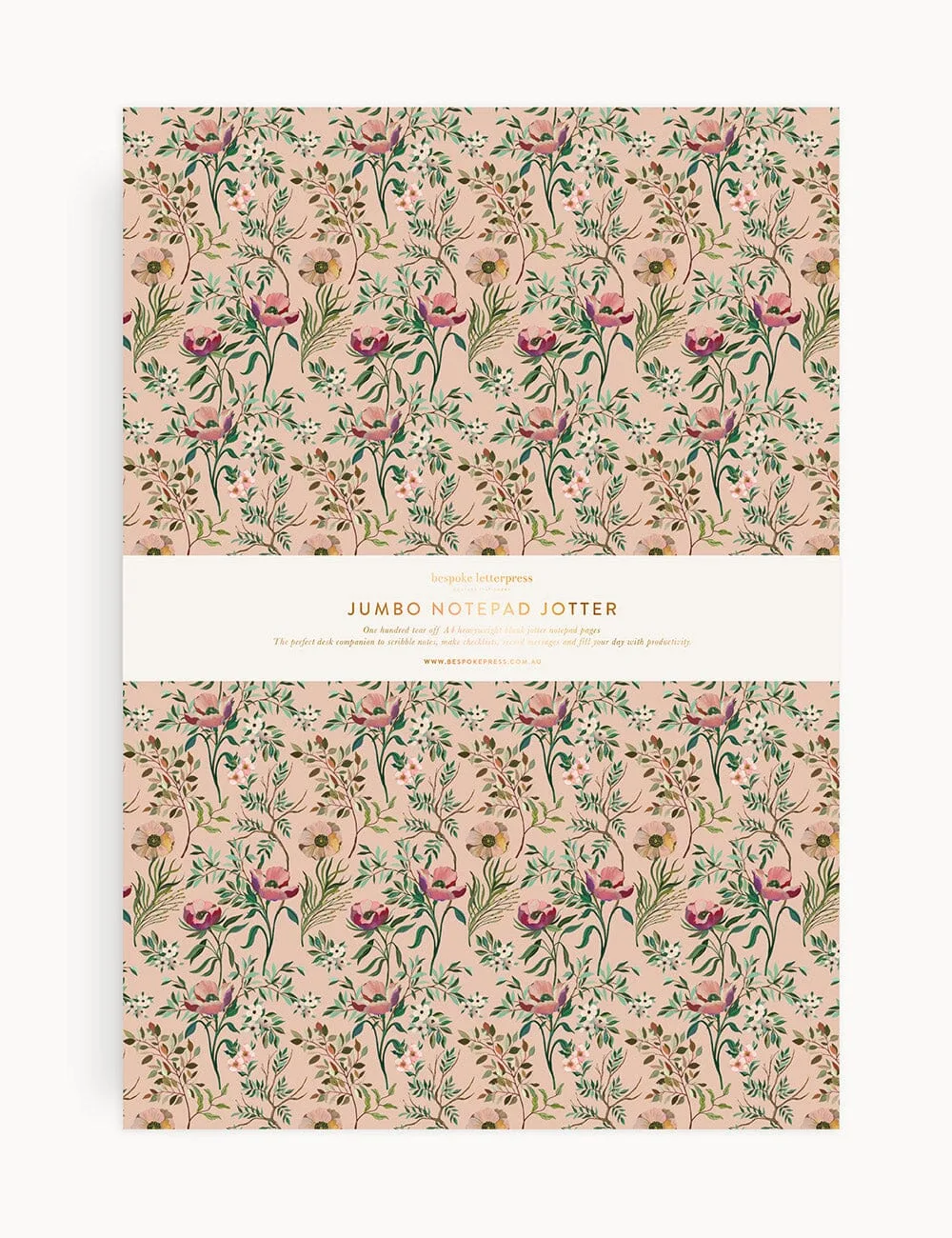
- Dancing Poppies Notepad Jumbo Jotter: An A4 jumbo notepad jotter with 100 heavyweight tear-off blank pages, a gummed binding edge, a full wrap-around cover, and gold foil and gilded edges. A tear-off pad handles the quick notes that would otherwise become loose paper on the desk, and the A4 size keeps checklists and messages in one place.
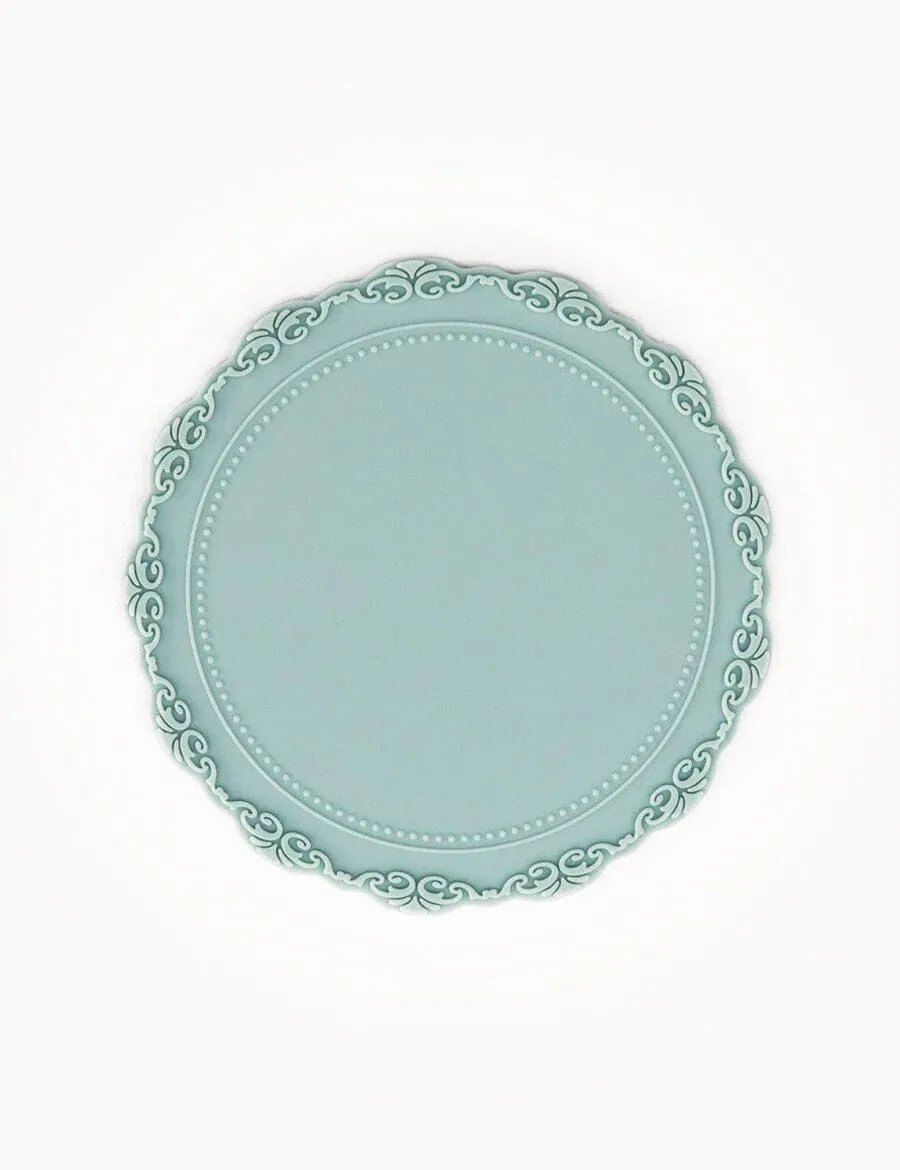
- Wax Silicone Mat - Duck Egg Blue: A silicone wax mat measuring 100mm x 100mm x 5mm, used with the Bespoke Letterpress Wax Accessories Collection. A small dedicated mat gives sealing and small craft tasks their own defined spot, so wax and tools do not spread across your working surface.
A document wallet and a couple of pen loops will not organise your desk on their own, but they give paper and pens a fixed home, which is what most desks are missing. Run the five steps once, then protect the result with a five-minute daily reset.