Quick Answer
The Ostheimer Squirrel Jumping is a beautifully handcrafted wooden figurine that invites open-ended, imaginative small world play. Use the steps below to inspire creative scenarios, build fine motor skills, and safely integrate this natural toy into your child's play space.
Why Choose a Wooden Squirrel for Play
Unlike plastic figurines with fixed poses, the Ostheimer Squirrel Jumping has a simple, flowing shape that leaves room for a child's imagination. The warm wood and plant-based colors fit naturally into Waldorf-inspired environments, blending with blocks, silks, or nature treasures. Its compact size makes it easy for small hands to grasp and move, encouraging storytelling without screens or sounds.
One trade-off: this is a solid, non-articulated toy. The squirrel does not have moving parts—its charm is in the pose and material quality. If your child loves dolls with movable limbs, they may initially expect more action. However, this very stillness is what makes it perfect for quiet, focused play where the story comes from the child.
5 Play Ideas for the Ostheimer Squirrel Jumping
- 1. Create a Mini Forest Floor: Spread a green or brown playsilk or a piece of felt on a table. Add small stones, pine cones, and a few leaves. Place the squirrel on its own or alongside other Ostheimer animals. Let your child decide what the squirrel is doing—gathering nuts, leaping between trees, or watching for friends. Common mistake: overcrowding the scene. Leave empty spaces so the story can breathe.
- 2. Use the Squirrel in a Daily Ritual: Each morning, invite your child to move the squirrel to a new spot in the room or on a nature table. Talk about what the squirrel sees, hears, or feels today. This builds observation skills and a gentle routine around care for objects. Checkpoint: keep the squirrel in a low, accessible place so your child can reach it without help.
- 3. Combine with Counting and Sorting: Gather a small bowl of acorns, pebbles, or wooden beads. Ask your child to feed the squirrel a certain number of items. The squirrel can be the 'customer' at a pretend market or a character collecting supplies for winter. Common mistake: using tiny items that are choking hazards. Always supervise children under 3 and use age-appropriate loose parts.
- 4. Build a Movement Story: Encourage your child to move the squirrel through a series of poses—jumping across a pillow, balancing on a book, peeking behind a block. Describe the action: 'The squirrel leaps from branch to branch!' This combines gross motor movement with role-play. Checkpoint: ensure the play area is clutter-free to avoid tripping. The squirrel is solid but can be damaged if stepped on.
- 5. Explore Seasons with the Squirrel: Change the backdrop as the weather changes. In autumn, add dried leaves and pretend nuts. In winter, make a nest of white wool. In spring, include felt flowers. The squirrel's jumping pose works well in all settings and helps children connect toy play with the real world. Common mistake: forgetting to rotate the scene. A stale backdrop reduces engagement—swap it every few weeks.
Product Details
-
Ostheimer Squirrel Jumping: Handcrafted in Germany for over 70 years using sustainable European wood and plant-based colours finished in organic oil. Waldorf-inspired, vegan-friendly, and exceeds strict EU safety standards. Recommended for ages 3+. This means you get a non-toxic, durable toy that is safe for young children and supports eco-conscious parenting—no harsh chemicals or sharp edges.
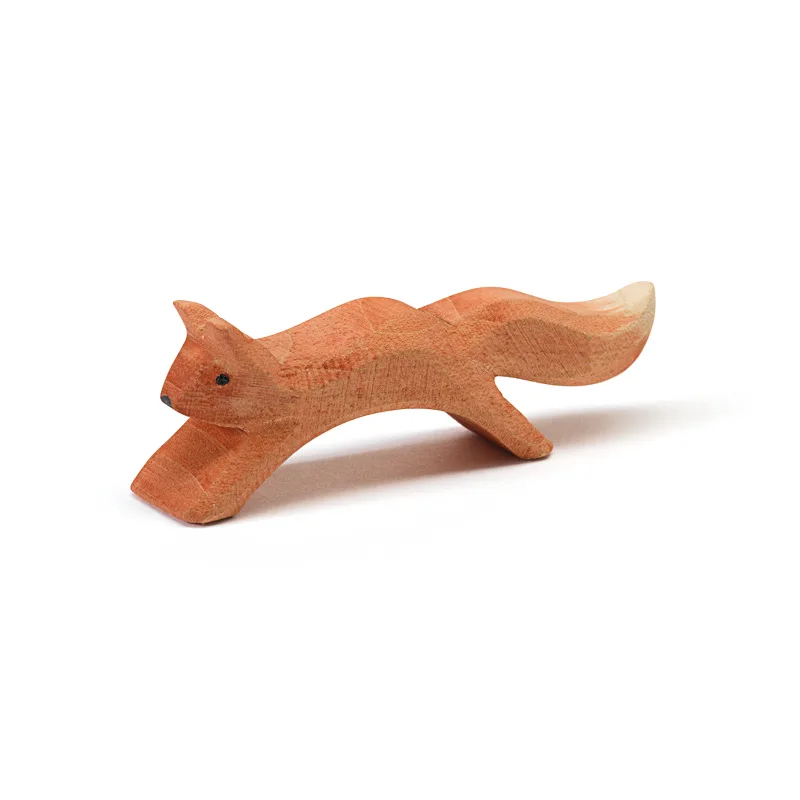
Ostheimer Squirrel Jumping