Why positional words matter for early language
Words like over, under, above, below, and between are more than just directions—they help children describe the world around them. Understanding these spatial concepts supports early language skills and gives kids the vocabulary to follow instructions, tell stories, and solve problems.
Over Under Opposite is a hands-on learning product from KiwiCo designed to engage curious kids in playful exploration of direction, position, and contrast. It encourages understanding of spatial relationships and opposites through interactive play. Because it is suitable for curious kids of all ages, you can adapt the activities to your child's level.
What you get with Over Under Opposite
-
Over Under Opposite: Over Under Opposite is a hands-on learning product from KiwiCo that encourages understanding of spatial relationships and opposites. This is the core purpose of the product—it's built to make abstract concepts like over and under concrete through play.
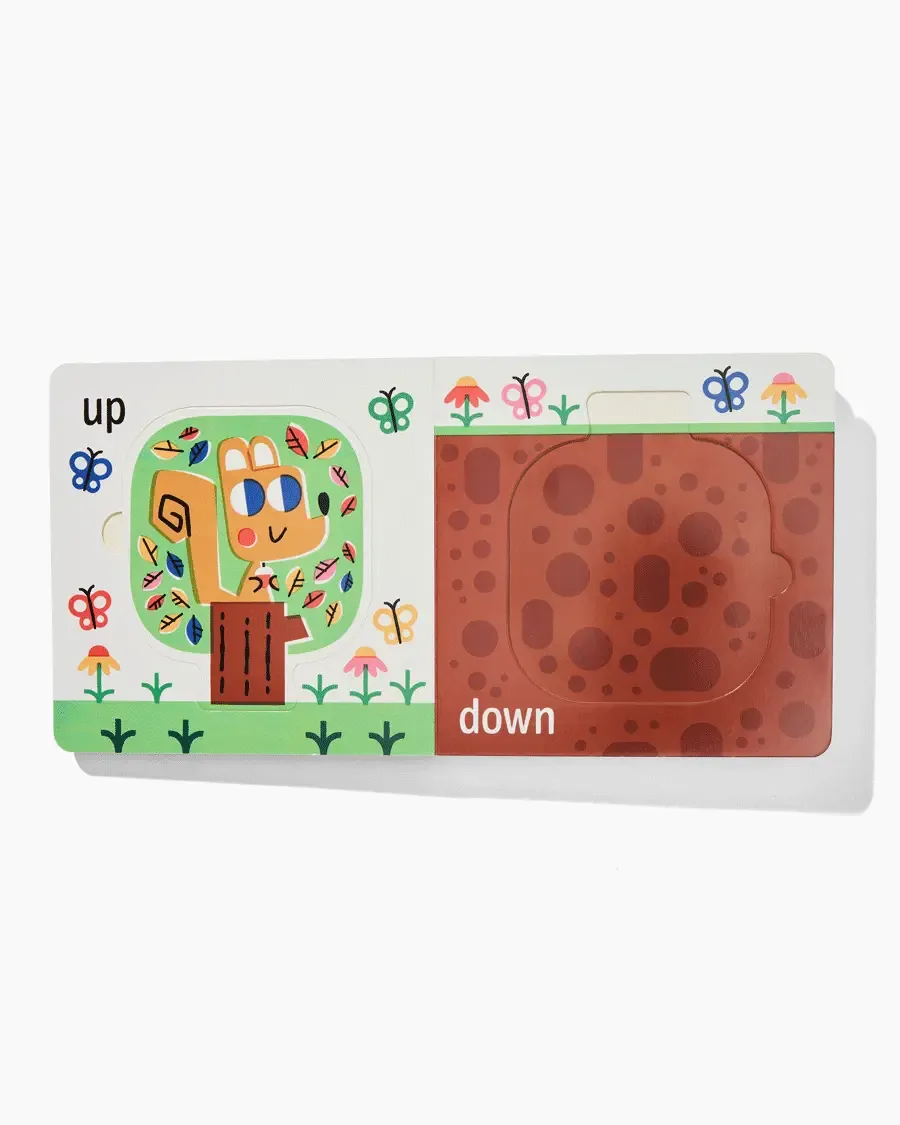
Over Under Opposite
-
Over Under Opposite: Part of KiwiCo's seriously fun educational line, it is suitable for curious kids of all ages. The open age range means you can use it with toddlers, preschoolers, and early elementary children, adjusting the challenge as they grow.
How to use Over Under Opposite for positional-word practice
These steps assume you have the product in hand. The exact components are not specified in the catalog, so the activities below are suggestions for using the product's focus on direction and position.
- Start with a simple demonstration: Place an object (like a toy) over another object, then under it. Say the words clearly: 'over' and 'under.' Repeat a few times so your child hears the contrast.
- Let your child try: Hand the object to your child and ask them to put it over something, then under something. Encourage them to say the word as they do it.
- Introduce more position words: Once over and under are familiar, add in, on, beside, and between. Use the product's pieces or everyday objects to demonstrate each word.
- Play a opposite-word game: Say a word and ask your child to show you the opposite. For example, you say 'over' and they show 'under.' This reinforces the concept of opposites while practicing position words.
- Connect to daily routines: Use the words during everyday activities: 'Put your cup on the table,' 'The ball is under the chair.' This helps generalize the learning beyond the activity.
Making it playful: activity ideas
Turn positional-word practice into a game of Simon Says: 'Simon says put the block over your head.' Or create an obstacle course where your child has to go under a table, over a pillow, and between two chairs.
You can also use the product as a prompt for storytelling. Ask your child to place the pieces in different positions and narrate what is happening: 'The bear is under the blanket. Now the bear is over the blanket.' This combines spatial concepts with early language skills.
What to keep in mind
The catalog does not specify small parts, materials, or care instructions for Over Under Opposite. If you have a child who still puts things in their mouth, supervise closely and check the product packaging for any safety information when it arrives.
Because the product is described as suitable for all ages, you can use it with a wide range of children. For younger toddlers, focus on just one or two words at a time. For older kids, challenge them to use the words in full sentences or to find examples of opposites around the house.
Building on the learning
Once your child is comfortable with over and under, expand to other opposite pairs like up and down, in and out, and front and back. You can use the same playful approach with everyday objects, and bring out Over Under Opposite whenever you want a structured, hands-on activity.
The product's focus on spatial relationships and opposites makes it a natural fit for preschoolers, but the open-ended design means it can grow with your child. Keep the sessions short and fun, and follow your child's interest.