Start with where you sit, not the table name
The real choice between an overbed table and an overchair table comes down to your daily routine: do you eat, read, or use a laptop mostly in bed, or mostly in an armchair? An overbed table spans your lap in bed, while an overchair table is designed to sit over an armchair. The labels tell you the intended setting, but the practical differences are in adjustment, access, and handedness.
This comparison uses the supplied catalog evidence for two specific models: the Rise and Fall Overbed Table and the Over Chair Table - Left Handed. Where the evidence is silent—such as exact dimensions or assembly steps—I will say so rather than guess, so you can decide what to confirm before buying.
Overbed vs overchair: the core trade-offs
- Intended seating position: The Rise and Fall Overbed Table is an overbed table, so its job is to serve you while you are in bed. The Over Chair Table - Left Handed is specifically designed for use with riser recliner armchairs, though the catalog also says it works equally well with a fireside chair.
- Height adjustment method: The Rise and Fall table uses a spring-loaded mechanism that lets users with poor grip adjust height with finger action only. The supplied evidence does not describe the adjustment mechanism for the Over Chair Table, so check that detail with the retailer if hand strength is a concern.
- Handedness: The Over Chair Table is left-handed. That matters if you need the table to approach from a particular side of your chair. The Rise and Fall Overbed Table is not described as handed in the supplied record.
- Where each fits best: Choose the overbed table if your main routine is eating, reading, or using a device in bed. Choose the overchair table if you spend most of your day in a riser recliner or fireside chair and want a surface that comes to you there.
- What the catalog does not confirm: Neither record supplies dimensions, load limits, assembly instructions, or care instructions. Those are decision limitations, not product faults—confirm them before purchase if they matter to your setup.
Evidence for the overbed option
-
Rise and Fall Overbed Table: The Rise and Fall Table features a spring loaded mechanism that enables users with poor grip to easily adjust the height with finger action only. If adjusting height is difficult for you, this is the clearest supplied difference: the overbed table is explicitly designed for low-grip height changes, while the overchair table’s adjustment method is not described in the supplied evidence.
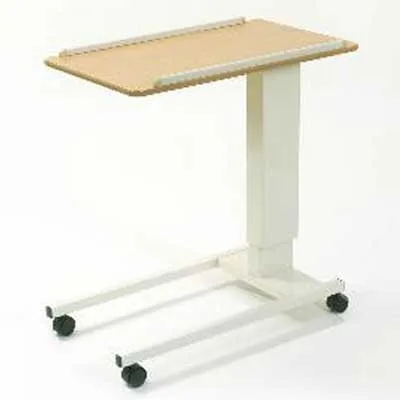
Rise and Fall Overbed Table
Evidence for the overchair option
-
Over Chair Table - Left Handed: This high quality over chair table has been specifically designed to be used with Riser Recliner armchairs but will work equally well with a fireside chair. This tells you the table is intended for armchair use, so it fits a routine built around a riser recliner or fireside chair rather than a bed.
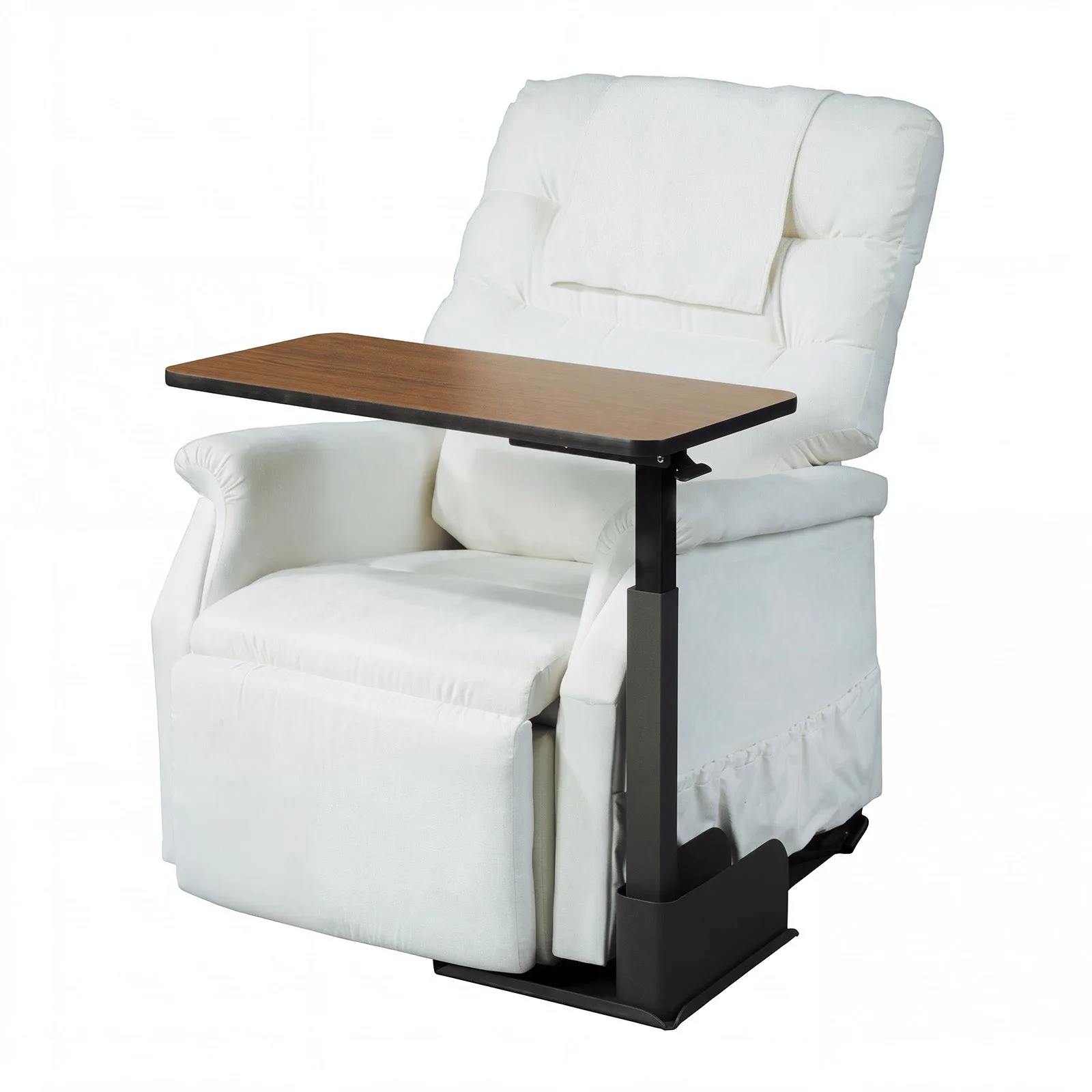
Over Chair Table - Left Handed
-
Over Chair Table - Left Handed: The product is left-handed. Handedness affects how the table sits relative to your chair and your dominant hand. If you need a right-handed table, this model may not suit.
Decision rules for your daily routine
- Mostly in bed?: Start with the Rise and Fall Overbed Table. Its finger-only height adjustment is the supplied feature that directly addresses poor grip, which is often the hardest part of using a table in bed.
- Mostly in a riser recliner or fireside chair?: Start with the Over Chair Table - Left Handed. It is designed for that seating, and the left-handed orientation is a specific fit decision you should confirm against your chair and hand preference.
- Need to adjust height with limited hand strength?: The overbed table’s spring-loaded mechanism is the only height-adjustment detail supplied. For the overchair table, ask the retailer how height is adjusted before you buy.
- Need dimensions or load limits?: Neither supplied record includes them. Measure your chair or bed and confirm the table’s footprint and safe load with the retailer rather than assuming.
What to confirm before you choose
Because the supplied evidence does not include dimensions, assembly steps, care instructions, or load limits for either table, treat those as open questions. Ask the retailer for the measurements that matter to your space—especially the height range and the base footprint—and confirm whether assembly is required. If you need a table for a specific chair, check that the left-handed overchair table’s orientation matches how you sit and reach.
The comparison is not about which table is better overall. It is about which table matches the place you spend your day and the adjustments you can comfortably make. Use the supplied evidence to narrow the choice, then confirm the missing details before purchase.