Overcast Presser Foot vs. Regular Foot: Key Differences
If you want neat, fray-free seam finishes on your home sewing machine, the overcast presser foot is a dedicated tool for that job. A regular all-purpose foot can sew seams, but it does not guide the fabric edge or control overlock stitches the same way. The overcast foot includes a guide bar at the side to keep the fabric aligned and a bridge in the middle that helps stitches lay flat, giving results that resemble serger-finished edges. A regular foot lacks these features, so you have to rely on careful manual feeding and trimming.
The choice comes down to how often you finish raw edges. For occasional seam finishing, a regular foot with a zigzag stitch can work. For consistent, professional-looking edges on woven or knit fabrics, the overcast foot saves time and frustration.
What the Overcast Presser Foot Offers
-
Overcast Presser Foot - Sewing Machine Overcasting Foot: The overcast foot features a guide bar at the side to keep the fabric in line and a bridge in the middle to make sure the stitches lay flat. These guides make it easier to sew exactly on the edge, reducing the need to trim or re-sew.
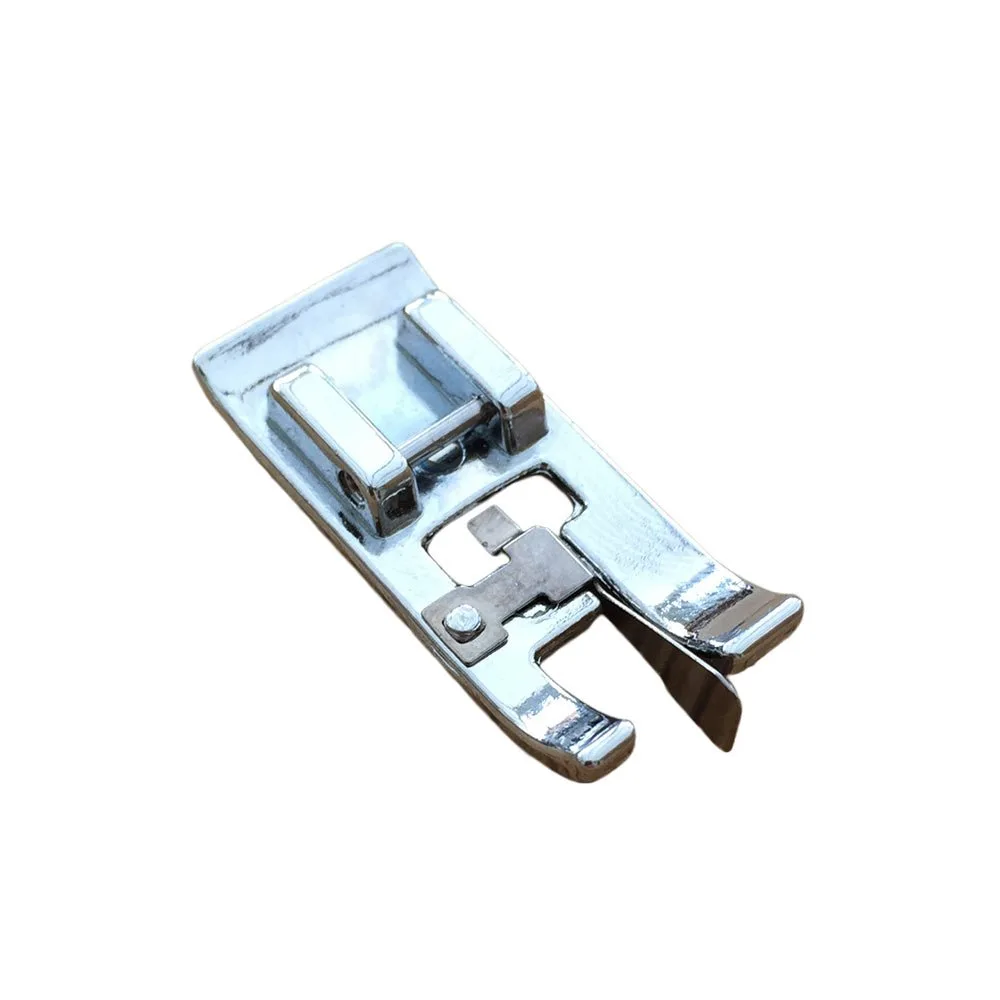
Overcast Presser Foot - Sewing Machine Overcasting Foot
-
Overcast Presser Foot - Sewing Machine Overcasting Foot: With this foot, overlock or overcasting stitches will bind the edge of the fabric perfectly to prevent it from fraying. This is the main benefit over a regular foot: the stitch wraps around the raw edge, locking it.
-
Overcast Presser Foot - Sewing Machine Overcasting Foot: The end result looks like the finished edges that a serger creates! You get a serger-like finish without the cost or setup hassle of a separate machine.
Overcast Foot vs. Regular Foot: When to Use Each
Both feet attach to most low shank home sewing machines, but their designs suit different tasks.
- Edge finishing on woven fabrics: Overcast foot: Excellent. The guide bar keeps the fabric edge aligned with the overlock stitch, preventing fraying. Regular foot: Possible but requires careful feeding and trimming; stitches may not wrap the edge consistently.
- Stretch and knit fabrics: Overcast foot: Works well because the overcast stitch stretches with the fabric. Regular foot: Can be used with a zigzag stitch, but the fabric may curl or the stitch may skip without the guide bar.
- Seam allowance trimming: Overcast foot: Does not cut fabric. You trim the seam allowance to ¼ inch before sewing. Regular foot: Same – no cutting, but you must trim manually either way.
- Changing thread color frequently: Overcast foot: Fast. No need to rethread a serger – just change the spool on your machine. Regular foot: Also fast, but you lose the edge-guiding benefit.
Practical Tips for Using the Overcast Foot
To get the best results, cut your seam allowance down to about ¼ inch if it is wider. Use a built-in overlock or overcast stitch on your machine – most home machines have at least one. Go slow so the needle can move over the vertical metal bar without skipping. When you finish sewing, pull the fabric away from you toward the back of the machine to free the thread from the guide bar. On some machine brands, you may need an adapter to attach the foot.
The overcast foot is also included in the 32-piece presser foot set if you want a complete collection.
Trade-offs to Keep in Mind
The overcast foot does not cut fabric like a serger, so you still need to trim seam allowances before sewing. It also requires a compatible overcast or overlock stitch – if your machine lacks that stitch, the foot won't perform its best. A regular foot is more versatile for general sewing but lacks the edge-guiding and stitch-control features that make the overcast foot so effective for neat seams.