Quick Answer
Paddock Farm Chicken Feet Dog Treats are a natural, single-ingredient chew that supports joint health and dental hygiene. Start with one foot per day for small dogs, supervise chewing, and store in a cool dry place.
Why Chicken Feet Are Different From Other Chews
Unlike rawhide or synthetic chews, chicken feet are a natural source of glucosamine and chondroitin, which are essential for joint mobility and reducing arthritis pain. The bones, skin, and tendons provide a satisfying crunch that helps scrape away plaque without artificial flavors or preservatives.
When Chicken Feet Are Not the Best Choice
These treats are not suitable for dogs with poultry allergies or those on a strict low-protein diet. The small bones can pose a choking hazard for very aggressive chewers who swallow large pieces without chewing. Always assess your dog's chewing style before introducing any natural bone treat.
How to Safely Feed Paddock Farm Chicken Feet
- 1. Choose the Right Size for Your Dog: For small dogs under 20 lbs, start with one foot per day. For medium to large dogs, one to two feet per session is sufficient. Break a foot into smaller pieces if needed to match your dog's jaw size. A common mistake is giving too large a treat to a small dog, which can cause gagging.
- 2. Supervise the First Few Chewing Sessions: Watch your dog closely the first time they chew a chicken foot. Some dogs try to swallow pieces whole, which can lead to choking. Remove any sharp bone fragments after chewing. If your dog is a gulper rather than a chewer, consider crushing the foot into smaller, manageable bits.
- 3. Store Properly to Maintain Freshness: Keep unused chicken feet in a sealed container in a cool, dry place. Avoid exposure to moisture or heat, which can cause spoilage. Use within the package's recommended time frame. Check for any off smells or mold before each feeding, especially in humid climates.
- 4. Incorporate Into a Balanced Treat Rotation: Use chicken feet as a supplement to your dog's regular diet, not a replacement for meals. Rotate with other natural chews like bully sticks or dental chews to provide variety and prevent boredom. Overfeeding any single treat can upset your dog's stomach, so limit chicken feet to a few times per week.
- 5. Monitor for Allergic Reactions: If your dog has a known poultry allergy, avoid chicken feet entirely. For first-time feeding, watch for signs like itching, vomiting, or diarrhea within 24 hours. Discontinue use if any reaction occurs. A small test portion can help identify sensitivities before offering a full treat.
Product Facts
-
Paddock Farm Chicken Feet Dog Treats: Naturally rich in glucosamine and chondroitin, these treats consist of bones, skin, and tendons, with no muscles. They are packed with protein, calcium, collagen, and cartilage that are easily absorbed. This makes them an excellent natural supplement for dogs prone to joint issues, especially older or active breeds.
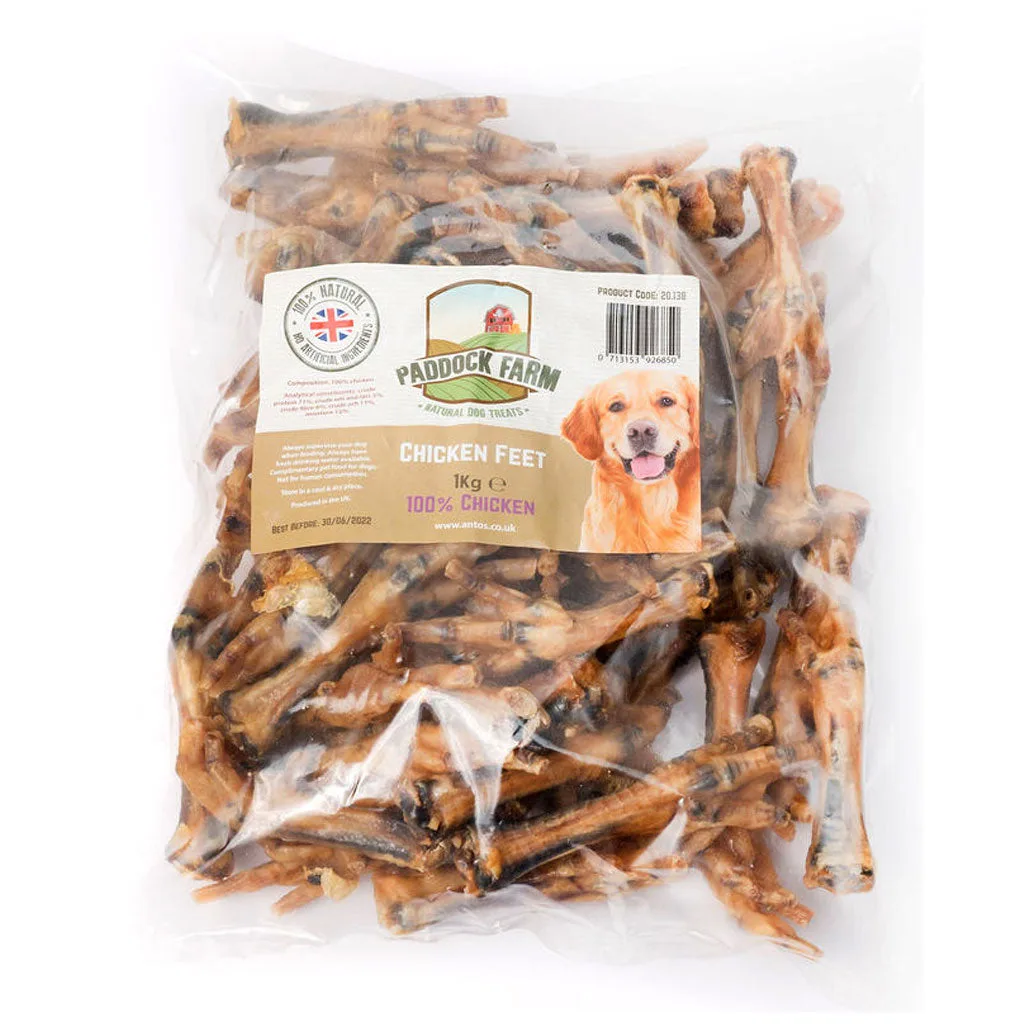
Paddock Farm Chicken Feet Dog Treats