What Paiko asks you to do
Paiko is a two-player tabletop game of tactics and elegance. Each side deploys tiles to threaten opposing forces and secure new territory from which to launch their own armies. The goal is to invade your opponent's territory and hold it to win.
The catalog describes a world where bow and blade compete with wind, air, earth, and fire. That flavor shows up in the tile abilities you can call on during play, such as summoning a tsunami to clear a path, deploying longbows along your perimeter to hold off a flanking maneuver, or contemplating the fragile beauty of the Lotus to instill harmony among your forces.
What the Paiko box confirms
-
Paiko: A Game of Tactics and Elegance: Paiko is a game of tactics and elegance for two sides, each deploying tiles to threaten opposing forces and secure new territory. This tells you the core setup task: prepare a shared play area where both players can place tiles and claim territory.
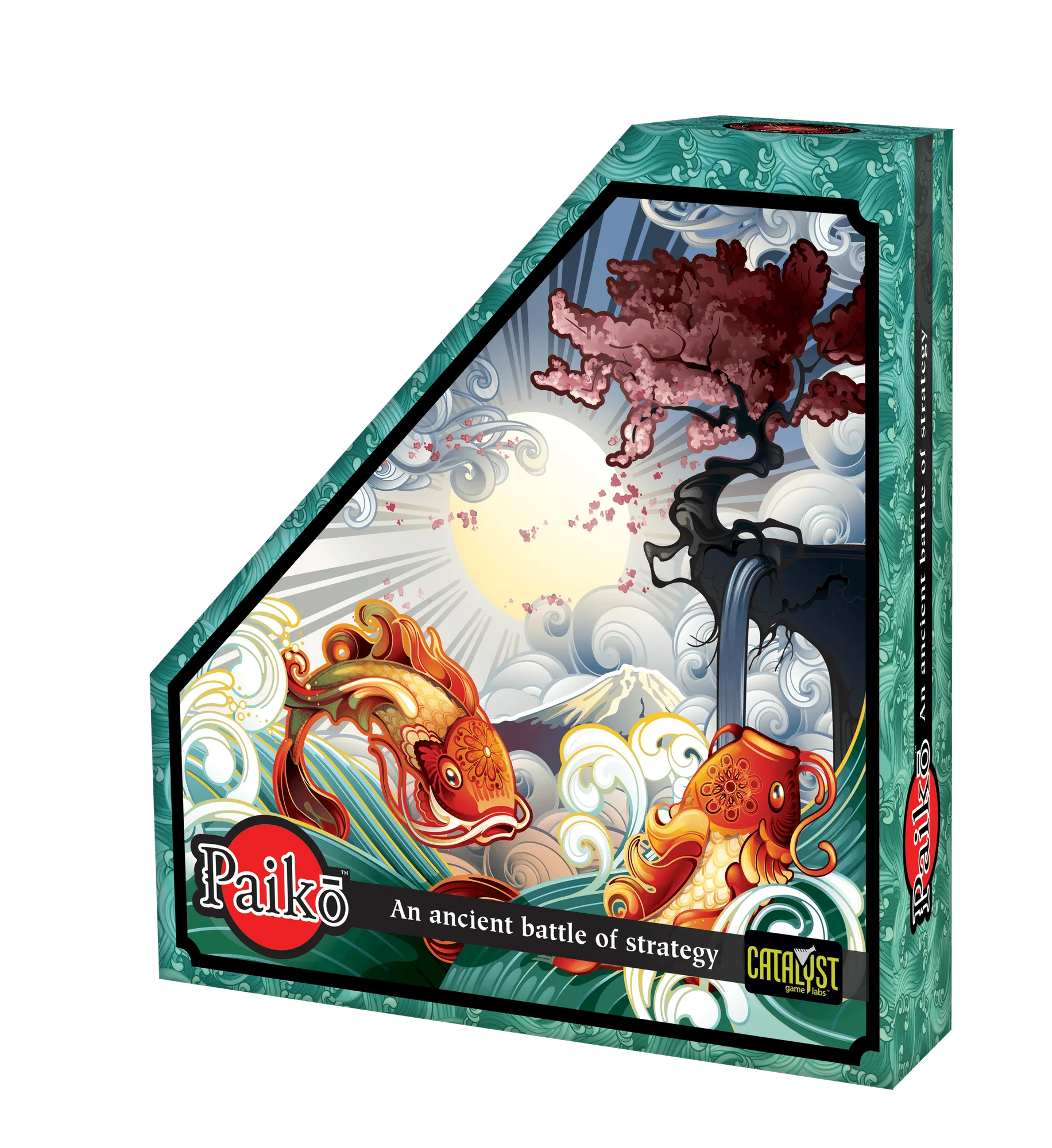
Paiko: A Game of Tactics and Elegance
-
Paiko: A Game of Tactics and Elegance: The catalog lists tile-deployment actions including summoning a tsunami, deploying longbows along your perimeter, and using the Lotus to instill harmony among your forces. Knowing these example actions helps you recognize which tiles to keep accessible during setup and which tactical options to plan around.
-
Paiko: A Game of Tactics and Elegance: The win condition is to invade your opponent's territory and hold it. Setup should leave clear space for territorial expansion, since holding ground is how the game ends.
Setting up a two-player game
The catalog does not include a full rulebook text, so treat these as practical starting points based on the confirmed game structure rather than a substitute for the official rules.
- Clear a shared play area: Both players deploy tiles into a common space and compete for territory, so use a table large enough for expansion in every direction.
- Separate each side's tiles: Each side deploys its own tiles. Keep your supply on your side of the table so you can reach tactical options like longbows or the Lotus without mixing them with your opponent's pieces.
- Agree on the starting territory: The catalog confirms that securing new territory is central to play, but it does not specify a starting layout. Agree on a fair starting arrangement before the first tile is placed.
- Review the tile abilities before play: Read through the abilities you have available, including the tsunami, longbow, and Lotus examples, so both players understand what each tile can do.
- Confirm the win condition: Remind both players that the game is won by invading and holding opposing territory, which shapes how aggressively you expand from the start.
Paiko strategy basics for your first game
These priorities follow from the confirmed tile actions and win condition. They are starting points, not a guaranteed winning formula.
- Expand with purpose: Since holding territory wins the game, every tile you deploy should either secure ground you can keep or threaten ground your opponent needs.
- Use the tsunami to open lanes: The catalog describes summoning a tsunami to clear a path. Save it for a moment when a blocked route is stopping your expansion.
- Guard your perimeter with longbows: Deploying longbows along your perimeter is described as a way to hold off a flanking maneuver, so think about which edges of your territory are most exposed.
- Consider the Lotus for harmony: The Lotus is described as instilling harmony among your forces. Use it when your position needs cohesion rather than a direct threat.
What the catalog leaves open
The supplied product information does not include a complete rulebook, a listed age range, a player count beyond the two-sided structure, or a play time. It also does not specify a starting tile layout or a detailed turn sequence. Check the printed rules in your copy of Paiko: A Game of Tactics and Elegance for those details before your first game.
The catalog price for Paiko is USD 35.99, compared with a listed comparison price of USD 49.99. The Standard variant is the only option shown in the supplied record.