Start with what is actually in the set
Before planning a craft session, it helps to know exactly what you are handing over. The Paint Pens Medium Tip - Black and White set contains six pens with 3mm medium tips: three black and three white. That is a deliberately limited palette, and it shapes what these pens do best.
Black and white are outline and contrast colours. They are not the set you reach for when a child wants to fill a rainbow. They are the set you reach for when a child wants to draw a face on a rock, add eyes to a cardboard creature, or write a name on a wooden tag. If you are buying for a group, plan for the fact that white and black will be shared across every project.
The catalog details that matter for craft planning
-
Paint Pens Medium Tip - Black and White: Set of 6 medium 3mm tips: 3 black, 3 white. This tells you the palette and the tip size, so you can judge whether the set suits fine lettering or broader marks before you buy.
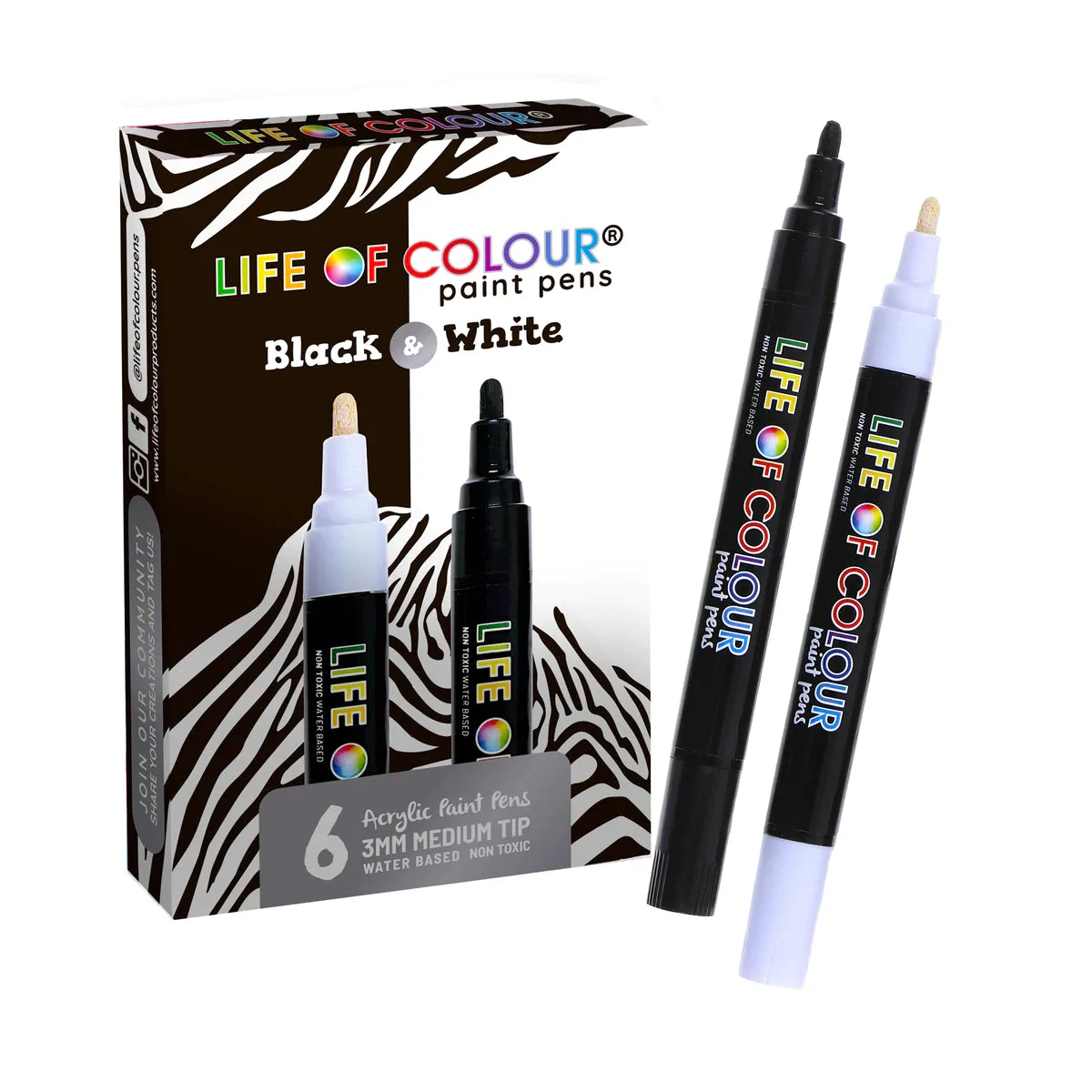
Paint Pens Medium Tip - Black and White
-
Paint Pens Medium Tip - Black and White: Mess-free, non-toxic and odourless acrylic paint pens. These are the properties that make the set practical for indoor family crafting and for children's use, as described in the supplied catalog information.
-
Paint Pens Medium Tip - Black and White: Works on almost any surface — rocks, pots, clothes, leaves, tin, glass, paper, wood, canvas and more. This is the list of surfaces the catalog names, which helps you choose a project rather than guessing whether a material is suitable.
-
Paint Pens Medium Tip - Black and White: Silk-matte finish, quick-drying, highly opaque. Opacity matters most with white, which often struggles on dark surfaces; the catalog describes these pens as highly opaque.
How to use paint pens on the surfaces the catalog names
The catalog lists rocks, pots, clothes, leaves, tin, glass, paper, wood and canvas. That is a wide range, and the practical approach is the same across most of them: start with a clean, dry surface, then let the pen do the work.
For kids rock painting, the medium 3mm tip is a sensible middle ground. It is narrow enough for dots and outlines but wide enough that a child does not need perfect control. White shows up well on dark grey stones; black works on paler ones. Leaves are a less obvious surface but are named in the catalog, so they can be used for a short-lived nature craft.
On fabric, the catalog says the pens bond permanently to porous materials when dry. That is useful for decorating a plain cotton bag or T-shirt, but treat it as a supervised project and follow the surface guidance rather than inventing a heat-setting step the catalog does not describe.
A simple first session, start to finish
This sequence stays within what the supplied information supports. It is a practical order of work, not a manufacturer's instruction.
- Choose a surface from the catalog list: Pick something the catalog names, such as a rock, a pot, paper or wood. Avoid surfaces the catalog does not mention until you have tested a small area.
- Set up with no fuss: The catalog states no set-up is required, so there is no mixing or priming step described. Lay out paper to protect the table and hand out the pens.
- Let children start with black outlines: With three black and three white pens, a natural workflow is black for outlines and details, white for highlights and contrast. This is a suggested approach, not a catalog instruction.
- Allow time to dry: The pens are described as quick-drying. Give the work a little time before handling, especially on non-porous surfaces such as glass or tin.
- Clean non-porous surfaces if needed: The catalog says the paint is removable from non-porous surfaces with household cleaner. That is the stated removal method, so test on an inconspicuous area first.
Paint pen care tips that follow from the catalog
- Replace the cap firmly after use: The catalog does not describe cap care, but the pens are acrylic paint pens and the practical habit is to close them when not in use. Treat this as sensible craft-room practice rather than a quoted instruction.
- Keep the tips for their intended use: The 3mm medium tips are the working part of the pen. Pressing hard on rough surfaces such as rocks can wear a tip, so a light touch is worth encouraging with children.
- Store them out of reach of very young children: The catalog describes the pens as non-toxic, but it does not supply an age recommendation. If you are buying for a toddler, check the packaging for the manufacturer's age guidance before use.
- Plan for the black-and-white limit: Because the set is three black and three white, a shared group will use up one colour first. If you are running a party or classroom session, consider how many sets you need for the number of children.
What the supplied information does not cover
The catalog does not state an age range for these pens, and it does not list certifications or a drying time in minutes. It also does not describe how to clean the tips or whether the pens can be refilled. If those details matter for your purchase, check the product packaging or ask the store before buying.
The catalog does state that the pens are waterproof when dry and bond permanently to porous materials. That is a meaningful difference from washable children's markers, so choose your project surface with that in mind rather than treating these as fully washable craft pens.