Quick answer
For most children, start with a small set of brushes that covers different shapes and sizes, then teach a simple rinse-and-dry routine after every session. That combination handles the widest range of beginner projects without overwhelming a young painter.
Why brush shape matters more than brush count
A child with one giant brush will struggle with detail; a child with ten identical brushes gains nothing. The useful variety is in shape and size: a flat brush for broad strokes and backgrounds, a round brush for lines and dots, and a small detail brush for tight spots. When you choose a paintbrush set for kids, check that the shapes differ, not just the handle colors.
Handle length also affects control. Short handles suit small hands and close-up work, while longer handles help older kids stand back from a canvas or easel. If the set does not list handle length, judge by the age and reach of the child rather than guessing from photos alone.
The cleaning step most families skip
Rinsing is only half the job. Paint left at the base of the bristles dries hard and shortens the brush's life. After rinsing, press the bristles gently against the sink or a paper towel to remove excess water, then reshape the tip with your fingers and dry the brush flat or bristles-up. Never stand a wet brush bristles-down in a cup; water seeps into the handle and loosens the glue over time.
For water-based paints, lukewarm water and a small amount of mild soap are enough. Oil-based paints need a different approach and are rarely the right choice for young beginners, so this guide assumes kid-friendly water-based paint.
When a cheap brush is the wrong economy
Bristles that shed into the paint frustrate children and ruin a project. A slightly better brush that holds its shape saves cleanup time and teaches kids that tools deserve care. That said, you do not need a professional set for a five-year-old; the goal is a brush that survives repeated washing and keeps a usable tip.
Paintbrush questions parents ask most
Which brush types should a beginner have?
A flat brush for washes and broad strokes, a round brush for lines and circles, and a small detail brush for faces or lettering. Three shapes cover most first projects.
How do I clean paintbrushes for kids without damaging them?
Rinse with lukewarm water, add a drop of mild soap, work it through the bristles with your fingers, rinse again, squeeze out excess water, reshape the tip, and dry flat or bristles-up. Teach the reshape step every time; it keeps the brush usable for the next session.
What are good first painting projects?
Start with color-mixing on paper, then try a simple landscape with a flat brush sky and round brush trees. A family portrait or pet portrait lets kids practice detail without needing perfect realism.
How should we store brushes between sessions?
Once fully dry, store them bristles-up in a jar or roll them in a cloth. Never store them wet in a closed container, which encourages mildew and bent bristles.
Product facts
-
Paintbrush Set: This portable paintbrush set has high-quality bristles and solid wood handles. Durable bristles and wood handles hold up to frequent washing, which matters when kids paint often.
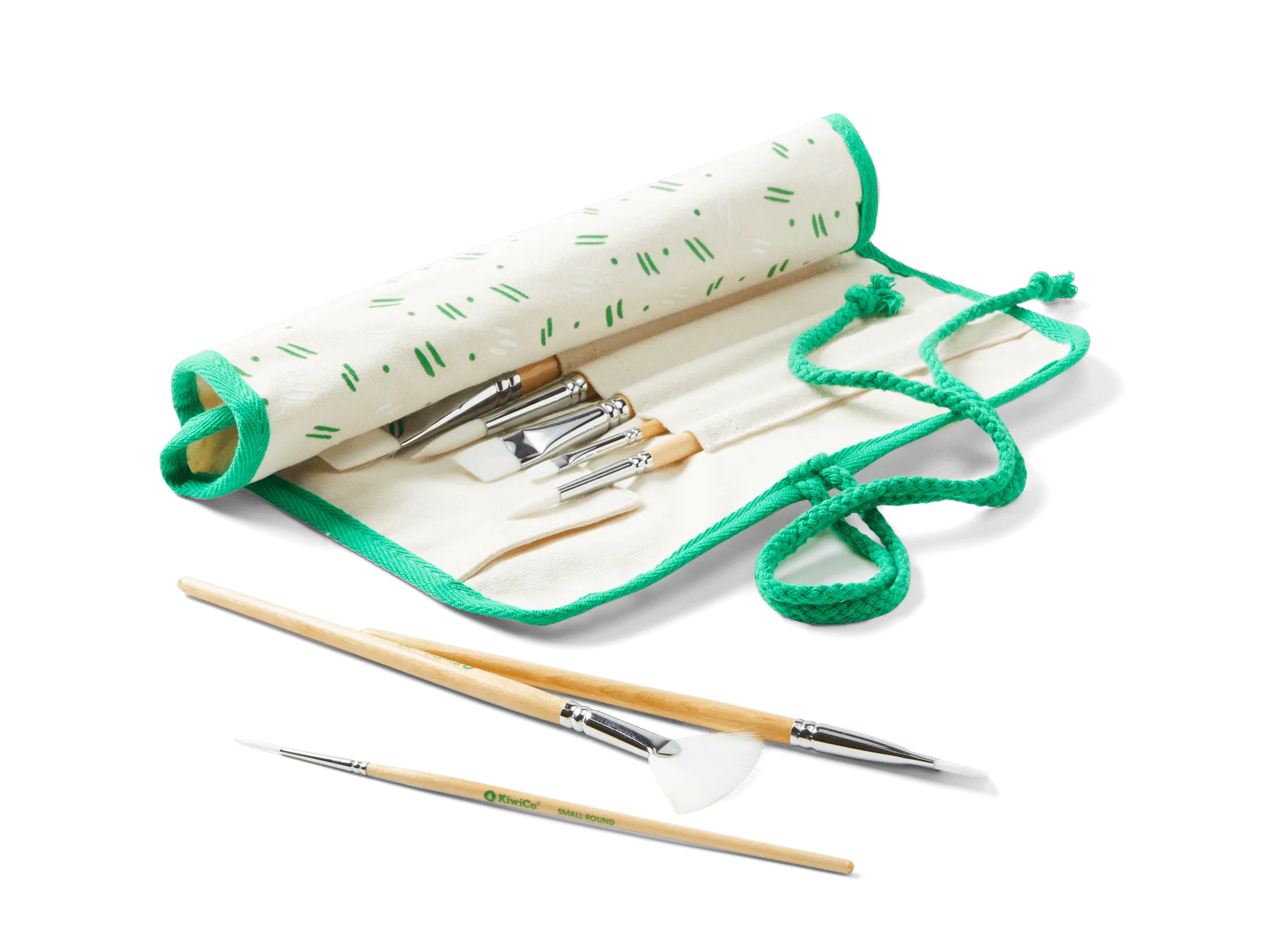
Paintbrush Set