What the set gives you to work with
The Victrix Carthaginian Citizen Infantry set contains 24 hard plastic figures with a wide range of parts. You get 7 warrior frames, 1 command frame, 6 body options, 11 head options, 44 shields (7 different styles), 28 spears and javelins, 2 banners, 4 unsheathed swords, and 1 trumpet. This variety allows you to build a unit with different poses and equipment, which is important for painting an ancient wargame force that looks like a real citizen levy rather than identical clones.
The figures represent Carthaginian citizen infantry who were unarmoured but carried helmets, shields, and spears. This means your painting scheme will rely heavily on fabric colors, skin tones, and shield designs rather than metal armour.
A practical painting order for Carthaginian citizen infantry
Plan the unit before you start painting. Decide how many figures will carry javelins versus spears, and which shield designs you want to use. The 44 shields include 7 different styles, so you can mix them to reflect the varied equipment of a citizen levy.
The following order keeps the process manageable for 24 figures.
- Assemble the figures in batches: Clip the parts from the frames and dry-fit each figure before gluing. Use the 6 body options and 11 head options to create variety. Leave the shields and weapons separate for easier painting access.
- Prime the figures: Use a light gray or white primer to keep the fabric colors bright. Since the figures are unarmoured, the primer will be the base for most of the model.
- Paint skin tones first: Start with the exposed arms, legs, and faces. Carthaginian citizen infantry were recruited from the local population, so a range of skin tones adds realism.
- Paint the tunics and trousers: Use off-white, light brown, or pale linen colors for the typical Carthaginian tunic. You can add variety with a few figures in darker earth tones.
- Paint the helmets and shields: Helmets can be bronze or dark metal. Shields are the main visual focus: paint them in a base color and add simple geometric patterns or use the LBMS shield transfers that support this set.
- Paint the spears and javelins: Wood shafts with bronze or iron spearheads. Keep them simple so they don't distract from the figures.
- Apply a wash and highlight: A brown or dark wash over the fabric and skin tones adds depth. Dry-brush the helmets and shield rims with a lighter metal color.
- Base the figures: Use a sandy or rocky base to match the North African terrain. Add static grass or small stones to complete the look.
Evidence from the catalog
-
Carthaginian Citizen Infantry: This 24 figure set of 28mm hard plastic miniatures is superbly detailed and includes a myriad of additional parts, allowing hundreds of options when assembling. The high level of detail and part variety means you can create a unique-looking unit without needing to convert or sculpt. The plastic material is easy to work with for painting and assembly.
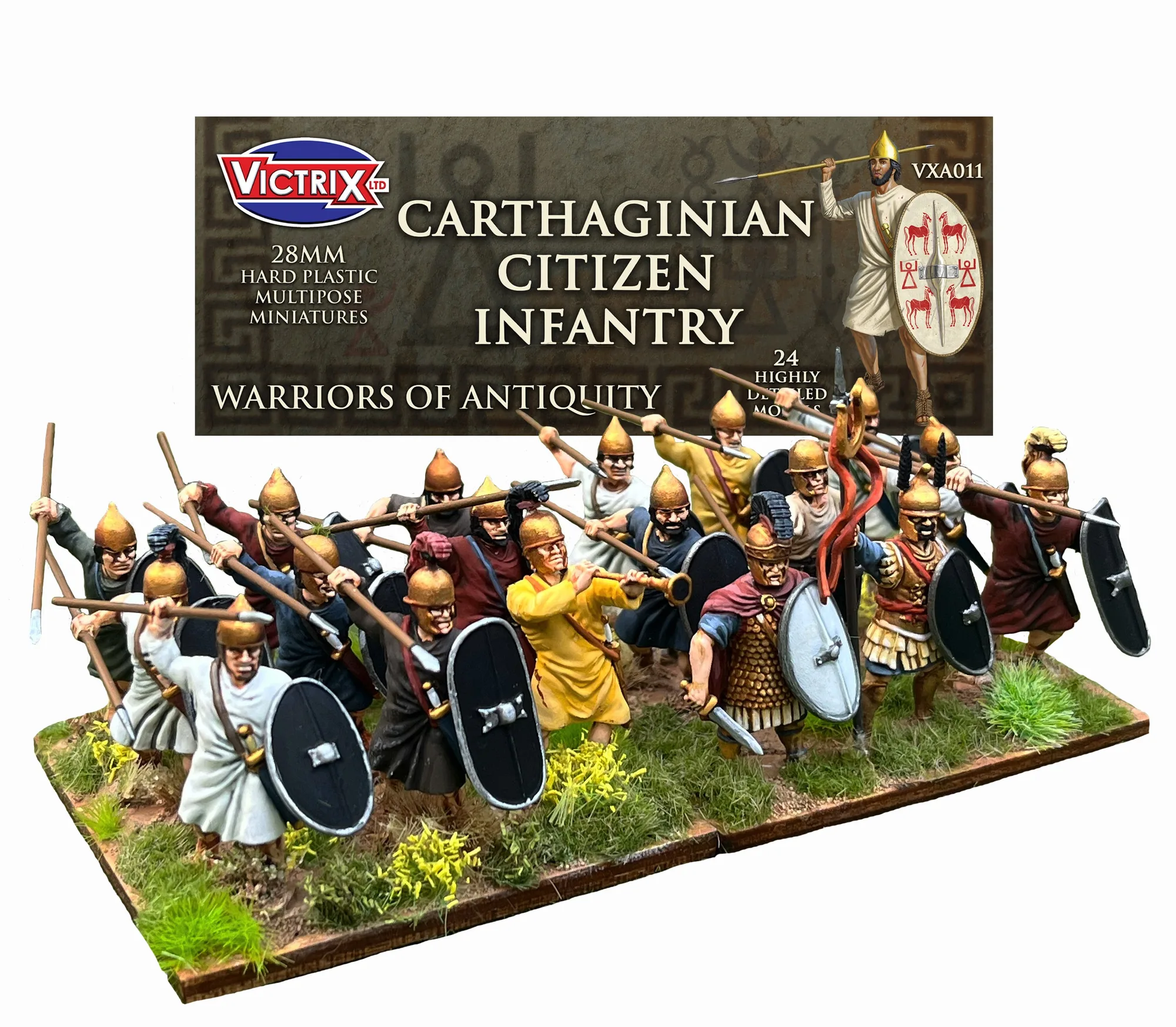
Carthaginian Citizen Infantry
-
Carthaginian Citizen Infantry: The figures were unarmoured but were equipped with helmets, shields, and spears. Your painting scheme should focus on fabric and skin tones rather than metal armour. The shields and helmet crests are the main areas for color and contrast.
-
Carthaginian Citizen Infantry: This set is fully supported by a range of shield transfers and banner sheets from LBMS. If freehand painting isn't your preference, you can use LBMS transfers to add authentic Carthaginian shield designs quickly and consistently.
Choosing shield designs for a citizen levy
Carthaginian citizen infantry were not a standing army but were called up when needed. This means their shields were probably not uniform. The set includes 44 shields with 7 different styles, which gives you the freedom to paint a variety of designs. You can paint simple solid colors, add geometric patterns, or use LBMS transfers for a more polished look. Mixing different shield designs across the 24 figures will make the unit look like a genuine levy rather than a professional army.
What the supplied information does not settle
The catalog does not specify exact uniform colors or historical shield patterns for Carthaginian citizen infantry. For historical accuracy, you may want to research Carthaginian military equipment from the Punic Wars period. The painting suggestions here are based on typical ancient wargaming conventions for unarmoured infantry. The set also does not include painting instructions, so the order above is a general recommendation rather than a manufacturer's guide.