If you’ve been shopping for high-end kitchen knives lately, you’ve likely noticed a shift in handle materials. While classic wood and synthetic handles have long dominated the market, a new contender is quietly winning over professional chefs and home cooks alike: Pakkawood. This engineered wood composite offers the warmth and beauty of natural wood with the durability and hygiene of modern synthetics, making it the go-to choice for premium knife makers.
In this article, we’ll explore what Pakkawood is, why it’s becoming the preferred handle material for chef knives, and how it compares to traditional wood and synthetic alternatives. Whether you’re a seasoned chef or an enthusiastic home cook, understanding handle materials can elevate your cutting experience and help you choose the right knife for your kitchen.
What Is Pakkawood?
Pakkawood is a composite material made by layering natural wood veneers with phenolic resin under high heat and pressure. The result is a dense, non-porous material that mimics the look and feel of exotic hardwoods like rosewood or ebony but with superior resistance to moisture, heat, and impact. Unlike solid wood, Pakkawood does not warp, crack, or absorb odors, making it ideal for kitchen environments where knives are frequently washed and exposed to humidity.
Originally developed for high-end knife handles in Japan, Pakkawood has gained a strong following among Western knife makers and chefs. Its ability to combine aesthetic appeal with practical performance has made it a staple in collections like the Eric Wareheim x Made In https://kindaero.store/products/steak-knives-97240https://kindaero.store/products/steak-knives-97296https://kindaero.store/products/steak-knives-97297Steak Knives, where both form and function are paramount.
- Pakkawood is often confused with resin-stabilized wood, but it is a distinct composite made from multiple veneers, not a single piece of wood infused with resin.
Pakkawood vs. Traditional Wood Handles: Key Differences
Traditional wood handles—such as walnut, maple, or cherry—are beloved for their natural beauty and comfortable grip. However, they require regular oiling to prevent drying and cracking, and they can absorb moisture, leading to swelling or bacterial growth. In a busy kitchen, even well-maintained wood handles can degrade over time, especially if they are frequently exposed to water or acidic ingredients.
Pakkawood eliminates these drawbacks. Because the wood fibers are sealed in resin, the handle is virtually non-porous and does not need periodic conditioning. It resists stains, odors, and moisture, making it more hygienic and lower-maintenance than solid wood. For cooks who want the warmth of wood without the upkeep, Pakkawood is a game-changer. Knives like the Carving Set often feature Pakkawood handles for this very reason, offering both elegance and longevity.
- Tip: If you prefer the look of natural wood but want easier care, look for knives with Pakkawood handles—they offer the best of both worlds.
Why Chefs Are Switching to Pakkawood Handles
Professional chefs demand tools that can withstand long hours of use, frequent washing, and exposure to heat and moisture. Pakkawood handles excel in these conditions. Their dense structure provides a secure, non-slip grip even when wet, reducing the risk of accidents during fast-paced prep work. Additionally, the material does not transfer heat as readily as metal or some synthetics, keeping the handle comfortable during extended cutting sessions.
Another reason chefs love Pakkawood is its aesthetic versatility. The layered construction creates unique, eye-catching patterns that give each knife a distinctive look. This has made Pakkawood a popular choice for premium knife sets and specialty blades, such as those found in the Eric Wareheim x Made In Steak Knives, where design and performance go hand in hand.
- Pakkawood handles are also lighter than many metal or synthetic options, improving balance and reducing hand fatigue.
How to Care for Pakkawood Knife Handles
One of the biggest selling points of Pakkawood is its low maintenance. Unlike traditional wood, it does not require regular oiling or special treatments. Simply wash the knife by hand with mild soap and warm water, then dry it immediately with a soft cloth. Avoid soaking the knife or placing it in the dishwasher, as prolonged exposure to moisture and heat can eventually degrade the resin bond over many years.
For long-term care, occasional application of a food-safe mineral oil can help maintain the handle’s luster, though it is not necessary. If you notice any roughness or dullness, a light sanding with fine-grit sandpaper followed by a coat of oil can restore the original finish. With minimal effort, a Pakkawood handle can last a lifetime, making it an excellent investment for any kitchen.
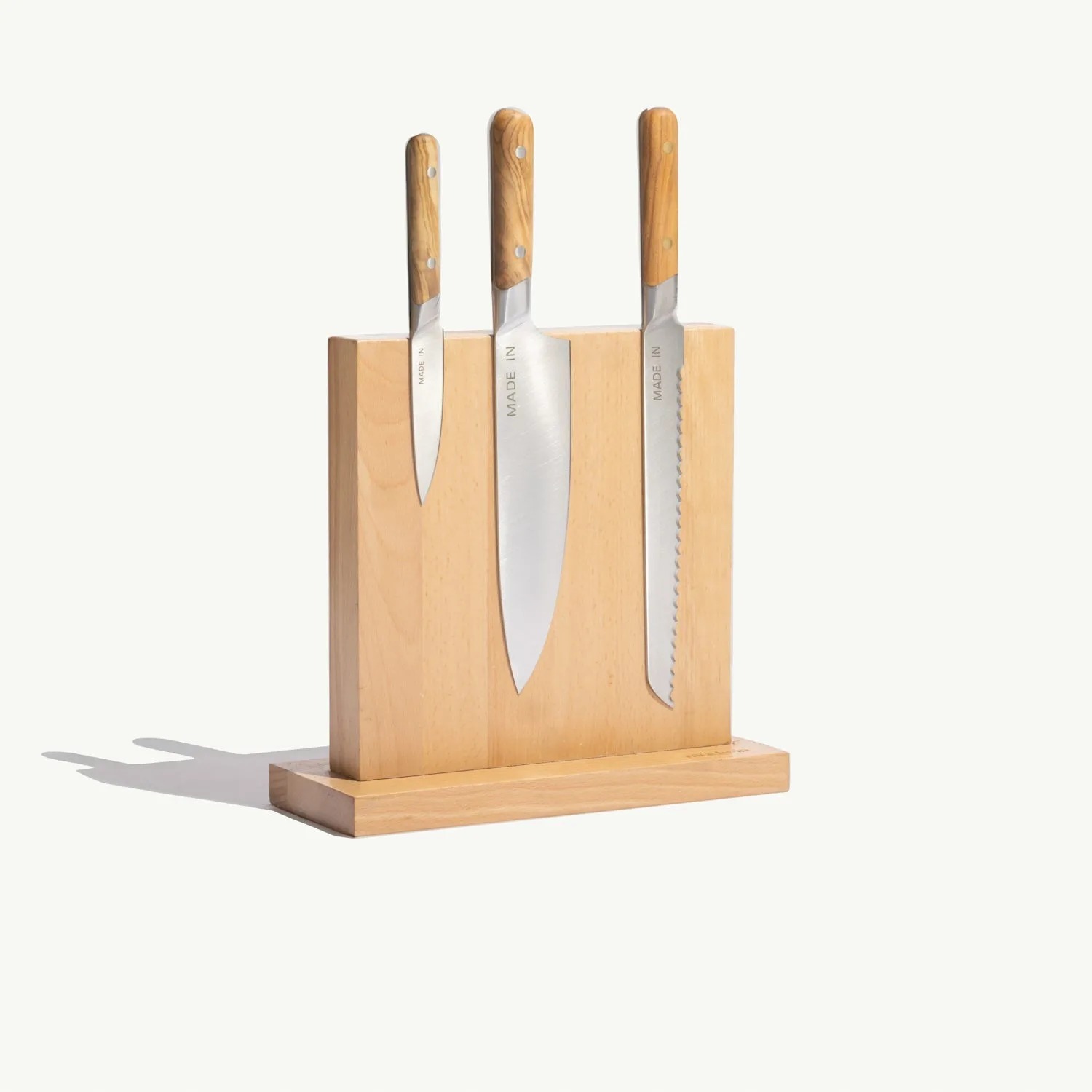
- Pro tip: Store your Pakkawood-handled knives in a knife block or magnetic strip to prevent scratches and keep the handles in pristine condition.
Whether you’re upgrading your kitchen tools or building your first knife collection, Pakkawood handles offer a compelling blend of beauty, durability, and low maintenance. They represent the future of premium knife design—honoring the tradition of fine wood while embracing modern performance. To experience the quality of Pakkawood firsthand, explore our selection of chef knives and specialty blades, including the Eric Wareheim x Made In Steak Knives, and see why this material is becoming a favorite among culinary professionals.