Quick answer
Lay down Pale Earth as your matte brown base, let it cure fully, then glaze Inktense Wood over it in thin layers to vary and intensify the ground color. Keep the ink translucent and stop before the satin sheen flattens the texture.
Why the base and the glaze do different jobs
Pale Earth is a matte acrylic paint with enough opacity to build glazes easily, so it establishes a believable ground color and hides the primer underneath. Inktense Wood is a slightly satin acrylic ink intended for glazing over already painted surfaces; it shifts and intensifies the color rather than covering it.
That split matters on natural ground because dirt and stone read through value and texture, not through a single flat color. If you try to get all the variation from the opaque paint, you risk a chalky, uniform surface. If you skip the matte base and glaze straight onto primer, the ink has nothing stable to tint.
When the satin finish works against you
Inktense Wood dries slightly satin, which suits damp earth, mud, and worn paths but can look wrong on dry dust or porous stone. On those surfaces, keep the ink to recesses and shadow areas, or accept a subtle sheen as a trade-off for the color variation it gives.
Both products are listed as valid for brush and airbrush. Brush gives more control for small bases; airbrush speeds up terrain but makes it easier to overshoot the thin glaze stage.
Step-by-step ground painting process
- Prime and check the surface: Apply a thin, even primer and let it cure completely before any color. Common mistake: spraying Pale Earth onto bare or damp primer, which can bead and leave patchy coverage. Check that the primer is uniformly dull with no glossy spots before you continue.
- Lay the Pale Earth base: Brush or airbrush a thin coat of Pale Earth over the whole ground area, then a second thin coat if the primer still shows through. Common mistake: applying one heavy coat that fills fine texture. Stop when the color is even but the surface detail is still visible.
- Let the base cure fully: Wait until the paint is hard and no longer cool to the touch before glazing. Common mistake: glazing too soon, which lifts or streaks the base coat. If a test touch drags color, the base is not ready.
- Mix a thin Inktense Wood glaze: Dilute the ink so it flows like tinted water rather than paint. Common mistake: using it at full strength, which covers the base instead of varying it. Test on a scrap base first; the glaze should tint, not hide, what is underneath.
- Glaze selectively, not everywhere: Apply the ink to recesses, path centers, and damp-looking areas, leaving higher or drier spots closer to the Pale Earth base. Common mistake: flooding the entire base evenly, which removes the natural variation you wanted. Step back at arm's length; the ground should show at least two values.
- Build layers and check the sheen: Add further thin glazes only after each is dry, and judge the satin finish under the light you will display the model in. Common mistake: adding layers to fix color when the real problem is an uneven sheen. If the sheen looks wrong for dry ground, keep the ink in recesses only.
Product facts
-
PALE EARTH: Matte acrylic paint, 17ml, with opacity that supports glazing and tones aimed at modeling and military figures. Use it as the opaque ground layer when you need a natural brown base that still accepts later glazes.
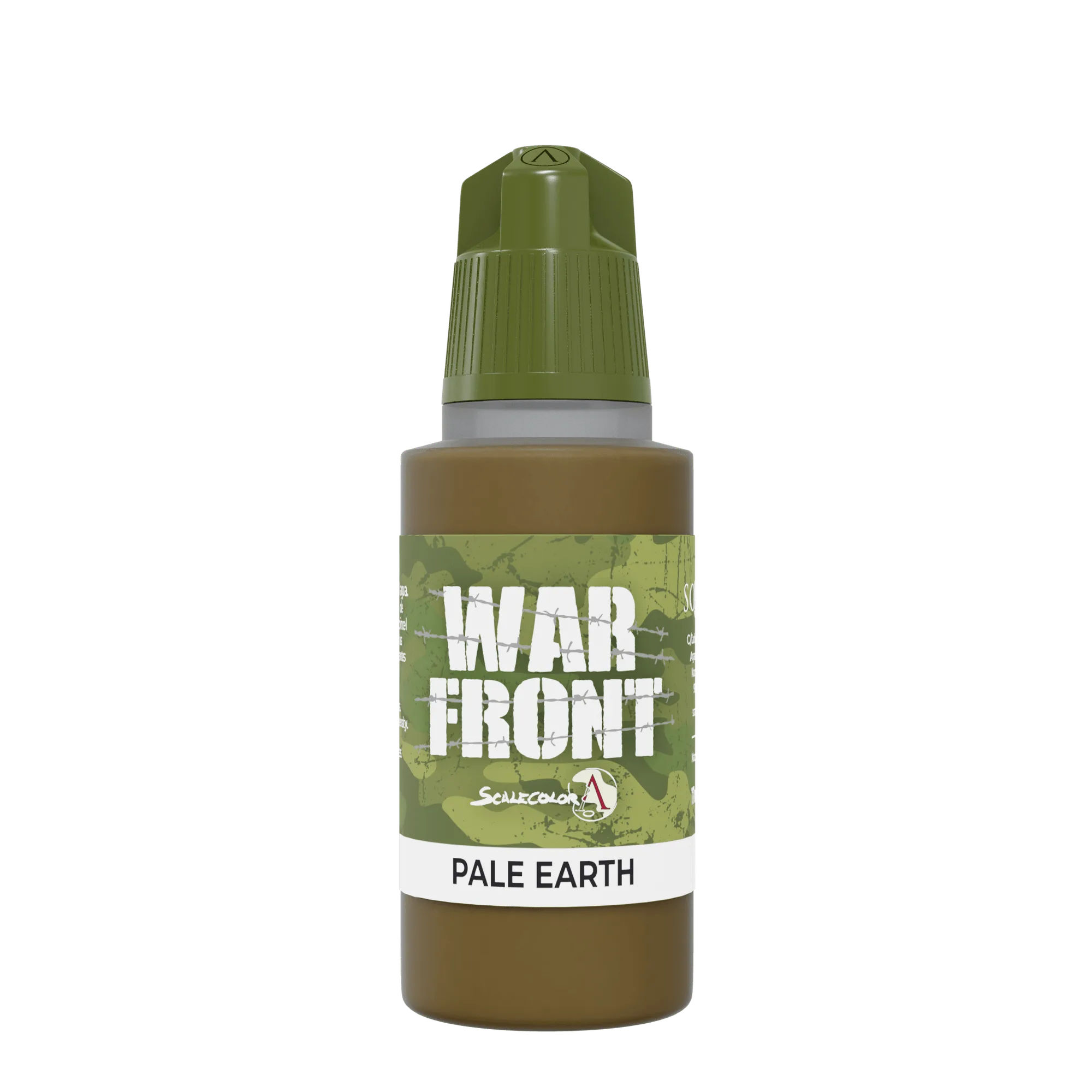
PALE EARTH
-
INKTENSE WOOD: Slightly satin acrylic ink, 17ml, made for glazing over already painted surfaces with brush or airbrush. Apply it only after the base is fully dry, and keep layers thin so the satin finish does not mask texture.
INKTENSE WOOD