Quick answer
Start with the Palm Lark Kid Carrier's seat and panel set for your child's size, then tighten the waistband before the shoulder straps. Recheck the seat depth and strap tension every time your toddler grows or changes layers.
Why toddler fit changes faster than baby fit
Toddlers change shape and posture quickly, so a fit that worked last month can feel loose or dig in this month. The Palm Lark Kid Carrier is sized for kids wearing 3T and up and comes in two sizes, which means the starting point is the carrier size, not endless strap adjustment. If the carrier is the wrong size, no amount of tightening will fix the seat or panel height.
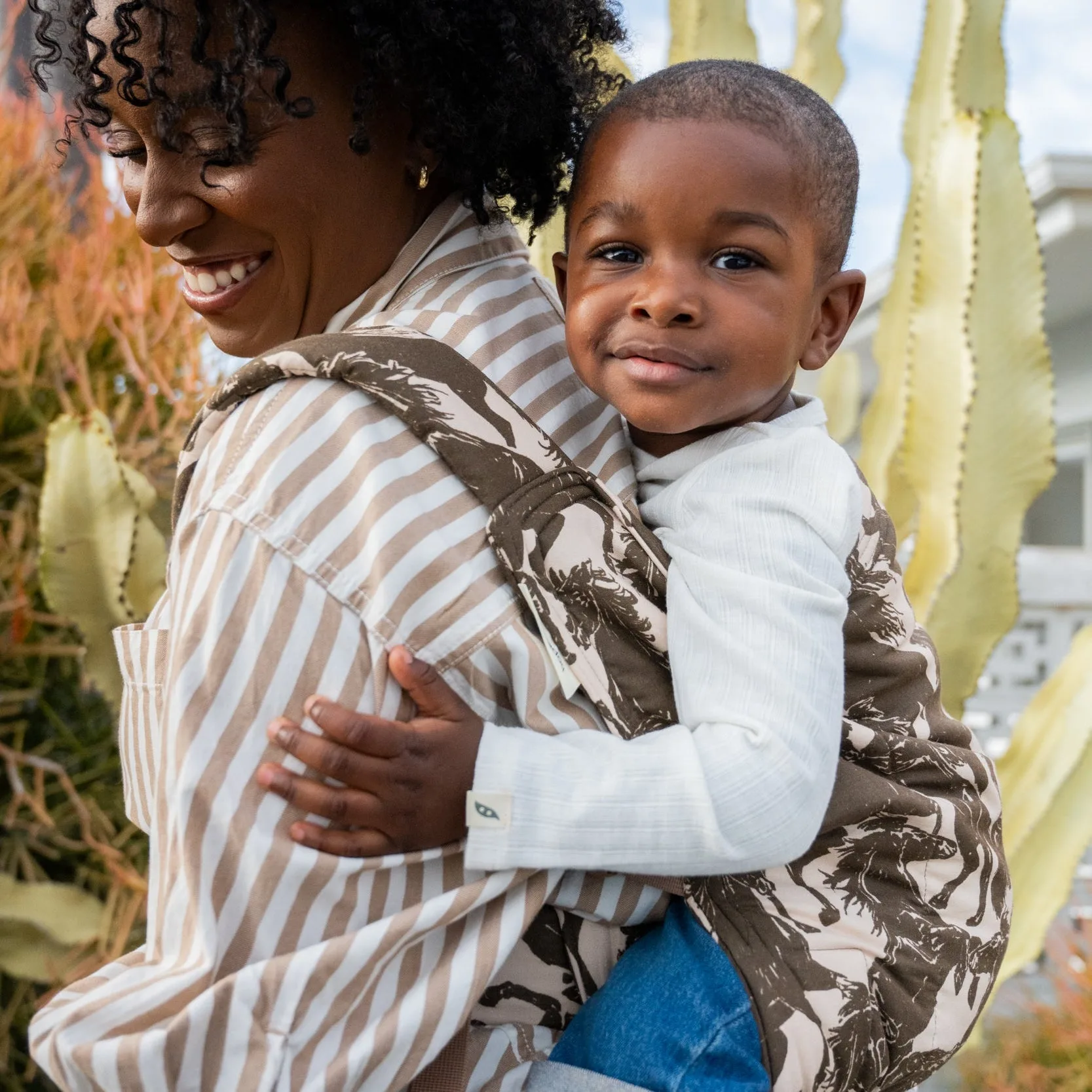
Front and back carry options change how the same carrier feels. Back carry usually improves toddler back carry comfort for longer walks because the weight sits closer to your center of gravity, but it also makes it harder to see the seat and panel. That is why the steps below include a mirror or second-person check.
Where the Palm Lark Kid Carrier earns its keep
The Palm Lark Kid Carrier combines quality, comfort, and versatility, and the two-size range is the feature that matters most for toddler days. A carrier that fits your child's current size gives you a stable seat and a panel that supports the back without covering the face. The front and back carry options let you switch as your toddler's mood and your route change.
The honest trade-off is that a sized carrier asks you to choose correctly up front. If your child is between sizes or growing fast, check the size guidance before you buy rather than relying on strap adjustment to compensate.
Step-by-step toddler fit for the Palm Lark Kid Carrier
- Confirm the carrier size against your child's current clothing size: Check that your child is wearing 3T or up and that the carrier size matches the size guidance for the Palm Lark Kid Carrier. Common mistake: sizing up for growth room, which leaves the seat too wide and the panel too tall for a secure carry today. If your child is between sizes, fit for the current size and recheck monthly.
- Set the waistband height before loading your toddler: Fasten the waistband and position it where it feels stable on your hips, then tighten it so it stays put when you bend. Common mistake: tightening the shoulder straps first, which pulls the waistband up and changes the seat angle. The waistband should not ride up when you squat or lean forward.
- Seat your toddler deep and check knee-to-knee support: Place your child in the carrier with the seat supporting the thighs knee-to-knee and the panel clear of the face. Common mistake: letting the seat sag so the knees hang lower than the hips, which makes the carry feel heavier. A deep seat is the single biggest comfort fix for toddler back carry.
- Tighten shoulder straps from the back, not the front: With the carrier on, reach behind and pull the strap adjusters evenly so the panel hugs your child's back without pulling them tight against you. Common mistake: over-tightening one side, which twists the panel and puts pressure on one shoulder. You should be able to slide a flat hand between your child's back and the panel.
- Switch to back carry for longer walks and recheck the seat: For toddler back carry comfort, move your child to your back using a mirror or a second person to confirm the seat is still knee-to-knee and the panel is centered. Common mistake: skipping the recheck after the switch, when the seat often shifts. Recheck seat depth and strap tension every time you change carry position.
Product facts
-
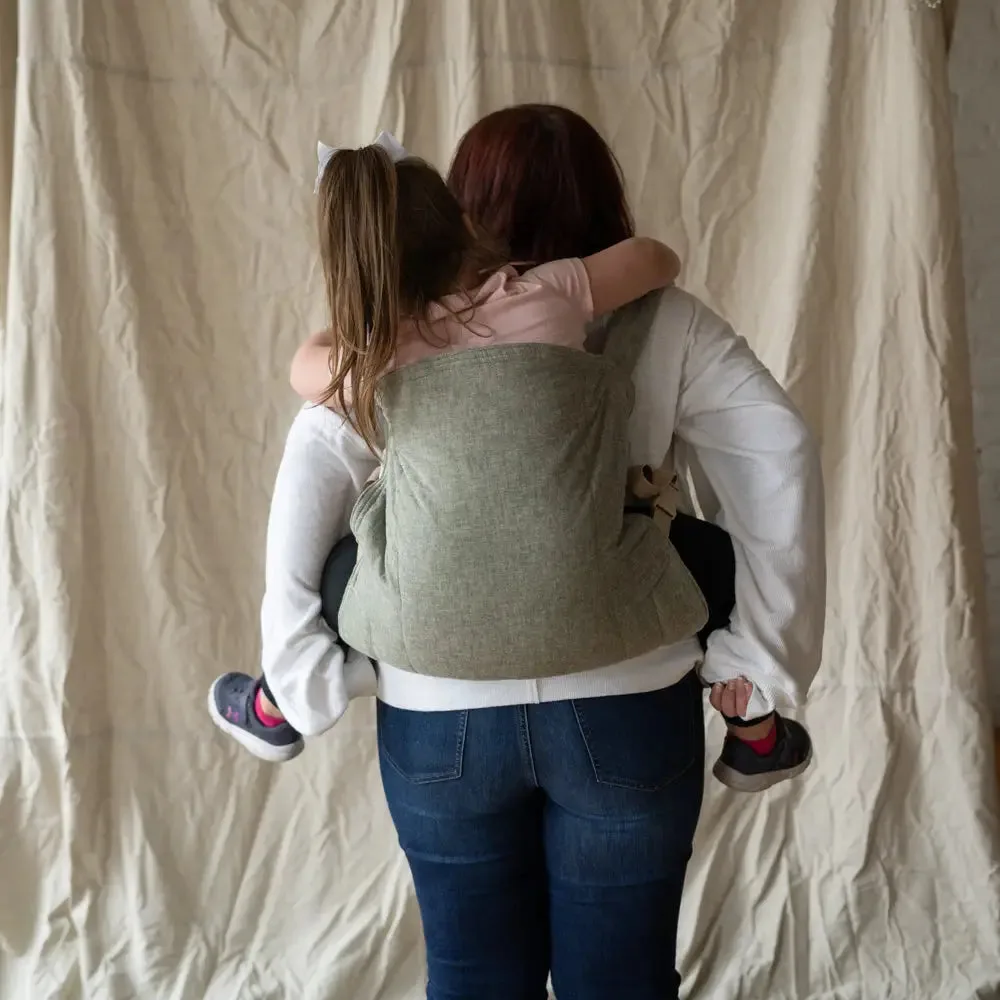
Palm Lark Kid Carrier: The Palm Lark Kid Carrier is available in two sizes and is designed for kids wearing size 3T and up. Choosing the right size first gives you a seat and panel that match your toddler, so the adjustment steps below fine-tune fit instead of fighting it.
Palm Lark Kid Carrier