Quick answer
Choose the Pama 3/4 Tee Shirt pack if you want a pure organic cotton rib boatneck with a straightforward fit. Choose the Omato 3/4 Tee Shirt pack if you prefer a stretchier organic cotton blend with exposed seams and can size up for its smaller run.
Fabric content changes stretch and recovery
The Pama pack is 100% organic cotton rib, while the Omato pack is 91% organic cotton with 9% elastane. That elastane gives the Omato more give and snap-back, which can help the tee hold its shape through repeated wear. The Pama, being all cotton, may feel firmer at first and relax slightly over time. Neither is better in every case: if you want a natural-fiber feel with no synthetic stretch, Pama is the cleaner choice; if you want a tee that moves with you and resists bagging, Omato has the edge.
Seam styling and neckline details
Both packs share a boatneck and lettuce edging at the neckline and hems, so the silhouette is similar. The visible difference is the Omato’s exposed seams, which add a subtle raw or deconstructed look. The Pama keeps its seams conventional, giving a smoother finish. If you plan to wear the tee under a blazer or cardigan, exposed seams can create bulk or show through lightweight layers; if you wear it on its own, they add visual interest. Neither pack lists a seam-free construction, so expect standard sewn seams in both.
Sizing risk and the cost of getting it wrong
The Omato pack runs small and the brand advises sizing up. The Pama pack has no such note, so you can order your usual size. That difference matters in a two-pack: a sizing mistake doubles the inconvenience. If you are between sizes or prefer a relaxed fit, the Omato’s sizing-up guidance is a clear instruction, but it also means you need to know your Omato size before ordering. The Pama removes that guesswork but may feel less forgiving if you are on the upper end of a size. Check the size chart for both and remember that the model wears a size S in each pack.
Trade-offs at a glance
- Fiber purity vs. stretch: Pama is 100% organic cotton; Omato adds 9% elastane. Choose Pama for an all-natural feel, Omato for more give and shape retention. If you avoid synthetic blends, Pama is the only option here.
- Seam finish: Pama has standard seams; Omato has exposed seams. Exposed seams add texture but can show under slim layers. Consider how you will layer the tee before deciding.
- Sizing confidence: Pama fits true to size; Omato runs small and requires sizing up. Order your usual size in Pama, one size up in Omato. First-time Omato buyers should consult the size chart rather than assume their usual size.
- Price per pack: Pama is listed at USD 77.35 (compared to USD 119.00); Omato at USD 87.00 (compared to USD 145.00). Both packs save 15% on unit price. The Pama pack costs less upfront, but check whether the Omato’s stretch and seam detail justify the difference for you.
Product facts
-
Pack - 2 Pama 3/4 Tee Shirt (Black / off white): 100% organic cotton rib with no elastane listed. You get a pure cotton feel with natural stretch, but less snap-back than a blended rib.
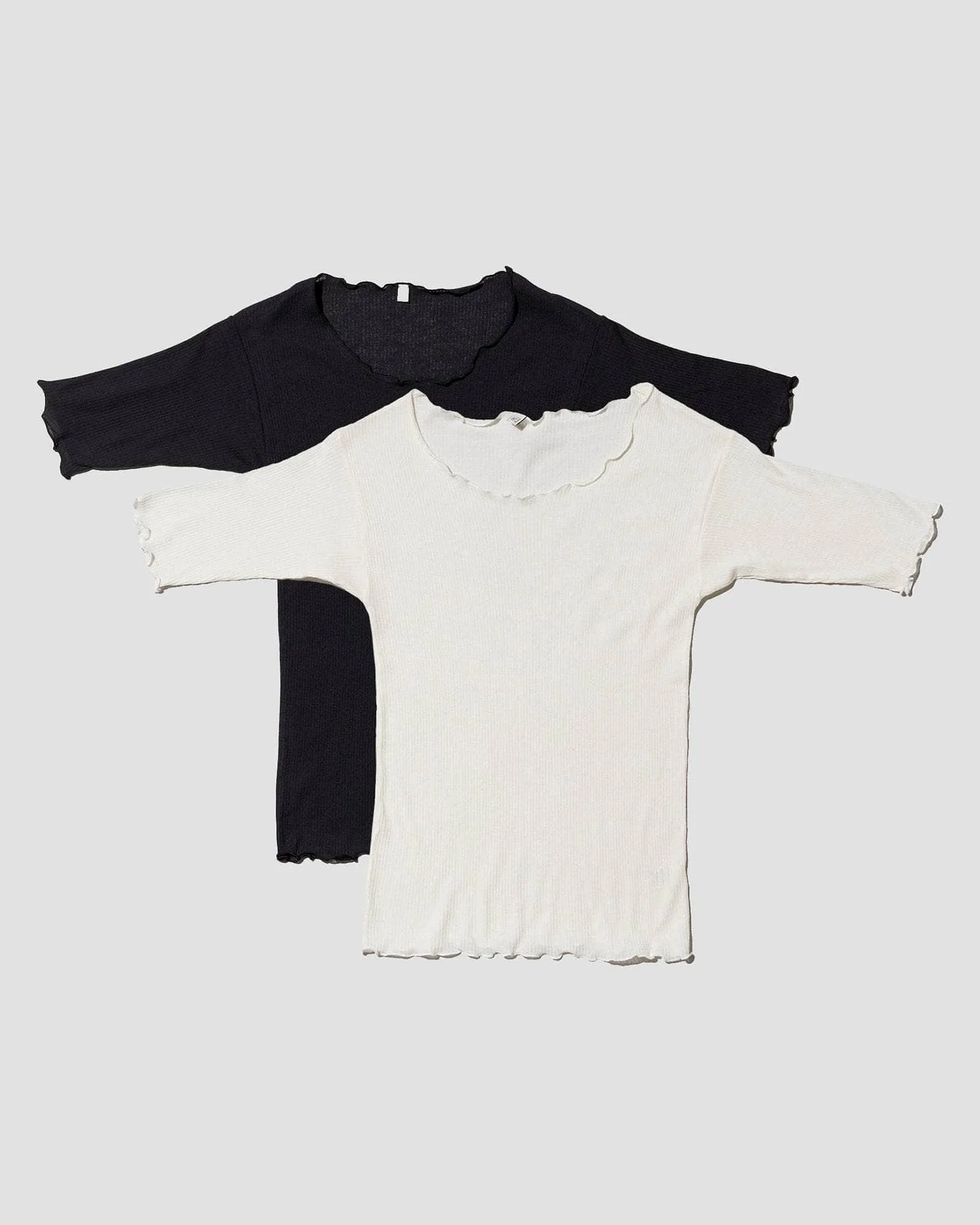
Pack - 2 Pama 3/4 Tee Shirt (Black / off white)
-
Pack - 2 Omato 3/4 Tee Shirt (Black / off white): 91% organic cotton and 9% elastane, and the pack runs small. The elastane adds stretch and recovery, but you should size up to avoid a tight fit.
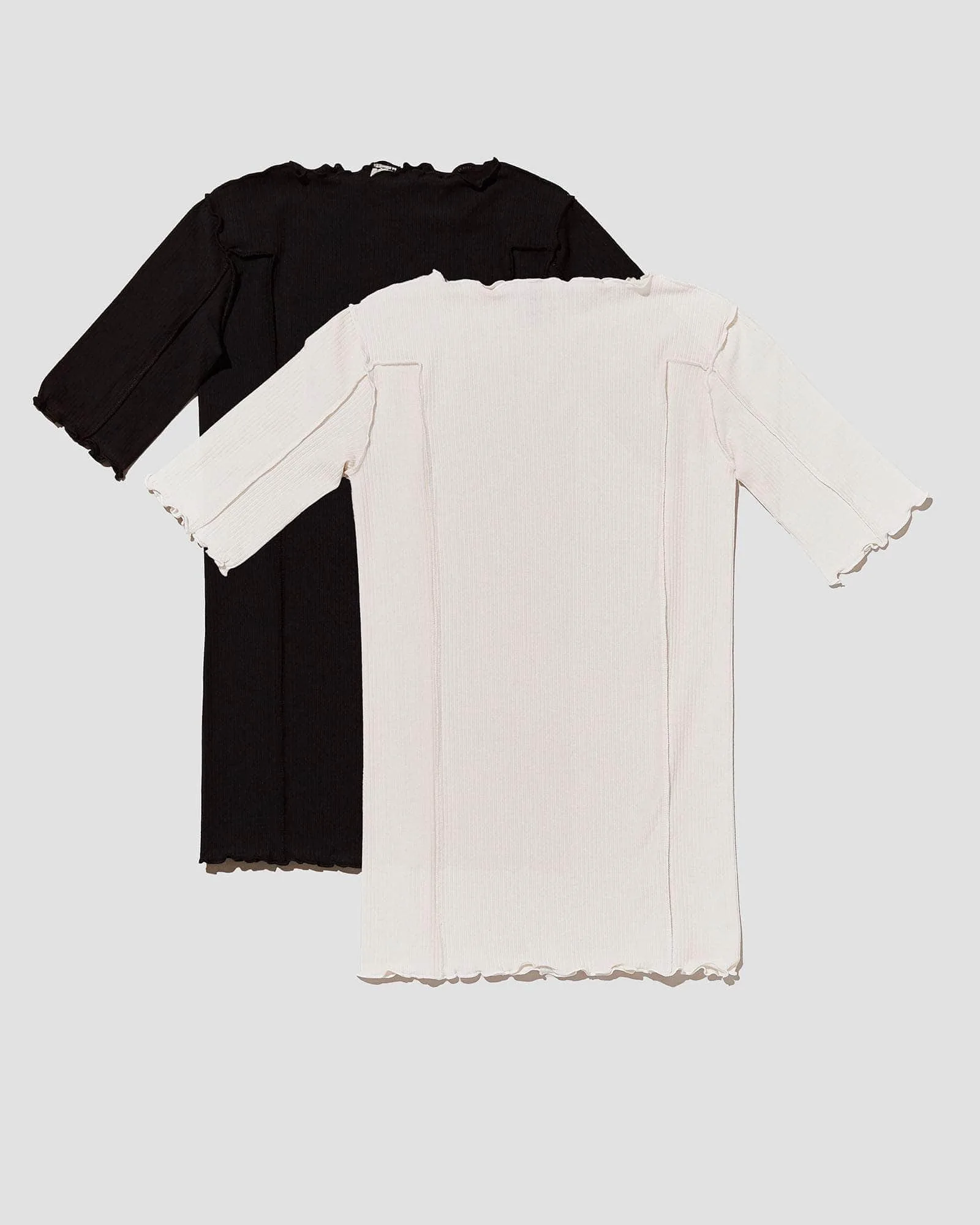
Pack - 2 Omato 3/4 Tee Shirt (Black / off white)
Who should choose which
Best for
- Shoppers who want a pure organic cotton boatneck tee with no elastane
- Those who prefer a conventional seam finish and true-to-size ordering
- Anyone building a capsule of neutral 3/4 sleeve tees at a lower pack price
Not for
- Shoppers who want extra stretch and recovery from elastane
- Those who like exposed-seam detailing
- Anyone unwilling to size up for a smaller-running fit