What separates papaya enzyme tablets from broad digestive enzymes
Papaya enzyme tablets are a narrower category than the broad digestive enzyme blends you often see on the same shelf. The difference matters when you are choosing: a papaya-based product draws its enzymes from ripened papaya fruit, while a broad blend may combine several enzyme sources aimed at different food types. Neither is automatically better. The right pick depends on what you want the supplement to do and how you want to take it.
American Health Original Papaya Enzyme Tablets sit firmly in the papaya category. The label describes naturally sourced enzymes from ripened papaya fruit, including papain, amylase, and protease, and positions the product as an after-meal supplement for digestive comfort and nutrient absorption.* That is a specific, limited role, not a claim to replace a full digestive enzyme complex.
Papaya enzyme vs digestive enzymes: how the two approaches differ
- Enzyme source: Papaya tablets rely on enzymes from ripened papaya fruit. Broad digestive enzymes may draw from plant, fungal, or animal sources and often list a wider range of enzyme activities.
- Stated enzyme activity: American Health lists papain, amylase, and protease. A broad blend may name additional enzymes for fats, dairy, or specific carbohydrates. Check the supplement facts panel rather than the front label.
- Format and routine: American Health Original Papaya Enzyme is a chewable tablet taken after meals. Many broad enzyme products are capsules taken before or with food. Your preference for chewing versus swallowing is a legitimate deciding factor.
- Dietary fit: The American Health product is described as gluten-free, lactose-free, made without GMO ingredients, and vegan- and vegetarian-friendly. Confirm the same details on any broad blend you compare.
- Scope of support: Papaya tablets are positioned for post-meal digestive comfort and breaking down proteins and carbohydrates.* Broad blends may target a wider range of foods, but the supporting evidence for each formula varies.
When a chewable papaya tablet is the practical choice
A chewable after-meal tablet solves a routine problem: you do not need water, and you do not have to remember to take it before you start eating. American Health Original Papaya Enzyme is designed around that habit. The label directs you to chew one to three tablets after a meal, one to three times a day. That flexibility lets you match the dose to the size of the meal, but it also means you need to read the bottle rather than assume one tablet per meal.
This format suits people who want a simple, portable option for occasional post-meal discomfort and who are comfortable with a papaya-based enzyme profile. It is not the right format for someone who needs a broad-spectrum enzyme product targeting fats or dairy, because the supplied information for this product describes protein and carbohydrate digestion, not fat digestion.
What the American Health Original Papaya Enzyme record confirms
-
American Health Original Papaya Enzyme Tablets: Chewable tablets containing naturally sourced enzymes from ripened papaya fruit, including papain, amylase, and protease. This tells you the enzyme scope: proteins and carbohydrates are named, so do not expect a fat-specific enzyme from this product.
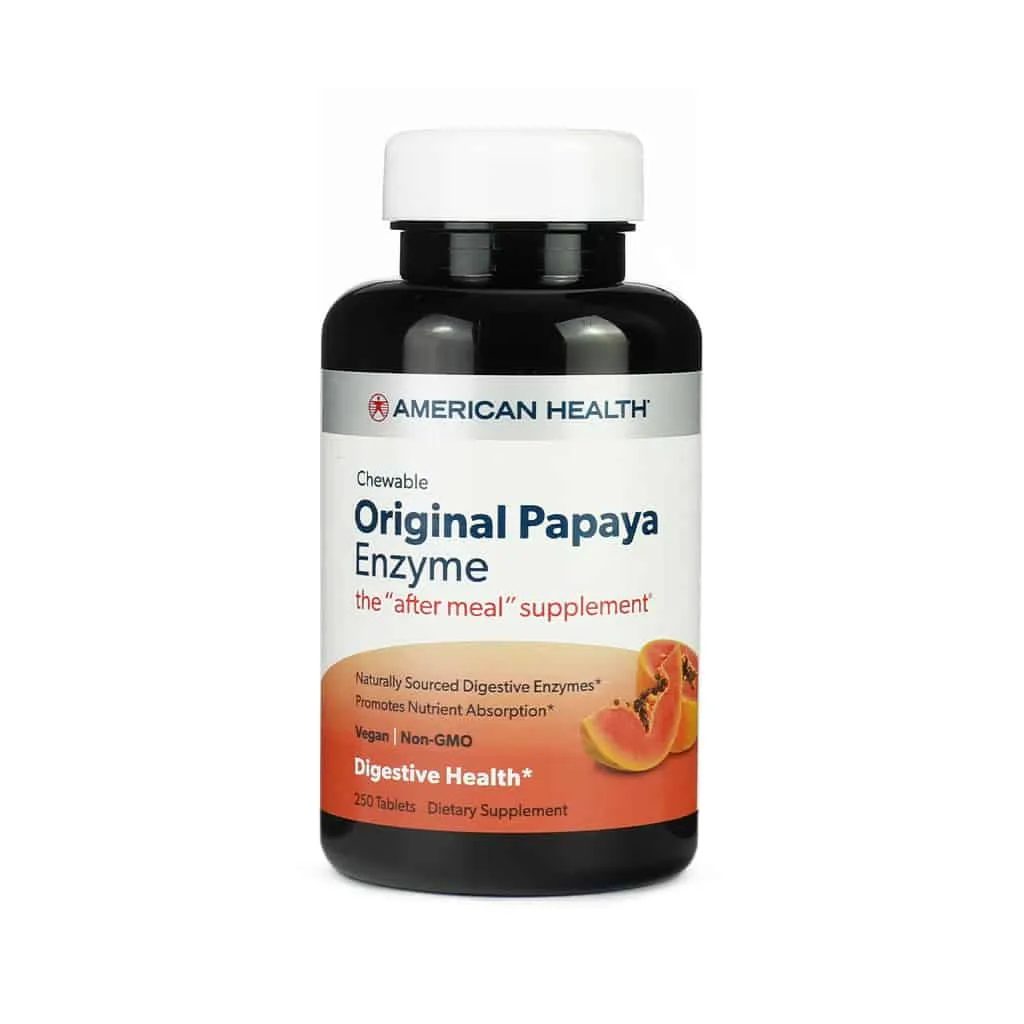
American Health Original Papaya Enzyme Tablets
-
American Health Original Papaya Enzyme Tablets: Label directions: chew one to three tablets after a meal, one to three times a day. The dose is flexible but not unlimited. Follow the bottle rather than guessing, especially if you take other supplements.
-
American Health Original Papaya Enzyme Tablets: Gluten-free, lactose-free, made without GMO ingredients, and vegan- and vegetarian-friendly. These are concrete dietary filters. If you avoid gluten, lactose, or animal-derived ingredients, this product clears those checks based on the supplied label information.
-
American Health Original Papaya Enzyme Tablets: Positioned to support healthy digestion and post-meal comfort and to help break down proteins and carbohydrates.* The claims are specific to digestive comfort and macronutrient breakdown. They do not promise to treat a medical condition.
A buyer's checklist before you choose any enzyme tablet
Use these checkpoints to compare papaya tablets with a broad digestive enzyme, or to decide whether either belongs in your routine.
- Read the enzyme list, not the product name: Look for the specific enzymes and their activity units. American Health names papain, amylase, and protease. A broad blend should name its own list clearly.
- Match the format to your day: A chewable after-meal tablet works if you eat away from home or dislike swallowing capsules. A capsule may suit a pre-meal routine better. Choose the one you will actually take consistently.
- Check the dietary filters that matter to you: Gluten-free, lactose-free, non-GMO, and vegan status are stated for American Health Original Papaya Enzyme. Verify equivalent claims on any alternative.
- Confirm the dose instructions on the bottle: The American Health label allows one to three tablets after a meal, up to three times daily. Do not borrow a dose from a different product or a different enzyme strength.
- Know when to ask a professional: If you have a diagnosed digestive condition, take prescription medication, are pregnant or nursing, or have persistent symptoms, talk to a clinician before adding any enzyme supplement. This article does not replace medical advice.
The trade-offs you accept with a papaya-only tablet
Choosing American Health Original Papaya Enzyme means accepting a narrower enzyme profile in exchange for a simple, chewable after-meal routine. You get papaya-sourced enzymes for protein and carbohydrate breakdown, a vegan and gluten-free formula, and a label that tells you exactly how to take it. You do not get a broad-spectrum blend aimed at fats or dairy, and the supplied information does not include clinical trial results or a guarantee that it will eliminate discomfort after every meal.
That is a fair trade for many people who want occasional digestive backup without adding another capsule to their day. If your goal is broader enzyme coverage, compare the supplement facts panels side by side and look for a product that names the enzymes you need. If your goal is a portable chewable that fits an after-meal habit, the papaya tablet is the more direct fit. Either way, the label, not the marketing copy, should make the decision.