Quick answer
Attach the lanyard through a lanyard hole or split ring on your gear, tighten the snake-knot loop so it cannot slip off, and let the brass darken naturally with handling; clean the cord with mild soap and water and reserve metal polish for the bead only when you want to reset its finish.
Why the B6 bead changes the care routine
A brass bead is not a sealed coating. It reacts to skin oils, humidity, and the abrasives in pocket lint, so the same handling that gives the bead character also transfers grime to the paracord. Treat the two materials separately: the cord tolerates soap and water, while brass responds to polishing and patina control.
The B6 bead is also a fixed component on a hand-tied lanyard. You are not swapping it on and off the way you might a loose bead, so most maintenance happens in place rather than during a rebuild.
When a lanyard is the wrong accessory
A lanyard adds length and a snag point. On gear that lives in a tight pocket or gets used near moving parts, a dangling cord can catch or pull the tool out of your hand. If your carry already sits flush and you never need a retrieval loop, a lanyard is optional rather than essential.
Brass is also relatively soft and will show marks from contact with harder metals. If you want a bead that stays bright and unmarked, accept that brass will not do that without frequent polishing.
Setup and patina questions, answered
How do I attach the paracord lanyard?
Thread the 2-inch loop through a lanyard hole, split ring, or clip point on your knife or flashlight, then pass the bead end through the loop and pull it snug. Check that the loop sits flat and cannot slide free before you carry it. Test the attachment with a gentle tug before the gear goes in your pocket.
Will the brass bead patina on its own?
Yes. Brass darkens as it contacts skin oils, moisture, and air. Carry it regularly and wipe off heavy grime; the color will develop unevenly at first and even out with handling. There is no fixed timeline because it depends on your skin chemistry and environment. Expect blotchy early patina; it is normal, not a defect.
How do I clean the paracord without ruining the knot?
Wash the cord with lukewarm water and a drop of mild dish soap, working it gently by hand. Rinse and blot with a towel, then air-dry fully before carrying. Avoid machine washing, bleach, and direct heat, which can fade color and stiffen the cord. Dry completely before storage to prevent mildew in the knot.
Should I polish the brass bead?
Only if you want to reset the finish. A soft cloth and a small amount of brass polish will brighten it, but polish also removes the patina you have built. Keep polish off the paracord, since it can leave residue in the fibers. Polish is a reset, not routine maintenance.
Can I undo or retie the snake knot?
The lanyard arrives hand-tied, and the snake knot is meant to stay as tied. If you undo it, you need to know the knot pattern to rebuild it, and the cord may not lie as neatly the second time. Treat the knot as permanent unless you are comfortable retying paracord. Decide on bead finish and cord color before you start carrying, because changing them means retying.
What causes a lanyard to fail?
The usual causes are a loop that was never snugged tight, a frayed end working loose, or a split ring that opens under load. Inspect the loop and the bead seat every few weeks, and replace the lanyard if the cord shows deep fraying or the knot has loosened. A quick monthly inspection catches most problems before they drop your gear.
Product facts
-
Paracord Lanyard with B6 Bead Brass: Hand-tied paracord snake knot lanyard with a choice of Antiqued Brass or Brass bead finish and a 2-inch loop. The finish choice sets your starting look, and the 2-inch loop is the part that must fit your gear's attachment point.
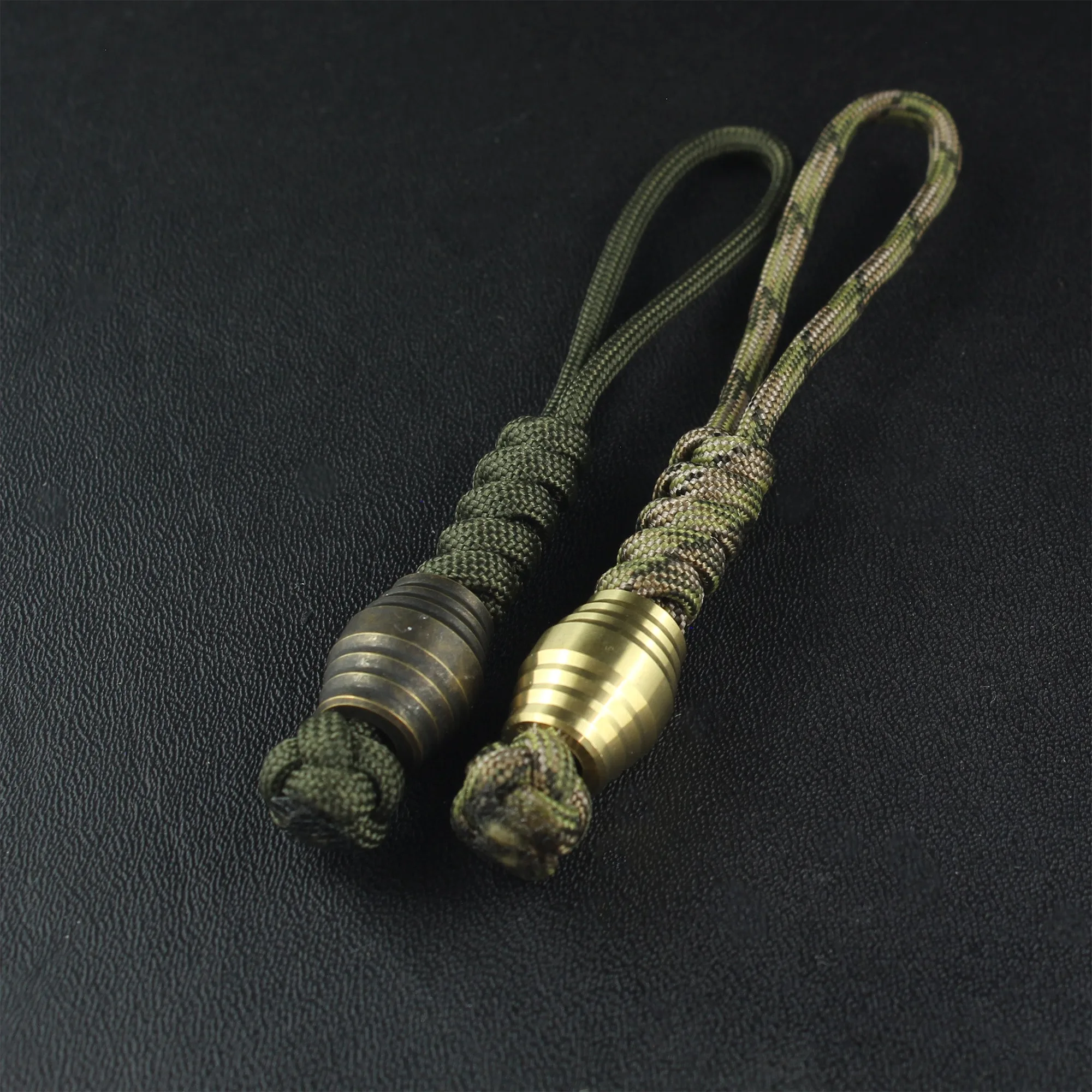
Paracord Lanyard with B6 Bead Brass