Quick answer
Choose an active buzzer for simple on/off alerts that need a fixed tone, and a passive buzzer when you want to generate multiple tones or melodies with PWM control.
Tone control and sound flexibility
An active buzzer contains an internal oscillator that produces a fixed tone (around 2300 Hz for the 5V Active Buzzer) as soon as you apply power. This makes it ideal for simple beeps and alarms where you only need one sound.
A passive buzzer, like the Passive 16ohm PCB Buzzer/Speaker, does not have an internal oscillator. You must drive it with a PWM signal or a square wave from a microcontroller to produce sound. This allows you to create different frequencies and even play simple melodies, but it requires more code and a timer pin.
Wiring and driver requirements
Active buzzers are nearly plug-and-play. Connect them to a digital output pin (or a transistor for higher current) and they sound immediately. The 5V Active Buzzer draws less than 25 mA, so many microcontrollers can drive it directly.
Passive buzzers need a PWM-capable pin or a timer toggling at the desired frequency. The Passive 16ohm PCB Buzzer has a coil resistance of 16 ohms and a maximum voltage of 5V, so you should limit current with a series resistor or use a transistor driver if your microcontroller pin cannot source enough current.
Tradeoffs at a glance
- Ease of use: Active buzzer: just apply power. Passive buzzer: requires PWM signal from a microcontroller timer. Active is best for beginners or quick alerts.
- Sound variety: Active buzzer: fixed single tone (~2300 Hz). Passive buzzer: any frequency you generate, so you can create melodies or variable alerts. Passive wins for projects needing multiple sounds.
- Current and driver: Active buzzer: <25 mA, can often be driven directly from a GPIO pin. Passive buzzer: 16 ohm coil, may need a current-limiting resistor or transistor for safe operation. Check your microcontroller's pin drive capability before choosing.
Product facts
-
5V Active Buzzer: This 5V Active Buzzer produces a tone when powered within its operating range of 3.5 to 5.5 V DC, with a fixed frequency output of 2300 ± 500 Hz. You get a consistent, single-tone beep without any programming beyond turning a pin on or off.
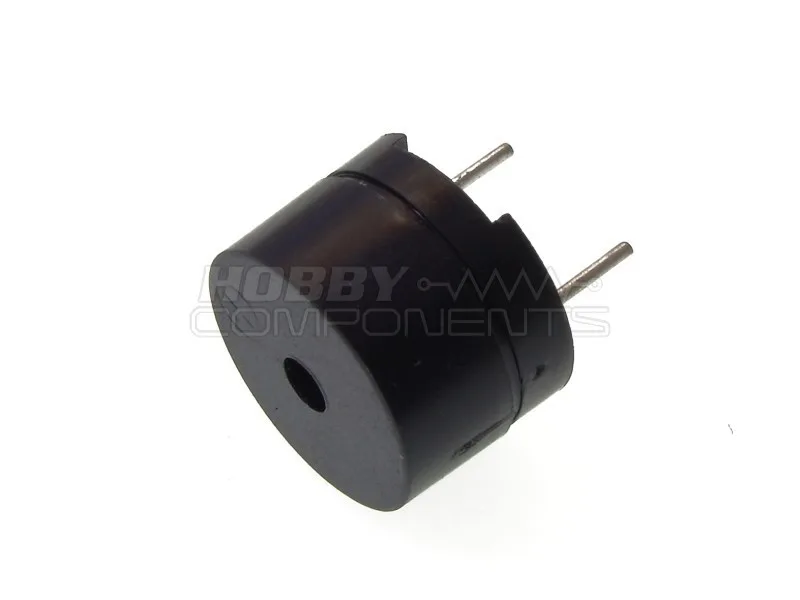
5V Active Buzzer
-
Passive 16ohm PCB Buzzer/Speaker: The Passive 16ohm PCB Buzzer/Speaker is a 12mm diameter miniature speaker with a coil resistance of 16 ohms and a voltage range of 1.5V to 5V. Its lack of internal oscillator lets you produce any frequency within its range, making it suitable for multi-tone alerts or simple audio playback.
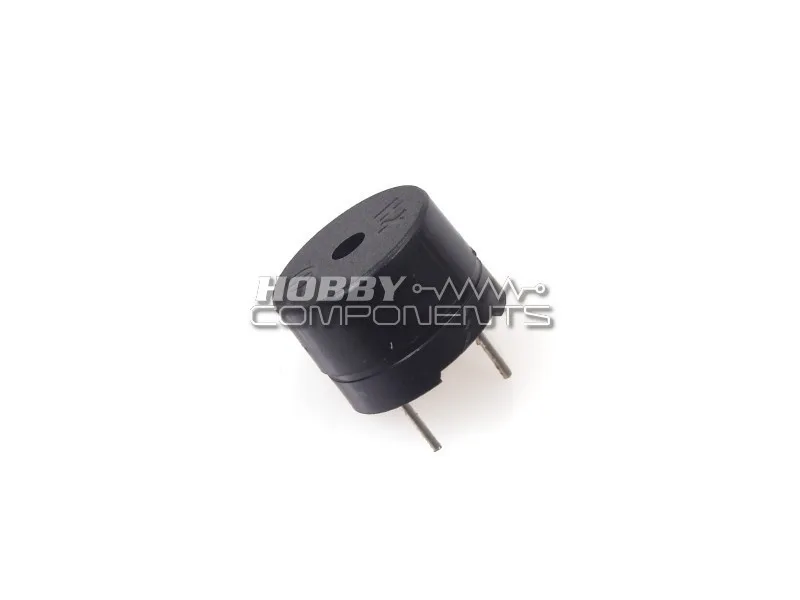
Passive 16ohm PCB Buzzer/Speaker
Which one should you choose?
Best for
- Simple alarm or indicator projects where a single beep is enough
- Beginners who want minimal wiring and coding
- Battery-powered devices where low current consumption is critical
Not for
- Projects that require multiple tones, melodies, or variable pitch
- Audio playback or sound effects that need frequency control