Quick answer
Choose a pattern router bit whose cut length matches your template plus stock thickness, and whose shank matches your router collet: 1/2-inch shank for stability in larger cuts, 1/4-inch shank for lighter work in compact routers. For most template routing, a 1/2-inch pattern bit with a 1-inch cut length is the practical default.
Why cut depth matters more than diameter
The bearing on a pattern bit rides against your template, so the cut length must cover the full thickness of the material you are trimming in one pass. If the bit is too short, you will need to flip the workpiece or make a second setup, which invites misalignment. If the bit is much longer than needed, the extra exposed cutting edge increases deflection and burn risk.
Cut diameter affects the corner radius and the amount of material removed per pass, but cut depth determines whether the bit can complete the template routing job at all. Start by measuring your template thickness and stock thickness together, then choose a cut length that covers that combined height.
Shank size: stability versus router compatibility
A 1/2-inch shank provides more rigidity and is the safer choice for deeper cuts and harder materials. A 1/4-inch shank fits compact routers and trim routers, but it flexes more under load, so it suits shallower cuts and lighter passes. Neither shank is universally better; the right choice depends on your router collet and the depth of cut you need.
If your router accepts both sizes, use 1/2-inch shank bits for template routing whenever the cut depth exceeds roughly 1/2 inch or the material is dense. Reserve 1/4-inch shank bits for small templates, thin stock, or situations where the router itself is the limiting factor.
When a longer cut length is the wrong answer
A bit with a longer cut length than your template and stock require exposes more carbide below the bearing. That extra length can flex and leave chatter marks, especially in a 1/4-inch shank bit. If you routinely work with thin templates and thin stock, a shorter pattern bit will produce cleaner results than a long one used partway.
Also consider the bearing position: on a pattern bit, the bearing sits above or below the cutter depending on the design. Confirm that the bearing will contact your template across the full cut depth, not just at the start.
Decision rules for choosing cut depth and shank
- Match cut length to template plus stock: Measure the combined thickness of your template and workpiece. Choose a bit whose cut length equals or slightly exceeds that measurement so the bearing can register against the template through the full cut. If no standard cut length matches, choose the next longer size rather than making two passes with a short bit.
- Choose 1/2-inch shank for cuts over 1/2 inch deep: For cut depths greater than about 1/2 inch, or for dense hardwoods, use a 1/2-inch shank pattern bit to reduce deflection and chatter. Confirm your router collet accepts 1/2-inch shanks before buying.
- Choose 1/4-inch shank for compact routers and light passes: If your router only accepts 1/4-inch shanks, or you are trimming thin stock with a small template, a 1/4-inch shank pattern bit is appropriate. Keep cut depth modest and take light passes. Avoid forcing a 1/4-inch shank bit through deep cuts in hard material.
- Check bearing placement against your template: Verify that the bearing will ride on the template edge for the entire cut depth. A bearing that loses contact partway through the cut will cause the bit to wander. Test the setup on scrap before cutting your final workpiece.
Two Whiteside pattern bits compared
-
1/2″ Pattern Router Bit – 1″ Cut – Whiteside 3004: 1/4-inch shank, 1/2-inch cut diameter, 1-inch cut length, 2-1/2-inch overall length, 16,000 RPM recommended. This is a compact pattern bit for trim routers and shallow template work where a 1/4-inch collet is the only option.
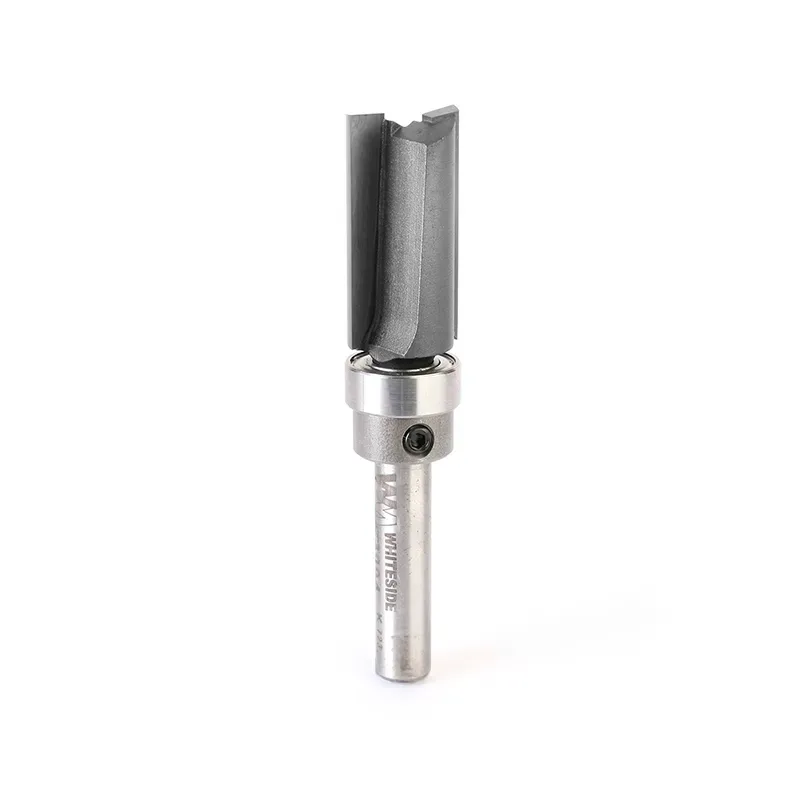
1/2″ Pattern Router Bit – 1″ Cut – Whiteside 3004
-
3/4″ Template Router Bit – 1.5″ Cut – 1/2″ Shank – Whiteside 3022: 1/2-inch shank, 3/4-inch cut diameter, 1-1/2-inch cut length, 3-1/4-inch overall length, 16,000 RPM recommended. The larger shank and longer cut length suit deeper template routing in thicker stock where stability matters.
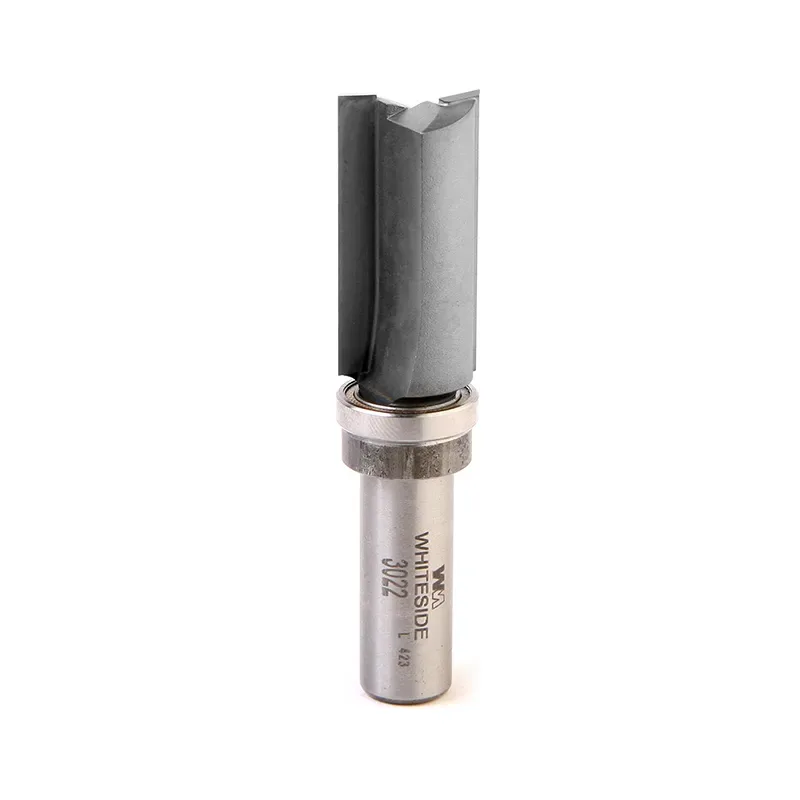
3/4″ Template Router Bit – 1.5″ Cut – 1/2″ Shank – Whiteside 3022
Who should choose which
Best for
- Woodworkers using a trim router or 1/4-inch collet for shallow template routing
- Projects with thin templates and stock where a compact bit improves control
Not for
- Deep template cuts in thick hardwood where a 1/2-inch shank is needed for stability
- Routers that only accept 1/2-inch collets