Quick Answer
For most Dodge RAM owners who tow or haul, the https://pedalcommanderzs.com/products/pc31-b8b80ce1754bfdfb972cc100-2706850Pedal Commander PC31 Bluetooth is the easiest starting point because it is a plug-and-play throttle response controller with 36 sensitivity settings and smartphone app control. If you drive a RAM model that uses a different connector, match the controller to your specific vehicle instead of assuming one unit fits every truck. Buy based on fitment first, then choose the driving mode that matches the load.

throttle response controller
Towing and hauling expose every delay in your truck's throttle. When you press the pedal to merge with a loaded trailer or climb a grade, the factory pedal map often softens that input to protect the drivetrain and smooth out daily driving. That is fine when the bed is empty, but it can feel vague when you are asking for power with weight behind you.
A throttle response controller changes how the pedal signal is interpreted before it reaches the ECU. It does not add horsepower or increase the manufacturer's torque rating. What it does is remove the lag between your foot and the engine's reaction, which is exactly what many RAM owners notice when they want a more direct feel while towing, passing, or maneuvering a loaded truck.
Why RAM Throttle Response Feels Soft Under Load
Modern RAM trucks use drive-by-wire throttle systems. The pedal sends an electronic signal, and the ECU decides how much throttle to apply based on a map that prioritizes smoothness, emissions, and fuel economy. Under load, that map can feel hesitant because the truck is not applying your full pedal input immediately.
A throttle controller sits between the pedal and the factory harness and modifies that signal. The practical result is a shorter delay between pressing the pedal and feeling the engine respond. For towing, that matters most when you are merging, maintaining speed on a grade, or making small throttle adjustments in traffic while carrying weight.
- A controller does not raise your truck's tow rating or payload capacity.
- It changes pedal feel, not engine output.
- Start with a mild setting and adjust based on load and road conditions.
Which Pedal Commander Fits Your Dodge RAM
Fitment is the first decision, not the last. Pedal Commander lists vehicle-specific products, and the connector type varies by model and year. The Pedal Commander PC31 Bluetooth is a Main Plug category unit, while the PC26-EU, PC25-JP, and PC31-DE are listed under Throttle Response Controller for different regions and applications. Buying the wrong connector means the unit will not plug in, no matter how good the settings are.
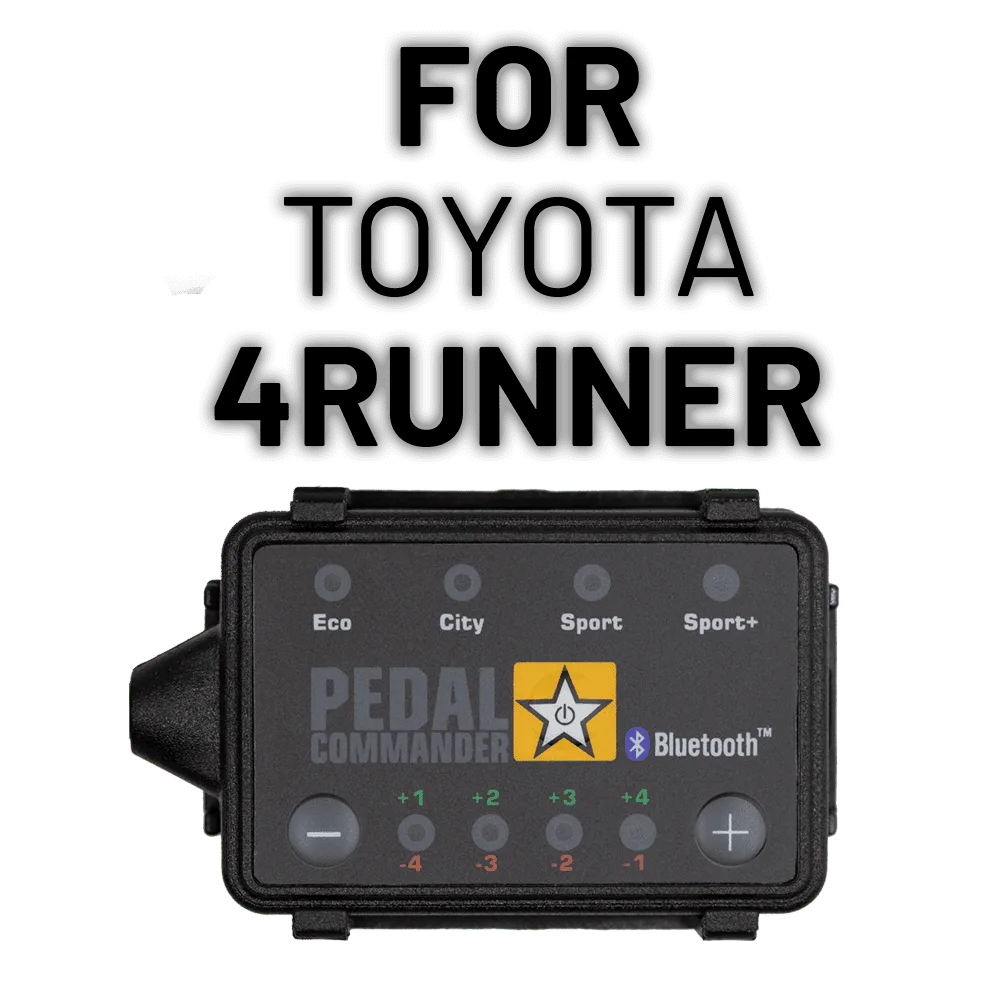
The product records in this store include vehicle-specific listings such as Pedal Commander for Toyota 4Runner and Pedal Commander for Mazda MX5 Miata, which show how trim and generation determine the correct part. For RAM, check your model year, engine, and trim before ordering. If your exact RAM configuration is not listed, contact support rather than guessing.
- Match the controller to your RAM's model year and connector type.
- Do not assume a unit for one RAM generation fits another.
- When in doubt, verify fitment before purchase.
Towing and Hauling: What Changes in Real Driving
The most noticeable change when towing is how quickly the truck responds to part-throttle input. Instead of pressing the pedal and waiting, you get a more immediate reaction. That can make it easier to hold a steady speed on a grade and to make small corrections without overshooting.
The trade-off is that a more aggressive setting can make the truck feel twitchy, especially in stop-and-go traffic or on wet roads. With a trailer attached, smooth inputs matter more, not less. Many drivers prefer a lower setting for towing and a higher setting for empty-bed driving, which is why the ability to change modes quickly is useful.
- Use a lower setting when towing to keep inputs smooth.
- Switch to a higher setting when the truck is empty and you want sharper response.
- Avoid aggressive settings in low-traction conditions.
Installation and Daily Use
Pedal Commander units are described as plug-and-play. Installation does not require reprogramming the ECU, and the controller can be removed without leaving a permanent change. That matters if you lease your RAM or want to return the truck to stock behavior for a dealer visit.
The PC26-EU, PC25-JP, and PC31-DE listings share the same core feature set: they eliminate the gas pedal's response delay, offer 36 sensitivity settings, work with an app on Google Play and the App Store, and include a 2-year product warranty. The PC31 Bluetooth is listed as a Standard option in the Main Plug category. Confirm the specific features of your chosen unit before buying.
- No ECU reprogramming required.
- Remove it before dealer service if you want stock behavior.
- Keep the app updated for the smoothest Bluetooth control.
Settings That Work for Towing Versus Empty Driving
The 36 sensitivity settings give you a wide range, but more is not always better. For towing, start in a lower mode and increase only if the truck feels unresponsive. For empty highway driving, a mid-to-high setting can make merging and passing feel more direct without being harsh.
If you share the truck with another driver, agree on a baseline setting and adjust from there. The goal is predictability, not maximum aggression. A setting that feels exciting solo can feel unstable with a trailer, especially in crosswinds or on uneven pavement.
- Towing: start low, increase gradually.
- Empty driving: mid-to-high settings are usually comfortable.
- Wet or icy roads: reduce the setting.
Decision Rules for Buying a Pedal Commander for Your RAM
- Rule 1: Fitment before features: Confirm your RAM's model year, engine, and connector type. If your exact configuration is not listed, do not order until you verify fitment with support. A controller that does not plug in has zero value, regardless of settings.
- Rule 2: Match the mode to the load: Use a lower sensitivity setting when towing or hauling, and a higher setting when the truck is empty. Adjust for weather and traffic. Smooth inputs matter more with a trailer attached.
- Rule 3: Keep the stock behavior in reach: Because installation is plug-and-play and reversible, you can return the truck to factory throttle feel before dealer service or when another driver uses it. Reversibility is a practical advantage for leased or shared trucks.
Product Facts Worth Knowing
- Pedal Commander PC31 Bluetooth: Listed in the Main Plug category as a Standard option (SKU PDC45985702), priced at USD 165.00 with a catalog comparison price of USD 329.99. This is the most straightforward starting point for many RAM owners who want Bluetooth control and a standard plug-in installation.
- Pedal Commander PC26-EU: Eliminates the gas pedal's response delay, plug-and-play installation, 36 sensitivity settings, app on Google Play and App Store, Bluetooth smartphone control, and a 2-year product warranty. These are the core features to expect from a Pedal Commander unit, and they apply directly to towing and hauling use where quick pedal response matters.
- Pedal Commander for Toyota 4Runner: Shows vehicle-specific fitment by generation and trim, with different part numbers for N210, N280, and N500 models. It demonstrates why RAM buyers must match the controller to their specific model year and trim rather than assuming one unit fits all trucks.
Who Should Buy a Pedal Commander for Their RAM
Best for
- RAM owners who tow or haul and want quicker pedal response under load
- Drivers who want adjustable throttle feel without ECU reprogramming
- Owners who want a reversible, plug-and-play upgrade
Not for
- Drivers expecting more horsepower or a higher tow rating
- Owners who have not confirmed connector fitment for their exact RAM
- Drivers who prefer a single fixed throttle feel and never adjust settings
A Pedal Commander for your Dodge RAM is a practical way to sharpen throttle response for towing and hauling, provided you match the unit to your truck and use settings that suit the load. Start with fitment, choose a lower setting when towing, and keep the stock feel available when you need it.