Quick answer
Pedal Commander is worth it if you want to eliminate the gas pedal's response delay and tune sensitivity with 36 settings, including app control over Bluetooth. The stock throttle map stays the better choice if you want zero extra hardware, no device to mount or pair, and a factory-fixed pedal feel. The deciding factor is usually how much you dislike the delay, not how much power your engine makes.

Pedal Commander
Most drivers notice it before they can name it: you press the gas, and the car seems to think about it first. That pause is not a lack of power. It is the stock throttle map filtering your input for smoothness and emissions, and it is the exact thing a throttle response controller changes.
throttle response controller
This comparison puts the factory setup and Pedal Commander side by side on the facts that matter: response delay, adjustability, installation, app control, warranty, and fitment. No dyno claims and no promises of extra horsepower, because a controller does not add power. It changes how quickly the engine answers your right foot.
What actually changes between stock and Pedal Commander
A stock throttle map is fixed. The pedal signal is filtered and averaged so the car pulls away smoothly, which is great for parking-lot manners and not great when you want an immediate response at a merge or a corner exit. You cannot adjust it, and it does not change with driving mode on most vehicles.
Pedal Commander sits between the pedal and the vehicle and eliminates the gas pedal's response delay, with 36 sensitivity settings you can change on the fly. In practice, that means the same engine feels sharper in Eco and noticeably quicker in Sport, without touching the ECU tune or adding parts under the hood.
- Think of it as remapping your input, not your engine output.
- Change one setting at a time so you can feel the difference clearly.
Response delay: the difference you feel first
The clearest throttle response comparison is a simple roll-on from a steady cruise. With the stock map, there is a beat between pedal movement and acceleration. With Pedal Commander installed, that beat shortens dramatically because the signal is no longer being smoothed out the same way.
This matters most in stop-and-go traffic, on highway on-ramps, and in heavier vehicles where the factory map is conservative. It is also why drivers who tow or carry loads often notice the change immediately, even though the controller is not adding torque.
Adjustability, app control, and installation
Stock gives you one setting forever. Pedal Commander gives you 36 sensitivity settings plus an app on Google Play and the App Store, so you can control it from a smartphone over Bluetooth instead of reaching for a module. Installation is plug and play, which means no cutting or splicing.
The honest trade-off is that you now own a small device and a pairing step. Stock has no app to learn, no module to mount, and nothing to unplug before a service visit. Pedal Commander covers its hardware with a 2-year product warranty, but it is still aftermarket equipment you are adding to the car.
- Set a mild mode for wet roads and a sharper one for dry, open roads.
- Keep the app installed so you can adjust without pulling over.
Fitment decides which unit you actually order
This is where a comparison gets practical: Pedal Commander is not one universal part. The right SKU depends on your vehicle, generation, and engine. Ordering by model name alone is the most common way to end up with the wrong connector.
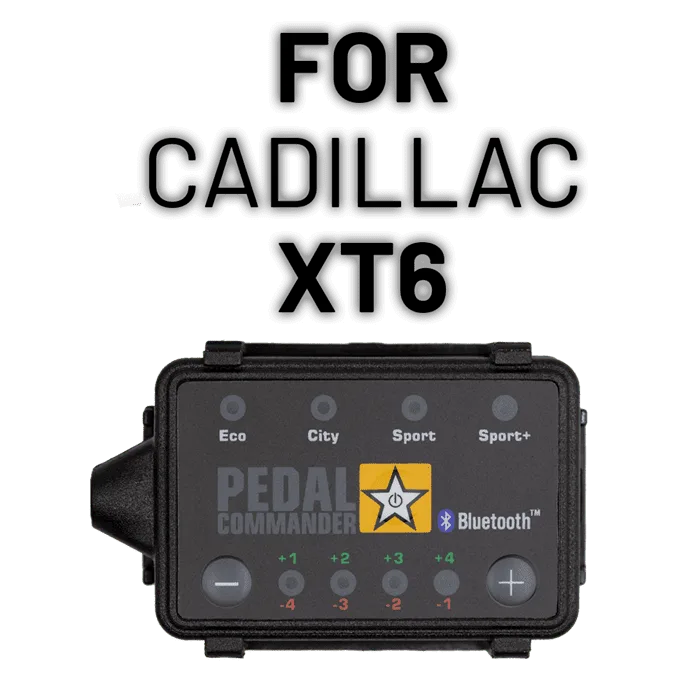
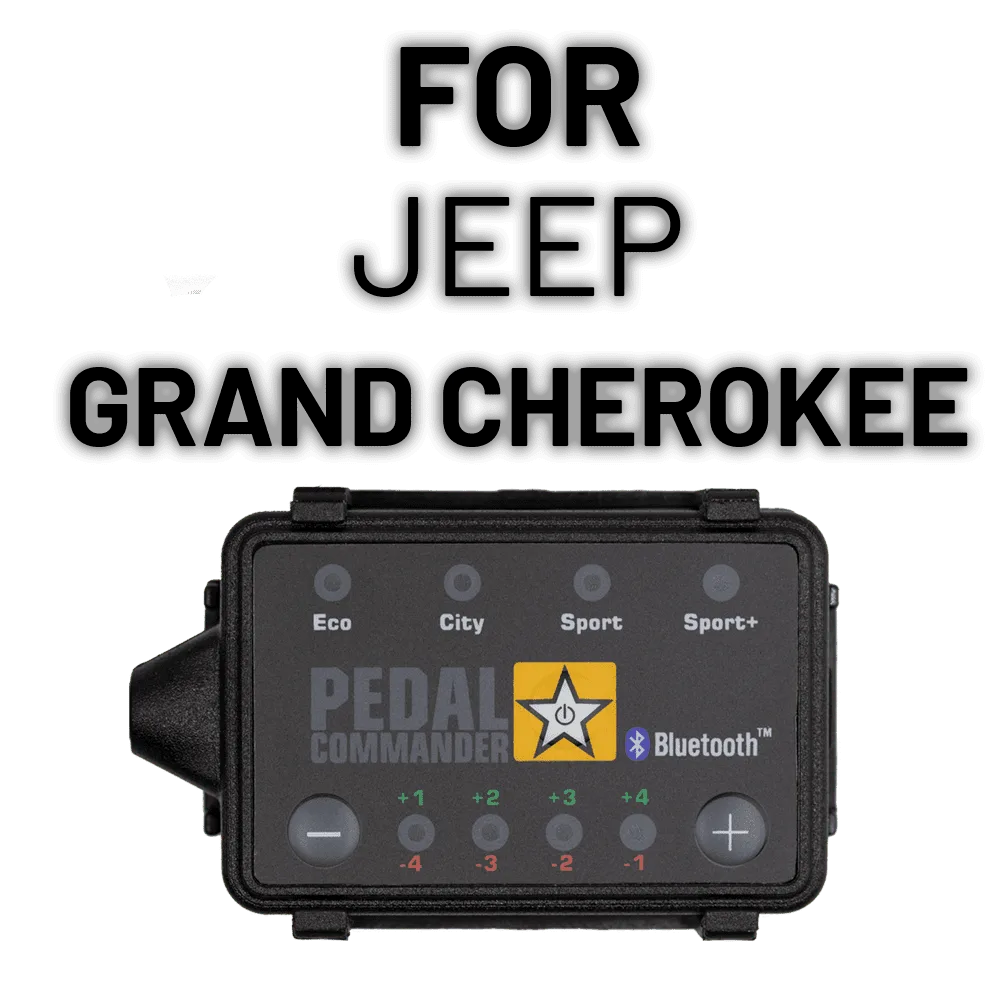
For example, Pedal Commander for Cadillac XT6 is offered in two fitment options so you can match the controller to your vehicle: PC75 for the 1st Gen (2020) 3.5L V6, and PC49 for the 1st Gen (2021 and newer) 2.0L Turbo to 3.5L V6, covering Premium Luxury, Sport, and Luxury trims. Jeep Grand Cherokee follows the same pattern, splitting across WK, WK2, and WL generations and their specific engines.
- Check your model year, generation, and engine before choosing.
- If two options look close, match the engine, not just the body style.
The trade-offs, honestly
- Gain: immediate pedal response: Pedal Commander eliminates the gas pedal's response delay, so the car reacts closer to the moment you press down. Stock keeps the factory smoothing that some drivers prefer in traffic. If the delay is what bothers you, this is the fix.
- Gain: 36 settings and app control: You get 36 sensitivity settings and Bluetooth control through the app on Google Play and the App Store. Stock gives you one fixed map with nothing to adjust or pair. More control also means more setup; pick a base setting and leave it.
- Cost: hardware, fitment, and warranty terms: You are adding an aftermarket device with a 2-year product warranty, and you must match the correct SKU to your generation and engine. Stock needs no ordering decision at all. Verify fitment first; it is the one step you cannot skip.
Product facts behind this comparison
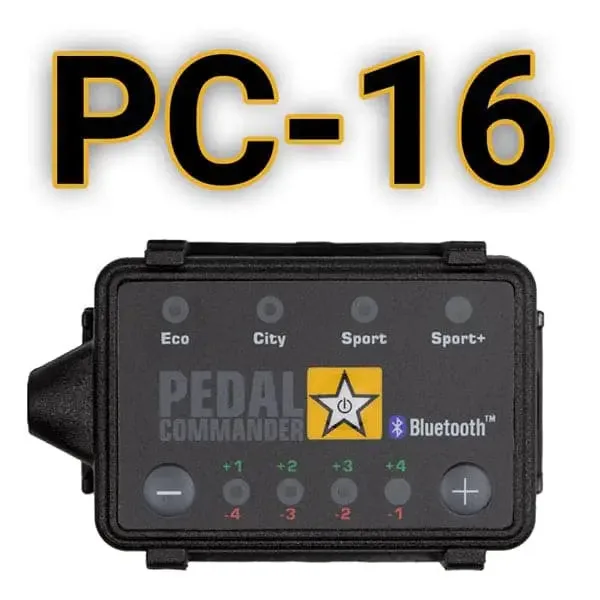
- Pedal Commander PC16-UK: Eliminates the gas pedal's response delay, plug and play installation, 36 sensitivity settings, app on Google Play and App Store, Bluetooth smartphone control, 2-year product warranty. This is the core of the upgrade case: the delay goes away, and you keep control over how aggressive the pedal feels.
- Pedal Commander for Cadillac XT6: Offered in two fitment options: PC75 for Cadillac XT6 1st Gen (2020) 3.5L V6, and PC49 for 1st Gen (2021 and newer) 2.0L Turbo to 3.5L V6. Applicable trims include Premium Luxury, Sport, and Luxury. It shows why you must order by generation and engine, not just by model name, or the connector will not match.
- Pedal Commander for Jeep Grand Cherokee: Fitment splits across PC30 for WK (2005-2006), PC31 for WK (2007-2010) and WK2 (2011-2022), and PC78 for WL (2021+) across the listed gas and diesel engines. Older and newer Grand Cherokees use different units, so the same vehicle name can lead to three different orders.
Who should choose which
Choose Pedal Commander if
- You notice the stock pedal delay daily and want it gone.
- You want adjustable sensitivity, including app control over Bluetooth.
- You drive a truck, SUV, or heavier vehicle where the factory map feels lazy.
Stay with the stock throttle if
- You want zero added hardware, pairing steps, or settings to manage.
- You are satisfied with the factory pedal feel and see no delay.
- You expect horsepower gains; a controller changes response, not output.
The pedal commander vs stock question comes down to one thing: whether the delay bothers you enough to add a device. If it does, 36 settings, app control, and plug and play installation make the upgrade easy to live with. Check your generation and engine first, then decide.