Quick answer
If you need powerful, directional airflow for a large workshop or garage, a pedestal fan is the better choice. If you want a slim, space-saving oscillating fan for a living room or bedroom, a tower fan is the way to go.
Airflow and coverage
Pedestal fans typically have larger blades and a more powerful motor, moving more air at higher speeds. This makes them ideal for cooling large areas like workshops, garages, or open-plan living spaces where you want a strong, direct breeze.
Tower fans have a smaller footprint and use a blower or impeller to push air through a vertical column. They provide a wider, more diffused airflow that is gentler and less focused, which can be more comfortable in a bedroom or office where you don't want a strong draft.
Space and portability
Tower fans are designed to be slim and fit into tight spaces, often taking up less than a square foot of floor area. They are easy to place next to furniture or in a corner without blocking walkways.
Pedestal fans have a wider base and a taller profile, requiring more floor space. However, they are still portable and can be moved from room to room. Some models, like the 30 In. 3-Speed Tilting Yoke Pedestal Fan, offer tool-free tilt adjustment for precise directional control.
Oscillation and control
Both fan types typically offer oscillation, but the range and pattern differ. Pedestal fans usually oscillate in a wide arc, covering a large area. Tower fans often have a wider, more consistent oscillation pattern that can reach multiple people in a room.
Pedestal fans often have simple mechanical controls (buttons or knobs) and a manual tilt adjustment. Tower fans frequently include remote controls, timers, and multiple speed settings, making them more convenient for use in a bedroom or living room.
Pedestal fan vs tower fan: trade-offs
- Airflow power: Pedestal fans move more air at higher speeds, creating a strong, direct breeze. Tower fans produce a gentler, more diffused airflow that is less disruptive.
- Space saving: Tower fans have a slim, vertical design that fits in tight spaces. Pedestal fans require more floor space and are wider at the base.
- Oscillation coverage: Pedestal fans typically oscillate in a wide arc, covering a large area. Tower fans often have a wider, more consistent oscillation pattern that can reach multiple people.
- Control and convenience: Tower fans often include remote controls, timers, and multiple speeds. Pedestal fans usually have simple mechanical controls and manual tilt adjustment. Choose a tower fan if you want remote convenience and programmable features. Choose a pedestal fan if you prefer simple, reliable controls.
Product facts
-
30 In. 3-Speed Tilting Yoke Pedestal Fan: Superior stability & tilt control with a unique yoke-style mount to easily tilt and secure the fan head at the perfect angle using tool-free locking knobs. You can direct airflow exactly where needed without tools, ideal for workshops or job sites where you need to cool a specific work area.
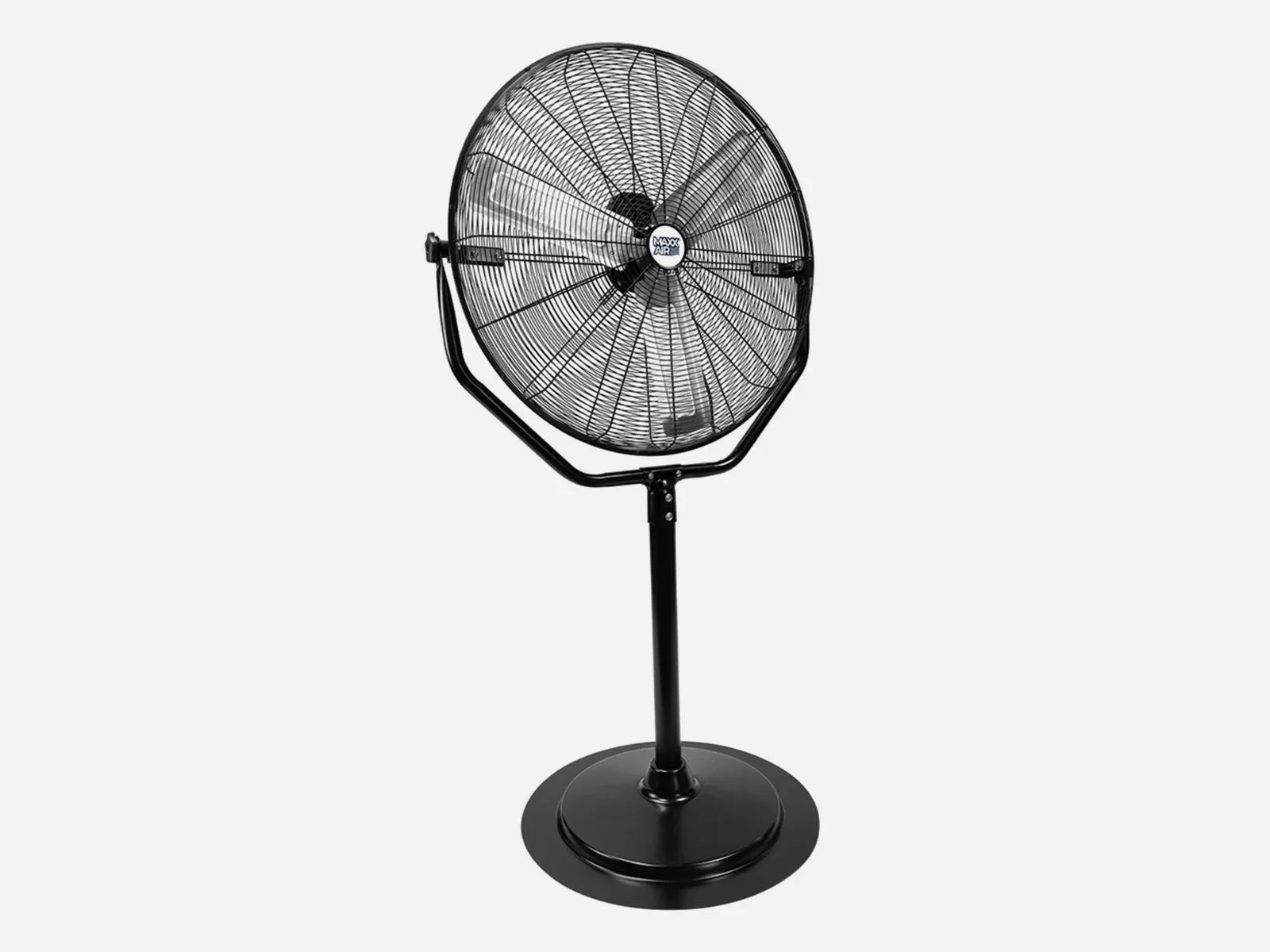
30 In. 3-Speed Tilting Yoke Pedestal Fan
-
30 In. 3-Speed Tilting Yoke Pedestal Fan: Minimal setup time—the fan head arrives pre-assembled. Only minimal assembly of the pole and base is required using common household tools. You can start cooling within minutes of unboxing, making it a convenient "out of the box" solution for busy workshops or job sites.
Which fan type is right for you?
Best for
- Large rooms, workshops, or garages where powerful, directional airflow is needed.
- Users who want a simple, durable fan with easy tilt control and quick setup.
Not ideal for
- Small rooms or tight spaces where floor space is at a premium.
- Users who want a quiet, gentle breeze and remote control convenience.