Quick answer
For most journaling, start with a 0.5mm fine-point black gel pen set. That tip size balances detail and smoothness, works for handwriting and small sketches, and black gel ink dries quickly on common journal paper. If you already know you prefer bold lines or colored ink, choose a set that matches that preference instead of buying a mixed set you will only half use.
A journaling pen set is not a single product category. It is a bundle of choices: tip size, ink type, barrel shape, and how many pens you actually need. The right set depends on how you journal, not on how many pens are in the box.
This guide explains the trade-offs behind a journaling pen set, how to choose pens for journaling when you are unsure, and when a small set of individual pens beats a large one. It also covers concrete decision rules so you can stop researching and start writing.
Start with tip size, not pen count
Tip size determines what a pen can do. A 0.5mm fine point is the most versatile for journaling: it is small enough for tight handwriting, margin notes, and simple diagrams, but not so fine that it scratches or skips on textured paper. Larger tips produce bolder lines that fill space faster but blur small letters. Smaller tips give precision but can feel scratchy if you write quickly.
If you are buying your first journaling pen set, choose one tip size across the whole set. Mixed tip sizes sound flexible, but most people settle on a favorite within a week and leave the rest unused. A set of four pens in the same 0.5mm fine point gives you backups and color variety without a learning curve.
- Write one sentence with your current pen. If your letters close up, go finer. If they look thin and faint, go bolder.
- Check the stated tip size on the listing or packaging. If it is not listed, treat that as a limitation and ask before buying.
Ink type: gel, ballpoint, or rollerball
Gel ink is the default for journaling because it lays down dark, smooth lines with low pressure, which matters when you write for pages at a time. Black gel ink is the safest choice for scanning, photocopying, and long-term readability. The trade-off is drying time: gel ink can smudge if you are left-handed or write fast, so give it a second before closing the notebook.
Ballpoint ink dries almost instantly and rarely smudges, but it requires more pressure and often looks lighter on the page. Rollerball ink writes wet and expressive but bleeds through thin paper. If your journal has thin pages, gel or ballpoint is usually the better match. If you mainly write short lists, ballpoint is fine.
- Test a new pen on the last page of your journal before committing to a full entry.
- If you are left-handed, keep a scrap sheet under your hand to avoid dragging through wet gel ink.
Barrel and grip: the part you actually hold
Barrel shape affects how long you can write comfortably. A slim barrel suits small hands and precise grip; a wider barrel reduces finger fatigue over long sessions. Jotter-style pens are usually slim and lightweight, which makes them easy to carry but less cushioned for marathon writing. If you write for more than twenty minutes at a time, look for a barrel with a slight taper or a soft grip section.
Barrel color and printed text are aesthetic choices, not performance ones. They matter more than people admit, because a pen you enjoy picking up gets used. A pen with a phrase that fits your mood can make daily journaling feel less like a chore, which is a legitimate reason to choose it.
- Hold the pen uncapped for thirty seconds before buying. If your grip shifts, the barrel is too narrow or too smooth.
- Weight matters more than length. A pen that feels top-heavy will tire your hand faster.
When a set beats single pens, and when it does not
A pen set makes sense when you want consistency: same tip, same ink, same feel, with spares for your bag, desk, and journal cover. It also makes sense as a gift or as a low-risk way to try a brand. A set does not make sense if you only need one pen, or if you already know you dislike a particular ink type.
The honest trade-off is that sets often include one or two pens you would not have chosen. If the set is cheap enough, that is acceptable. If it is not, buy two individual pens in the tip and ink you actually want. A journaling pen set for beginners should be small, matched, and easy to replace.
- Count the pens you lost or dried out in the last year. That number is your ideal set size.
- Check whether refills are available. If not, treat the set as disposable and factor that into the price.
Paper compatibility: the variable most buyers ignore
The same pen can feel smooth on one notebook and scratchy on another. Paper weight, coating, and texture all change how ink sits. Gel ink generally performs well on smooth, medium-weight paper. On rough or recycled paper, fine tips can catch and skip. On very thin paper, wet inks can ghost or bleed through.
Before blaming a pen, test it on the paper you actually use. If you journal in more than one notebook, keep a pen that works across all of them rather than a specialist pen that only shines on one. This is why a 0.5mm black gel pen is such a common recommendation: it tolerates a wider range of paper than most alternatives.
- Write on both sides of a test page. If you can read the reverse clearly, the ink is too wet for that paper.
- Keep one pen reserved for your main journal so you notice paper problems early.
Decision rules for buying a journaling pen set
- If you are new to journaling: Choose a small set of 0.5mm fine-point black gel pens. Same tip, same ink, no decisions while writing. Buy four pens or fewer. You can expand once you know your preference.
- If you already have a favorite pen: Buy individual pens in that exact tip and ink rather than a set that includes other sizes. A set is only a good deal if you will use most of it.
- If you write for long sessions: Prioritize barrel comfort over color or printed text. A slim jotter pen is portable but less cushioned. Hold the pen before committing to a full set.
- If you journal in thin notebooks: Avoid wet rollerball inks. Stick to gel or ballpoint and test on the reverse side of the page. Paper compatibility can matter more than the pen itself.
- If the listing omits tip size or ink type: Treat that as missing information, not as a neutral detail. Ask the seller or choose a listing that states it. You cannot judge smoothness or smudge risk without those two specs.
Product facts that illustrate the trade-offs
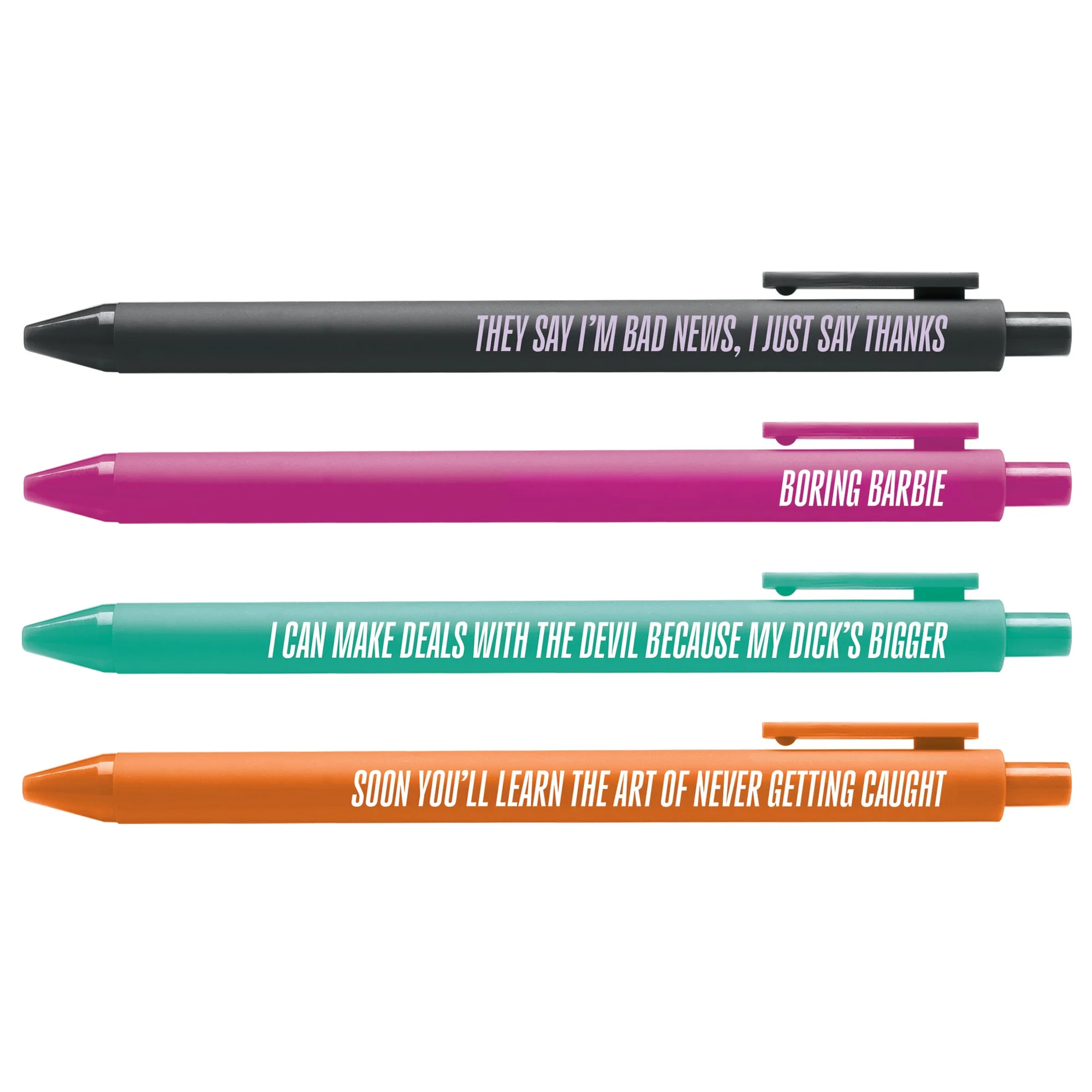
- CANCELLED! Pen Set: Four jotter gel pens with a 0.5mm fine point and black gel ink, packaged in a cello sleeve with card backing. A matched set in one tip size and ink color is the simplest way to get consistency and spares without choosing between incompatible pens.
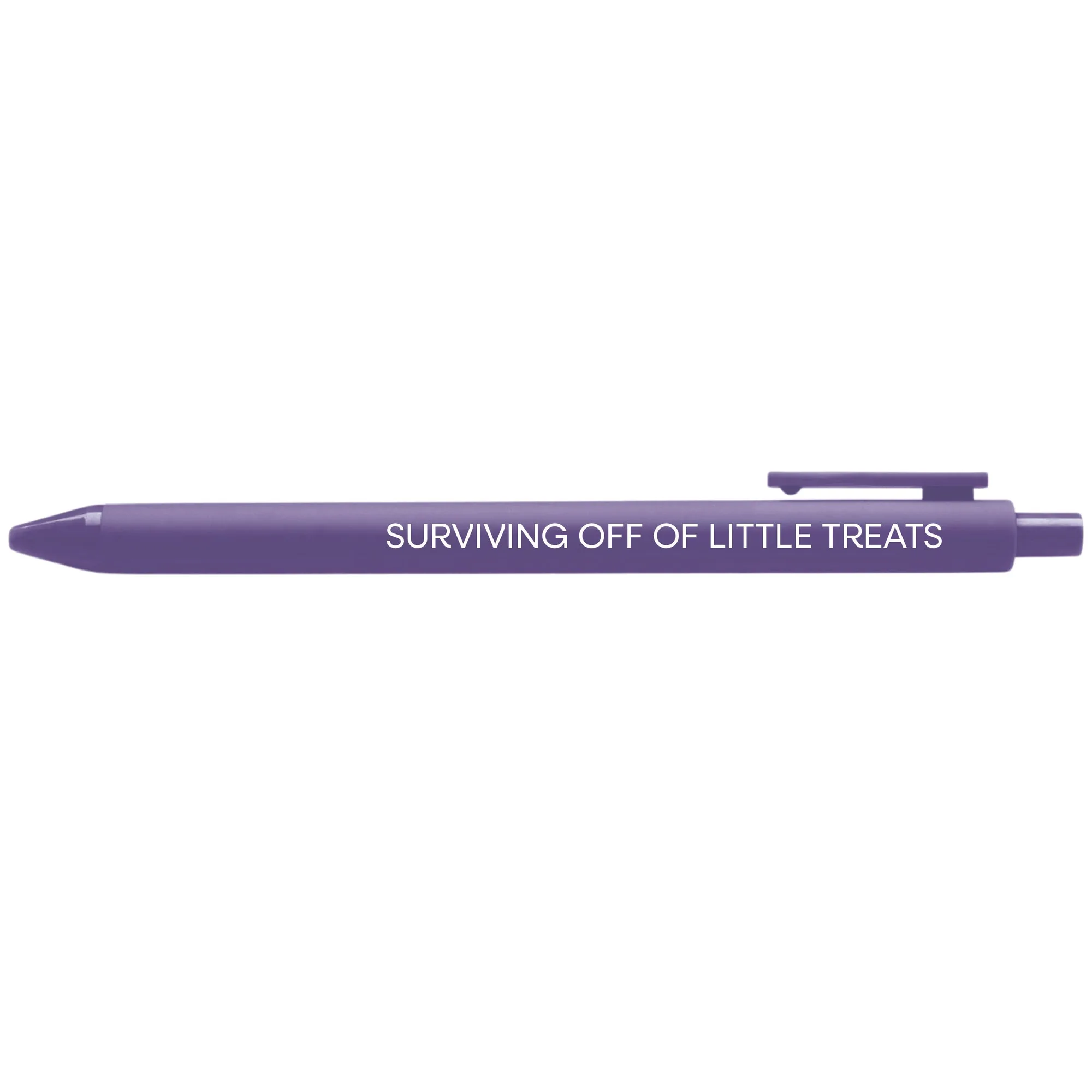
- Surviving Off of Little Treats Pen: Purple barrel, 0.5mm fine point, black ink. The listing notes that actual pen color may vary slightly due to device settings. Buying a single pen is a low-risk way to test a tip size before committing to a set, and the color caveat is a reminder to check expectations on screen versus in hand.
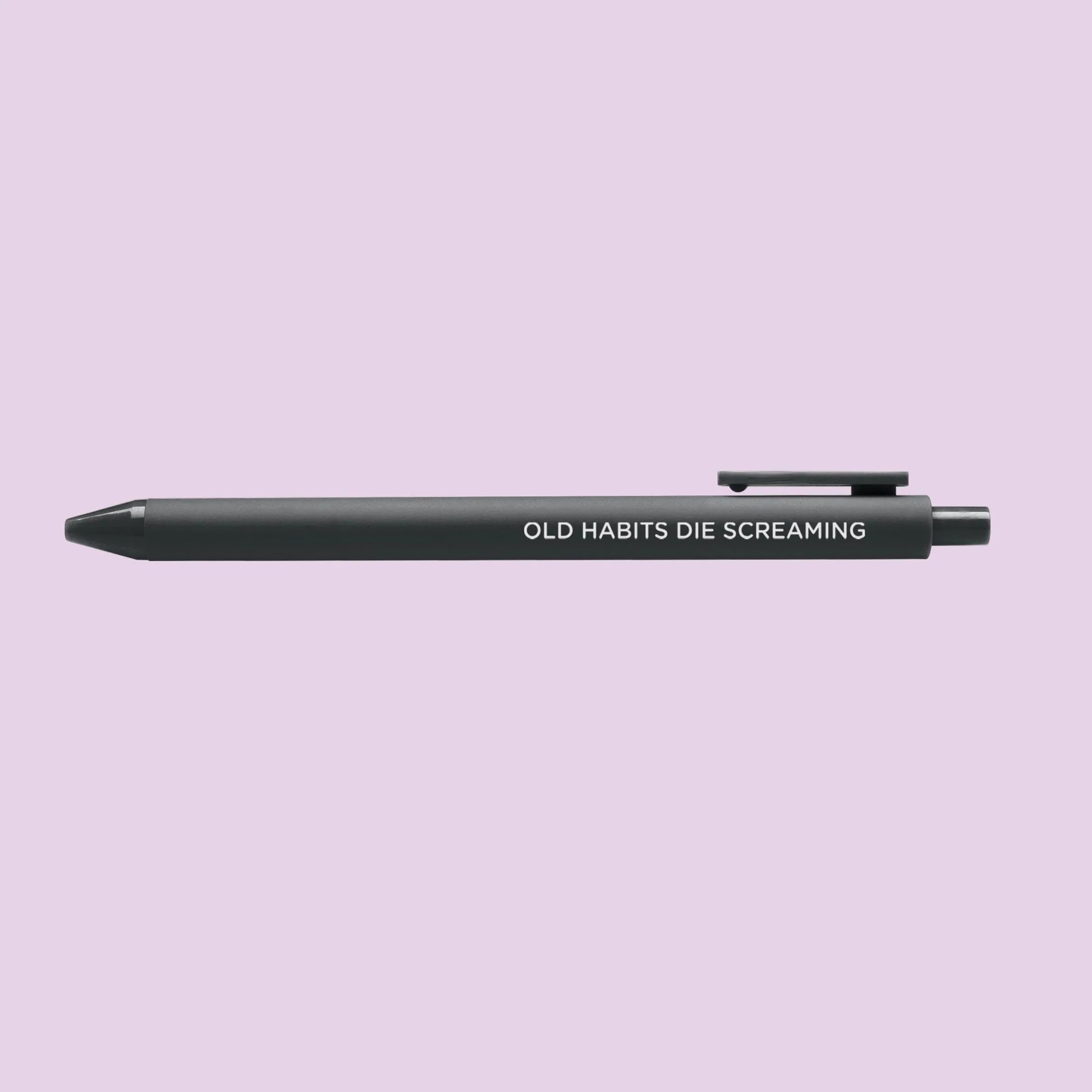
- Old habits die screaming jotter gel pen: Black barrel with white text, 0.5mm fine point, black gel ink. Barrel color is an aesthetic choice, but it affects whether you reach for the pen daily, which matters more for journaling consistency than most specs.
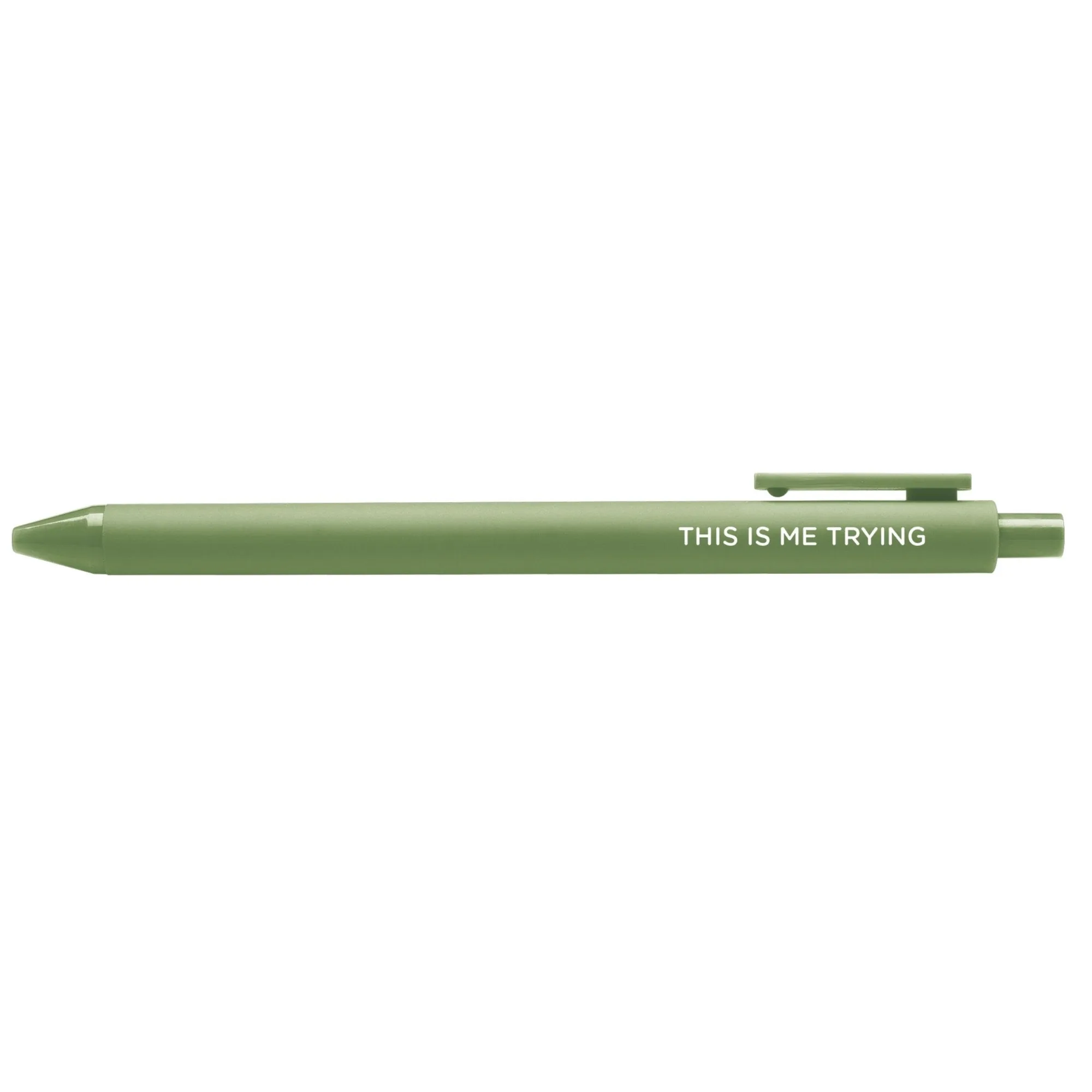
- This is Me Trying jotter gel pen: Olive barrel, 0.5mm fine point, black gel ink. Same tip and ink as the other single pens, so you can mix barrels for variety without changing how the pen writes.
Who this advice fits
Best for
- Beginners who want one reliable journaling pen set without overthinking tip sizes
- Writers who prefer black gel ink and a 0.5mm fine point for everyday entries
- People who want matched pens for desk, bag, and journal cover
Not for
- Artists who need brush tips, broad nibs, or archival pigment ink for finished work
- Left-handed writers who smudge wet gel ink and need fast-drying ballpoint instead
- Buyers who want a single luxury pen rather than a set of everyday writers
A journaling pen set works best when it removes decisions instead of adding them. Match the tip size to your handwriting, choose an ink that suits your paper, and keep the set small enough that every pen gets used. Start with one 0.5mm black gel pen, write a page, and let that experience guide the set you buy next.