Quick answer
For most students and office workers, a zip pencil case is the best all-rounder: it keeps small items contained, opens wide, and packs flat. A box case suits anyone who needs rigid protection, a roll-up suits minimalists who want a compact footprint, and a pouch suits people carrying cables or makeup as well as pens. If you want one case that does daily school or work duty, start with a zip style around 20–22 cm long.
pencil
Pencil case styles are not interchangeable. A zip case, a box case, a roll-up and a pouch each solve a different problem: speed of access, protection, footprint or flexibility. Choosing the wrong one usually shows up as a bag that bulges, a case that spills, or a daily hunt for a pen.
This comparison looks at the four main styles on the factors that matter in real use: how they open, what they hold, where they fit, and what you give up. There is no single winner — only the style that matches how you carry and use your stationery.
Zip pencil case: the everyday default
A zip pencil case opens along one edge and usually has a single main compartment, sometimes with an internal elastic loop or slip pocket. The zip keeps contents enclosed, so pens do not roll out when the case is dropped or tipped. Most zip cases pack flat, which makes them easy to slide into a backpack front pocket or a tote.
The trade-off is visibility. Because the case is a soft bag, items settle at the bottom and you often need to dig. A zip case with a wide opening or a contrasting lining helps. If you carry more than about 12 pens plus a ruler, look for a gusseted zip case rather than a flat one.
- Best when you want one case for school and work.
- Choose a wide-opening zip if you dislike digging.
Box pencil case: protection over portability
A box pencil case holds its shape, so contents stay put and fragile items such as a compass or a small calculator are less likely to be crushed. It opens like a lid, which gives a clear view of everything inside — useful when you need to grab one item quickly.
The cost is bulk. A rigid box takes up more room in a bag and weighs more when empty. It also offers less flexibility: if you add a thick marker set, a box will not stretch the way a fabric case will. Box cases suit a fixed kit that does not change much day to day.
- Good for technical drawing or maths kits with hard tools.
- Measure your bag before buying — rigid cases do not compress.
Roll-up pencil case: compact and visual
A roll-up pencil case lays flat, with pens held in individual slots or loops, then rolls into a cylinder and ties or snaps shut. Because every pen has a place, you can see the full set at a glance and spot a missing pen immediately. Rolled up, it is usually narrower than a box case, so it fits into slim bags.
The trade-off is capacity and speed. Slots limit how many pens you can carry, and thick items such as a large eraser or a pencil sharpener may not fit the loops. Rolling and unrolling takes a few seconds longer than unzipping a pouch, which matters if you switch tools constantly.
eraser
- Great for artists who want a visible, ordered set.
- Not ideal if you carry bulky tools or refill constantly.
Pouch pencil case: flexible but unstructured
A pouch is a soft, often flat bag with a zip or snap. It has no internal structure, so it can hold pens, cables, a small calculator, or makeup — whatever you put in it. That flexibility makes it a common choice for adults who carry a mixed kit rather than a pure stationery set.
The trade-off is organization. Without loops or dividers, pens bunch together and small items sink. A pouch also offers little protection for delicate tools. If you choose a pouch, pick one with a wide base so it stands open, and use a small internal pouch or elastic band to group like items.
- Best for mixed kits: pens plus cables or earbuds.
- Add a slim inner pouch if you hate digging.
Pencil case size guide: match the case to the job
Size is the fastest way to rule a style in or out. As a rough guide, a small case around 18–20 cm long holds 8–12 pens and fits a child's backpack. A medium case around 20–22 cm holds 12–20 pens plus a ruler and fits most school and work bags. A large case over 22 cm or a box style suits a full kit with markers, scissors or a calculator.
Depth matters as much as length. A flat case under 5 cm deep will not close over a thick marker set, while a gusseted case 6–8 cm deep will. For roll-up styles, count the slots: a 12-slot roll holds 12 slim pens, not 12 thick ones. Always check the internal dimensions, not just the outside.
- Small: 18–20 cm — 8–12 pens, younger students.
- Medium: 20–22 cm — 12–20 pens, school and office.
- Large or box: 22 cm+ — full kits with bulky tools.
Pencil pouch vs pencil case: what actually changes
The difference is structure, not size. A pencil case, whether zip, box or roll, is designed around stationery: it may have loops, dividers or a shaped interior. A pencil pouch is a soft bag with no built-in organization, so it adapts to whatever you carry. If your kit changes often, a pouch is more forgiving; if your kit is stable, a structured case keeps it tidy.
Many people use both: a structured case for pens and a pouch for cables, chargers or a calculator. That split keeps the pen case light and stops hard items from scratching pens. If you only want one item, choose based on whether you value order or flexibility more.
- Structured case = order; pouch = flexibility.
- Two-bag setup works well for hybrid school or work kits.
Trade-offs at a glance
- Zip case — access vs. visibility: Fast to open and secure when closed, but soft sides mean items settle and you may need to dig. Choose a wide opening or a light lining if visibility matters. Best all-rounder for daily school and work.
- Box case — protection vs. bulk: Rigid walls protect hard tools and give a clear view when open, but the case does not compress and takes up more bag space. Choose it for a fixed technical kit, not a changing one.
- Roll-up — order vs. capacity: Slots keep every pen visible and stop rolling, but the slot count limits how many pens you carry and thick tools may not fit. Ideal for artists with a stable set of slim pens.
- Pouch — flexibility vs. structure: Holds pens, cables or makeup without complaint, but without loops or dividers small items sink and mix. Pair with a small inner pouch if you want order.
- Size — fit vs. capacity: A 20–22 cm case fits most bags; a 24 cm structured case such as the Cherry Check Vanity Case holds more but needs a larger compartment. Measure your bag's internal width before buying.
Product facts that help you choose
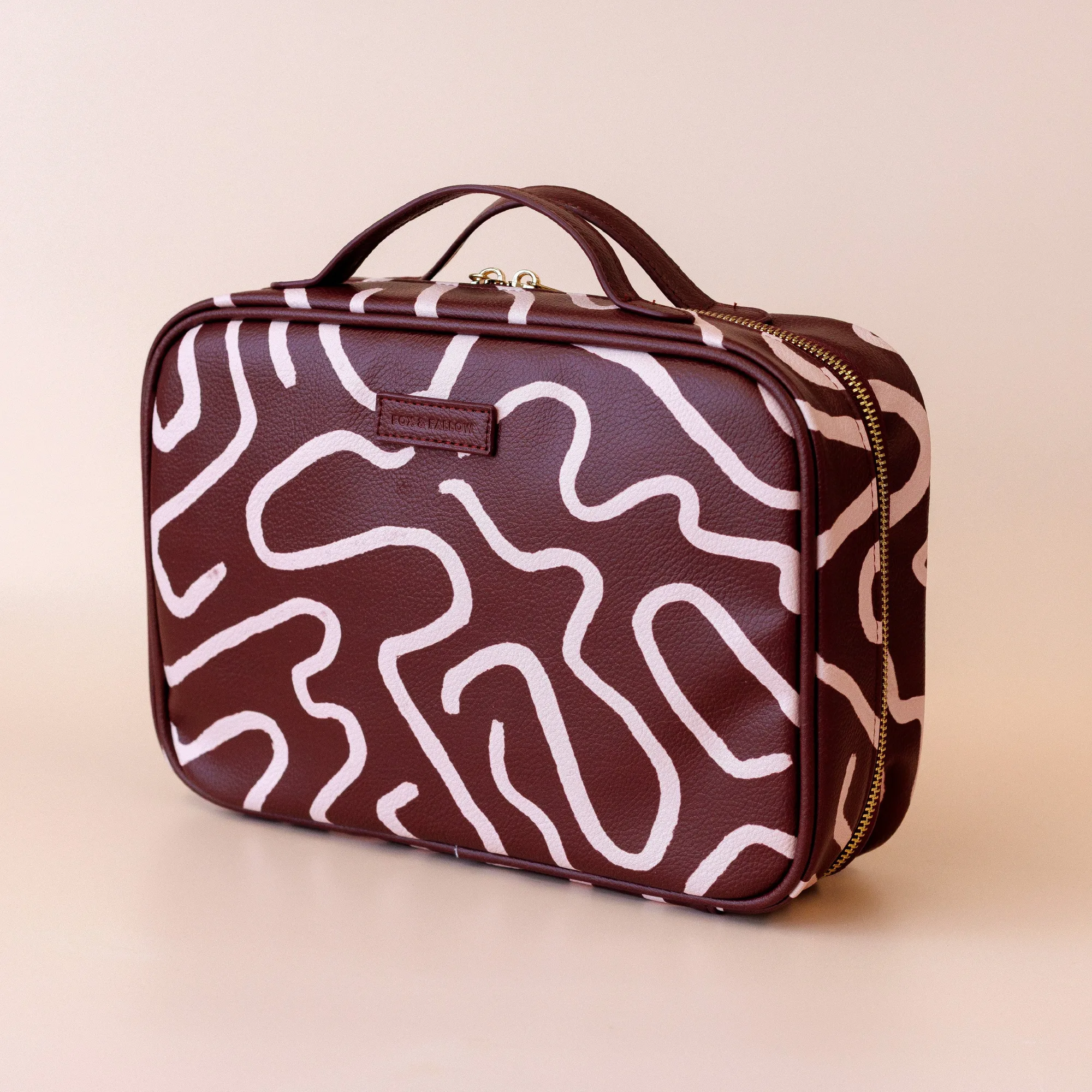
- Cherry Check Vanity Case - 'The Classic': Vanity Case: 24 x 16.5 x 17.5cm, pebble vegan leather with a tan lining, dual layer with elastic loops, internal zip pocket, gold hardware, two handles. The elastic loops and internal zip pocket show how a structured case keeps small items in place. At 24 cm long and 17.5 cm deep, it is far larger than a typical pencil case, so it suits a full kit or mixed stationery and makeup, not a slim backpack pocket.
- Como Cosmetic Bag: The bag of your dreams is here! With so many bonus features, you'll be wondering where they've been all your life. The miracle pop out bag everyone's been talking about. The ingenious removable clear bag is the true MVP here: it pops out of the main bag and it's perfect for all your makeup & skincare essentials so you can find them easily through the clear plastic sides. Take it out and use it for your daily... The removable clear inner bag is the key idea for a pencil pouch: you can lift out the items you need without emptying the whole case. Clear sides also solve the visibility problem common to soft pouches, so you can see what is inside before unzipping.
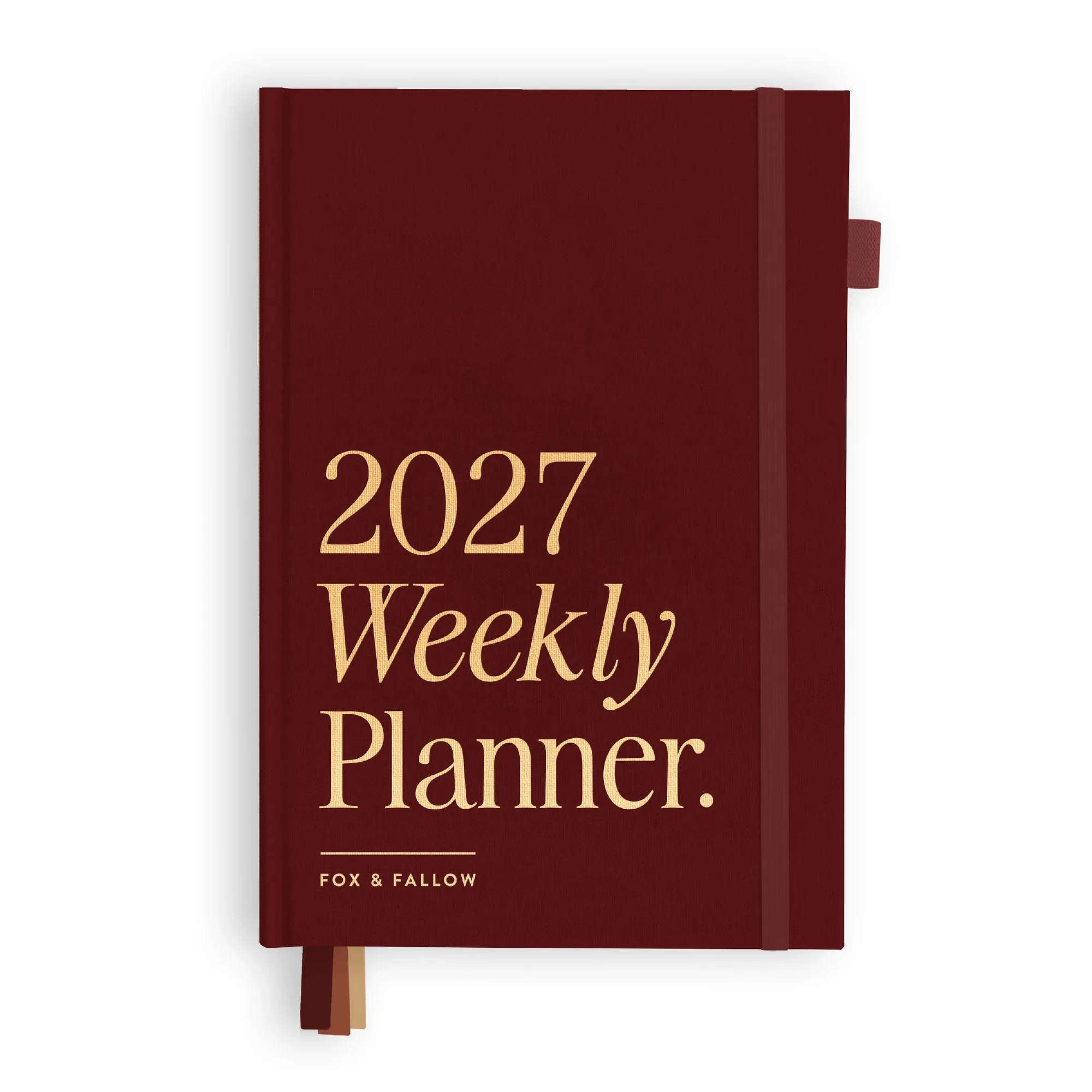
- 2027 A5 Horizontal Planner - Cherry - PRE-ORDER (25 SEPTEMBER): Our best-selling A5 planners are back in 2027 with the horizontal layout you know and love, and a new planning system designed to simplify your life. At Fox & Fallow we're all about making planning simple. Your planner should de-stress and simplify your life, not make it more rigid or complicated. That's why we've designed a planning system split into two halves - for your left and right brain. A planner is a good size reference when choosing a pencil case for school or work. If your planner lives in the same bag, a slim zip case or a roll-up keeps the footprint small, while a box case adds rigid bulk next to a flat A5 planner.
Which pencil case style fits your routine?
Best for
- Students who carry 12–20 pens and want one case that opens fast.
- Office workers who pack a slim case next to a laptop or A5 planner.
- Artists who want every pen visible in a roll-up.
- Travellers who need a pouch for pens plus cables or chargers.
Not for
- Anyone carrying bulky markers who needs a flat, slim case.
- People who want rigid protection for a compass or calculator from a soft pouch.
- Minimalists who dislike digging in an unstructured bag.
Pick the style that matches how you open and carry your kit, not the one with the most features. A zip case covers most school and work needs, a box protects a fixed technical set, a roll-up keeps a slim pen collection visible, and a pouch absorbs whatever you throw in. Measure your bag, count your pens, and choose the trade-off you can live with daily.