Quick answer
Choose a pendant when you want focused, architectural light over a surface or in a tight footprint. Choose a chandelier when the room needs a sculptural centerpiece and you have the ceiling height and width to support it. For a dining room or foyer, a chandelier usually wins; for a kitchen island or a low ceiling, pendants are the safer, more useful pick.
The functional difference: task lighting vs. room lighting
A pendant is typically a single, focused fixture hung over a specific zone: a kitchen island, a bar, a small table, or a reading nook. Its job is to put light where people work, eat, or gather, and its shade shape controls glare and spread. A chandelier is a multi-arm or multi-tier fixture designed to light and define a whole room. It distributes light more broadly and acts as the visual anchor overhead.
That difference drives everything else. If you need even, useful light over a counter, a pendant is the practical choice. If you are lighting a dining room or foyer where the fixture is part of the architecture, a chandelier gives you the scale and presence a single pendant may not.
How to read scale before you choose
Start with the room's smallest dimension. A chandelier should generally be no wider than about one-third of that dimension so people can walk around it without ducking. Pendants are more forgiving because you can hang two or three in a row and keep each one narrow.
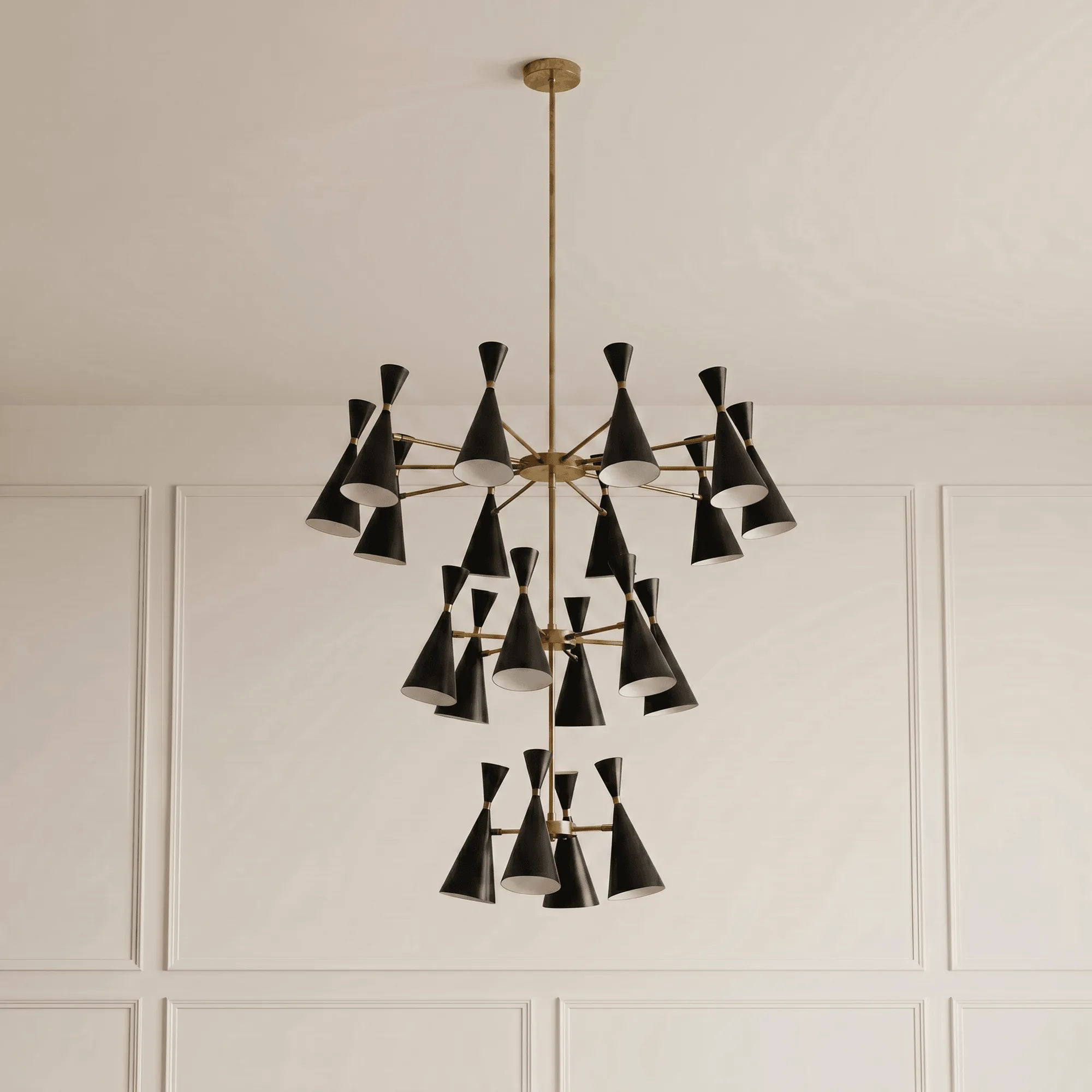
Then look at visual weight. A large multi-tier chandelier like the Monolith 3-Tier is a commanding statement piece, so it needs a room with generous volume and a clear sightline. A compact chandelier such as Ludo Petite or Calyx can sit over a dining table or kitchen island without overwhelming the space. If your room is long but narrow, a row of pendants often reads better than one wide chandelier.
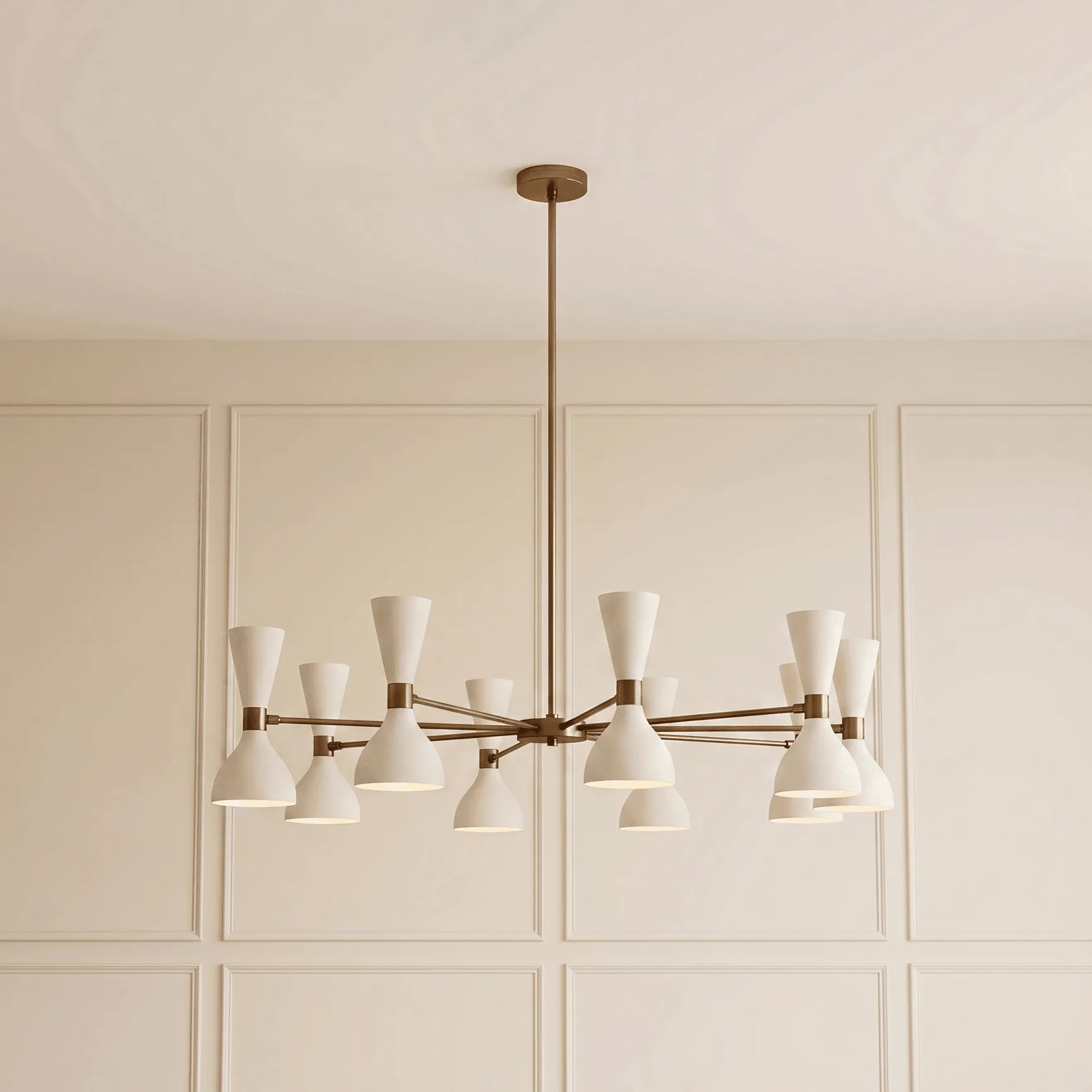
Ludo
Height and hanging rules that actually matter
For a dining table, hang the bottom of the fixture about 30 to 36 inches above the tabletop. For a kitchen island, 30 to 36 inches above the counter is the usual range, but raise it if the fixture is large or if tall people use the island. In a foyer, keep the bottom of the fixture at least 6 feet 8 inches above the floor, and higher if the ceiling is tall.
Pendants and chandeliers share the same basic clearance logic, but pendants give you more control because you can adjust each one independently. That flexibility is why pendant light vs chandelier kitchen island debates usually end with pendants: you can center each fixture over a seat or work zone.
Material and style cues that change the decision
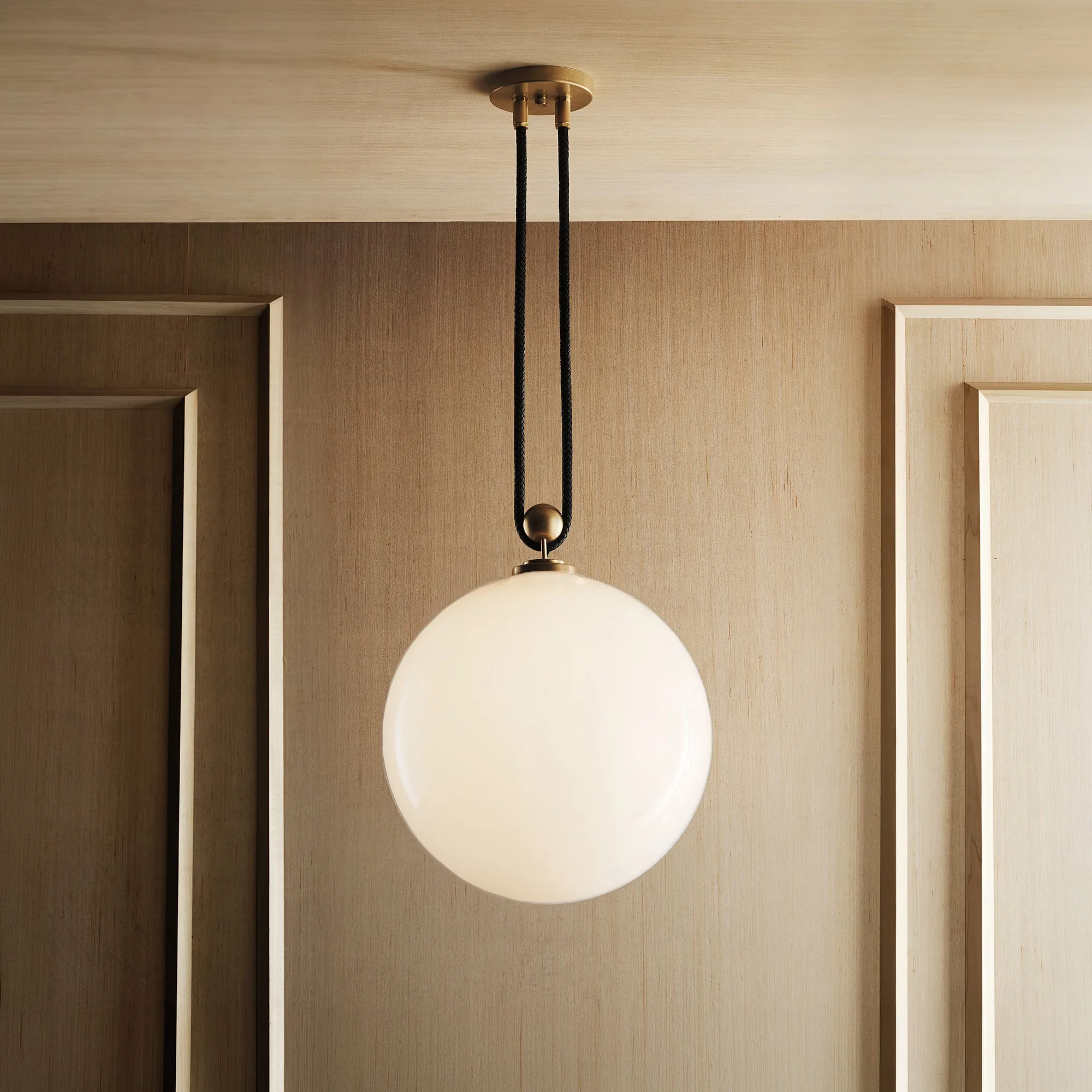
Pendants often lean architectural or industrial. The Pulley 16, for example, uses Art Deco-inspired geometry, tactile leather accents, and a solid brass sphere, with a braided leather cord drawing the eye upward. That reads as precision and warmth, and it works well over a bar or island where you want a strong vertical line.
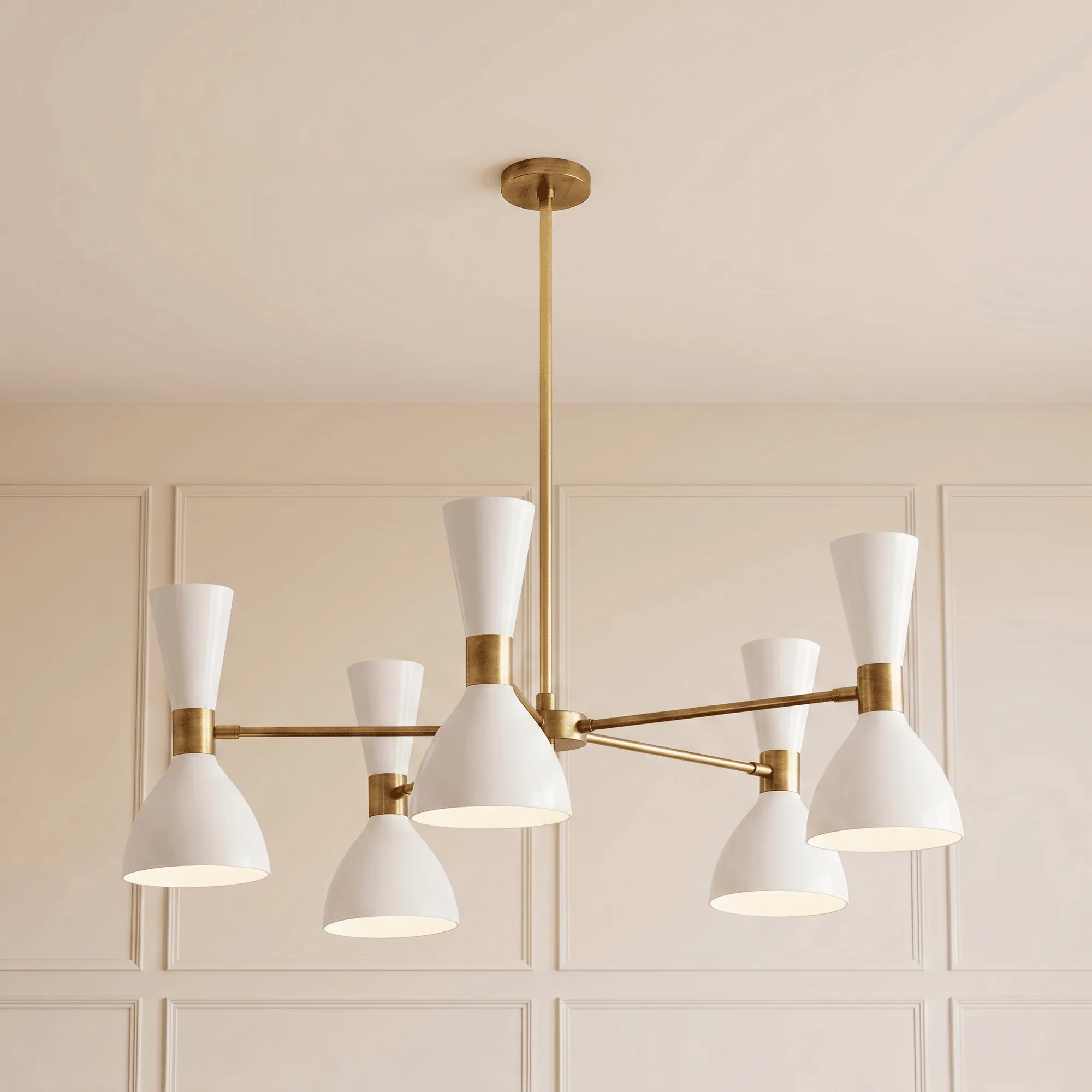
Chandeliers tend to carry more decorative history. The Calyx ceiling fixture is a playful, functional sculpture inspired by Lucienne Day's Calyx fabric, which suits a dining table, bar, or kitchen island where you want atmosphere and a story. Ludo Petite mixes spun aluminum shades in a vintage mid-century Italian style with an over-scaled brass band, so it brings playful modernism without taking itself too seriously. Monolith 3-Tier is the opposite end of the spectrum: a dramatically scaled piece in the style of Italian and French modernism, shown in Black enamel and Natural Brass, and it requires White Glove shipment and a custom-built crate.
Trade-offs to weigh before you commit
- Focused light vs. room-wide glow: Pendants concentrate light over a specific surface, which is ideal for tasks but can leave the rest of the room dim. Chandeliers spread light and define the whole space, but may need dimming or supplemental layers for close work. If you cook or eat at the surface below, pendants usually serve you better. If the room itself is the point, choose a chandelier.
- Flexible scale vs. fixed impact: A row of pendants lets you tune width and spacing to the island or table. A chandelier is one large decision, so its diameter and drop need to be right for the room's smallest dimension. Measure the smallest dimension first. If a chandelier would exceed about one-third of it, switch to pendants or a compact chandelier like Ludo Petite.
- Installation and delivery reality: Most pendants are straightforward to hang and adjust. Very large chandeliers can require structural planning and special delivery; Monolith 3-Tier, for example, needs White Glove shipment and a custom-built crate. Check ceiling support, ceiling height, and delivery access before ordering a large chandelier. For tight access, pendants are the lower-risk choice.
Fixtures that show the trade-off
- Monolith 3-Tier: Monolith 3-Tier is a massive handcrafted chandelier, a dramatically scaled version of the Monolith, with Italian and French modernist design elements, shown in Black enamel and Natural Brass. It requires White Glove shipment and a custom-built crate. This is a true statement chandelier for rooms with real volume. The White Glove and custom crate requirement means you should plan delivery and installation access before you buy, not after.
- Calyx: Calyx is a ceiling fixture described as a playful and functional sculpture inspired by Lucienne Day's Calyx fabric, conceptualized by Chief Luminary Kelly Aaron, and suited to a dining table, bar, or kitchen island. It gives you chandelier presence in a form that works over a surface, so it can replace a pendant row where you want atmosphere rather than pure task light.
- Ludo Petite: Ludo Petite is a more compact version of the Ludo chandelier, with spun aluminum shades in an iconic vintage mid-century Italian design and an over-scaled brass band. Its compact size makes it a realistic chandelier choice for smaller dining rooms or open kitchens where a full-scale chandelier would be too much.
- Pulley 16: Pulley 16 is the boldest expression of the Pulley series, with Art Deco-inspired geometry, tactile leather accents, a solid brass sphere, and a braided leather cord. It is a pendant that behaves like architecture, so it suits an island or bar where you want a strong vertical element and focused light.
Which should you choose?
Choose a pendant if you have
- A kitchen island, bar, or small table where you want focused, adjustable light
- A low or standard ceiling where a large chandelier would feel crowded
- A long or narrow room where a row of pendants reads better than one wide fixture
Choose a chandelier instead if you have
- A dining room or foyer that needs a sculptural centerpiece and you have the ceiling height and width
- A room where you want broad, decorative light rather than task lighting
- A compact space that still wants chandelier character, where a smaller model like Ludo Petite or Calyx fits