Quick answer
For everyday journaling and note-taking, start with a 0.5 mm gel pen if you want smooth, dark lines, or a 0.3–0.4 mm fine liner if you need precise, quick-drying marks. Match the pen to your paper: smoother, coated sheets suit gel and rollerball inks, while absorbent uncoated paper handles fine liners and ballpoints with less bleed. If you write on both, keep one of each and test on a corner page first.
The pen you reach for changes how your notes feel and how long they last. A pen that skips, smears or presses too hard makes daily writing a chore, while the right nib and ink can make even a quick list feel satisfying. This guide explains pen nib sizes, ink types and paper pairing so you can choose note-taking pens and journaling pens that work together.
You do not need a drawer full of options. Two or three pens, chosen for how you write and what you write on, cover most journaling, planning and study sessions. The rules below focus on practical trade-offs rather than brand hype, so you can buy once and actually use what you own.
Pen nib sizes: what the numbers mean
Nib size is usually given in millimetres, such as 0.3 mm, 0.5 mm or 0.7 mm. A smaller number produces a thinner line, which suits small handwriting, detailed notes and tight planner grids. A larger number lays down more ink, so it feels smoother and shows ink colour and shading more clearly, but it can feather or bleed on thin paper.
If you are unsure, 0.5 mm is a safe middle ground for most adults. Students who write quickly and need legible notes often prefer 0.7 mm for speed, while people with small, neat writing usually get cleaner results from 0.3–0.4 mm. The best size is the one that matches your natural handwriting, not the one someone else recommends.
- Write a full sentence with each size before deciding; a quick scribble hides how the pen behaves over a page.
- If you use a planner with narrow columns, stay at 0.4 mm or below to avoid crowding.
Pen ink types: gel, ballpoint, rollerball and fine liner
Gel ink is pigment-based and sits on top of the paper, giving dark, opaque lines and smooth flow. It is a favourite for journaling because colours look rich and the writing feels effortless, but it can smudge if you are left-handed or write fast, and it needs a moment to dry on coated paper. Ballpoint ink is oil-based and dries almost instantly, which makes it reliable for quick notes and forms, though the line is lighter and can require more pressure.
Rollerball pens use water-based liquid ink, so they write smoothly and dry faster than gel on many papers, but they can bleed through thin sheets. Fine liners use a porous tip and water-based ink, producing a consistent thin line that is excellent for labelling, underlining and detailed work. The fine liner vs gel pen choice usually comes down to precision versus richness: fine liners for control, gel for colour and feel.
- Left-handed writers should favour quick-drying ballpoint, rollerball or fine liner inks over slow-drying gel.
- If you highlight over your notes, let gel ink dry fully or switch to ballpoint to avoid smearing.
Pen and paper pairing: the rule that prevents most problems
Ink and paper interact. Smooth, coated or heavily sized paper lets gel and rollerball ink glide, but it also slows drying, so smudging is more likely. Absorbent, uncoated paper pulls ink in quickly, which reduces smudging but can cause fine lines to spread or feather. Before committing a pen to a new notebook, test it on a back page and check for bleed-through, feathering and dry time.
A simple pairing rule: use gel or rollerball on smooth paper when you want vivid lines and can wait a second for drying; use fine liner or ballpoint on absorbent paper when you need speed and precision. If your notebook has thin pages, choose a finer nib and a drier ink rather than pressing more lightly, which rarely works for long.
- Keep a scrap page in the front of your journal for testing new pens before you write on a spread.
- If a pen bleeds through, try a finer nib first; if it still bleeds, the paper is the limiting factor.
How to choose note-taking pens for speed and comfort
Note-taking rewards quick drying, low pressure and a consistent line. A 0.5 mm gel pen works well for most people, but if you write fast or are left-handed, a 0.7 mm ballpoint or a 0.4 mm fine liner may be more practical because the ink sets faster. Grip matters too: a wider barrel or a soft grip reduces hand fatigue during long lectures or meetings.
Buy one pen first and use it for a week of real notes before buying a set. If your hand aches, the issue is often grip or pressure, not ink type. If your notes smear, the issue is usually dry time, which points to a different ink or a more absorbent paper.
- For exams and fast notes, prioritise quick-drying ink over colour variety.
- For planning and lists, a fine liner keeps small boxes and columns readable.
How to choose journaling pens for reflection and colour
Journaling is slower and more personal, so you can favour feel, colour and line character over pure speed. Gel pens in 0.5–0.7 mm give satisfying, opaque lines that make headings and quotes stand out. If you decorate or colour-code, a small set of gel pens plus one fine liner for outlines covers most pages without clutter.
Paper choice matters more here because journaling often involves layered writing, doodles and stickers. A smooth, slightly heavier sheet handles gel ink without ghosting, while thin paper may show through. If you write on both sides, test your pen on the reverse of a page before you commit to a full spread.
- Choose a pen that feels good in your hand for 20 minutes, not just for a signature.
- Keep one archival-quality pen for important entries and a cheaper one for drafts.
Practical care and storage for pens you actually use
Pens last longer when stored tip-down or horizontally, and when capped tightly to stop ink drying. Gel and rollerball pens can clog if left uncapped, while fine liners fray if pressed too hard. If a pen skips, try writing a few loops on scrap paper before assuming it is empty; sometimes the tip has dried slightly.
Keep your daily pens in one place, such as a pencil case or a dedicated pouch, so you are not hunting for them. A simple rotation of two or three pens prevents ink from sitting unused for months, which is when most pens fail.
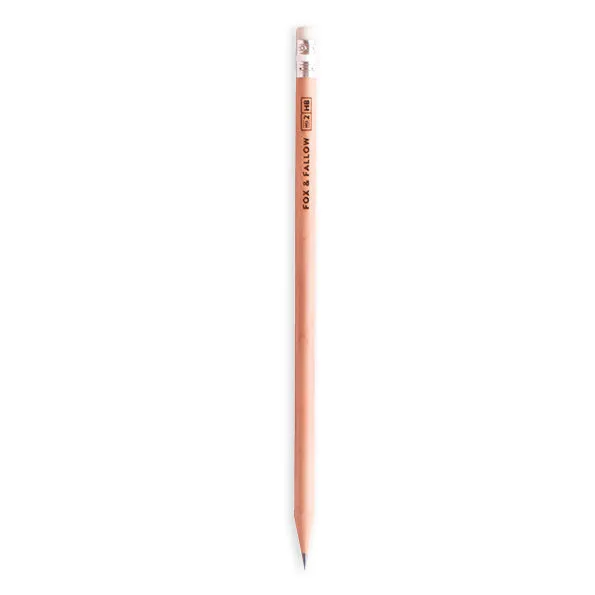
pencil
- Store pens horizontally in a case rather than loose in a bag where tips can bend.
- Replace a pen when it skips consistently after a short scribble, not after one bad line.
Decision rules for pen and paper pairing
- If you are left-handed: Choose a quick-drying ballpoint, rollerball or fine liner instead of a slow-drying gel pen, and test on your actual paper before writing a full page. Dry time beats colour richness for left-handed writers.
- If your paper is thin or coated: Drop to a finer nib (0.3–0.4 mm) and a drier ink; if it still bleeds or smudges, change the paper rather than pressing lighter. Paper is often the limiting factor, not the pen.
- If you write fast in meetings or lectures: Prioritise a 0.7 mm ballpoint or 0.4 mm fine liner for speed and low smudging, and keep a gel pen for headings only. One fast pen plus one colour pen covers most note-taking.
- If you journal for reflection and colour: Use a 0.5–0.7 mm gel pen on smooth, slightly heavier paper, and add a 0.3 mm fine liner for outlines and labels. Two pens are enough for a full journaling setup.
- If you are unsure what to buy first: Buy a single 0.5 mm gel pen and a single 0.4 mm fine liner, then test both on the paper you already own before expanding. Test on real paper before buying a set.
Products that support good pen and paper pairing
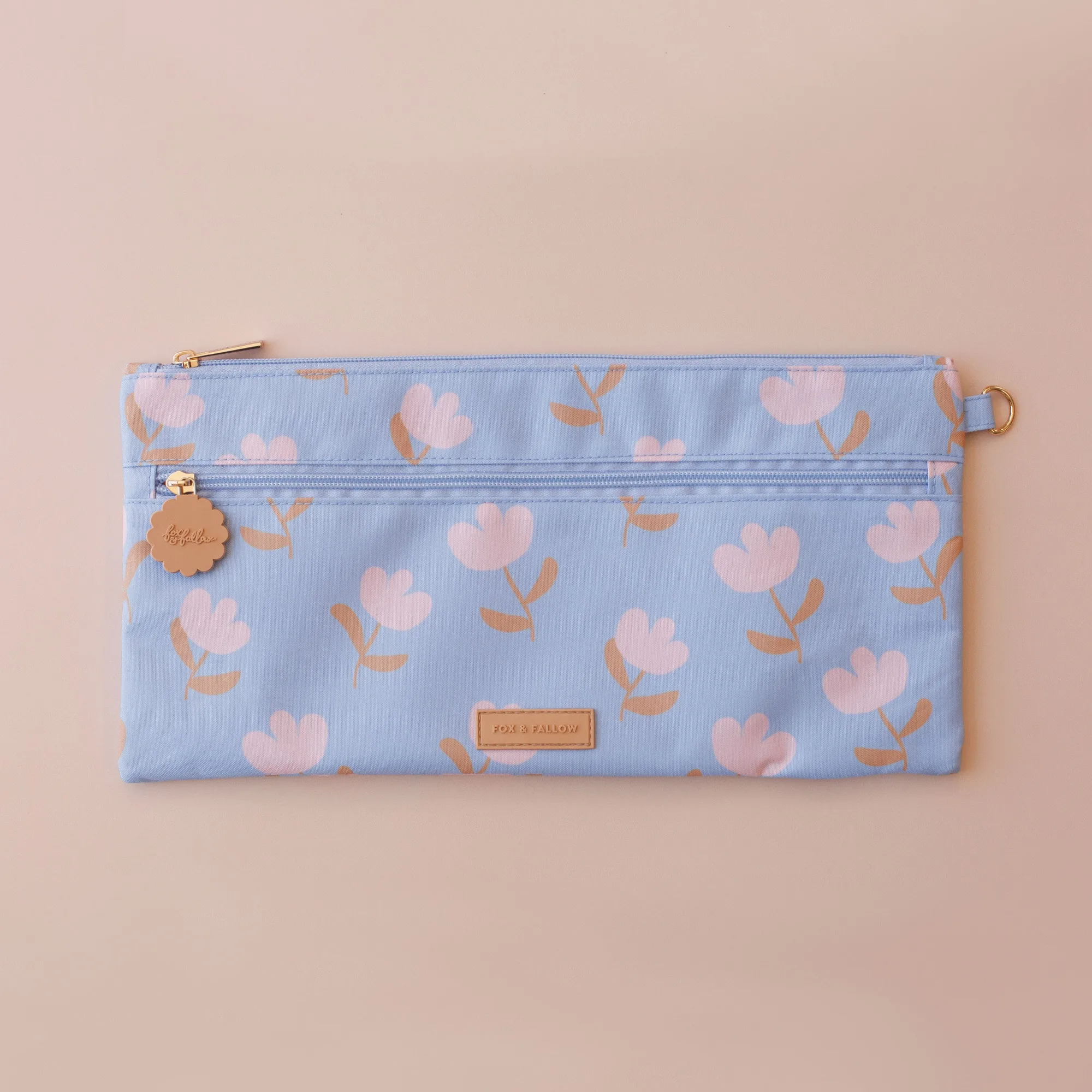
- Tulips Large Pencil Case: Fox & Fallow's pencil cases are described as super durable and super functional, extra wide, and designed to fit all your supplies, suitable for kindy/prep and school-aged kids to adults. A wide case keeps several pens, a fine liner and a spare gel pen together without bending tips, so your daily rotation is always ready.
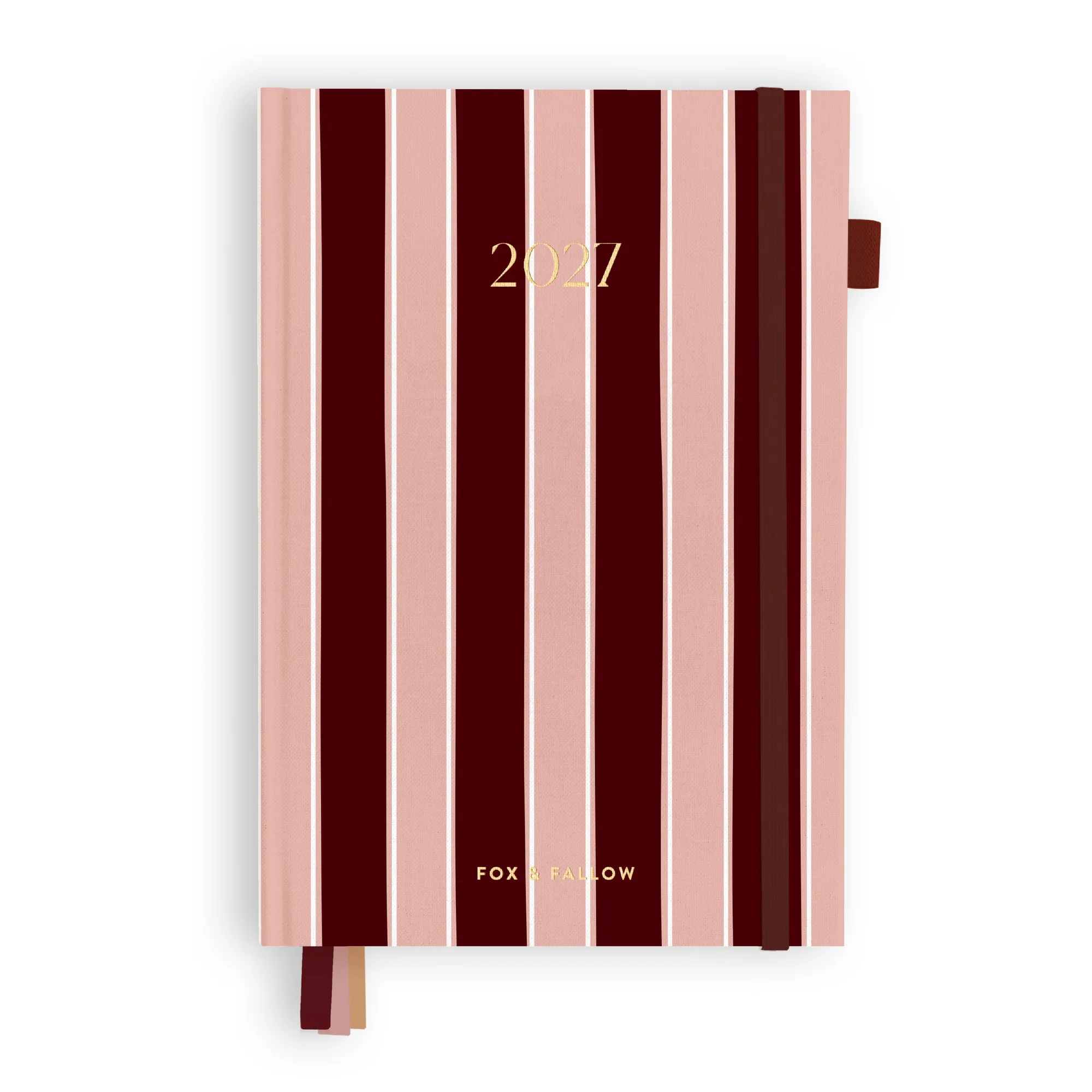
- 2027 A5 Vertical Planner - Sorrento - PRE-ORDER (25 SEPTEMBER): The A5 vertical planner is a best-selling planner with a vertical layout and a planning system designed to simplify your life. A vertical layout gives you narrow columns and small boxes, which is exactly where a 0.4–0.5 mm pen keeps entries legible without crowding.
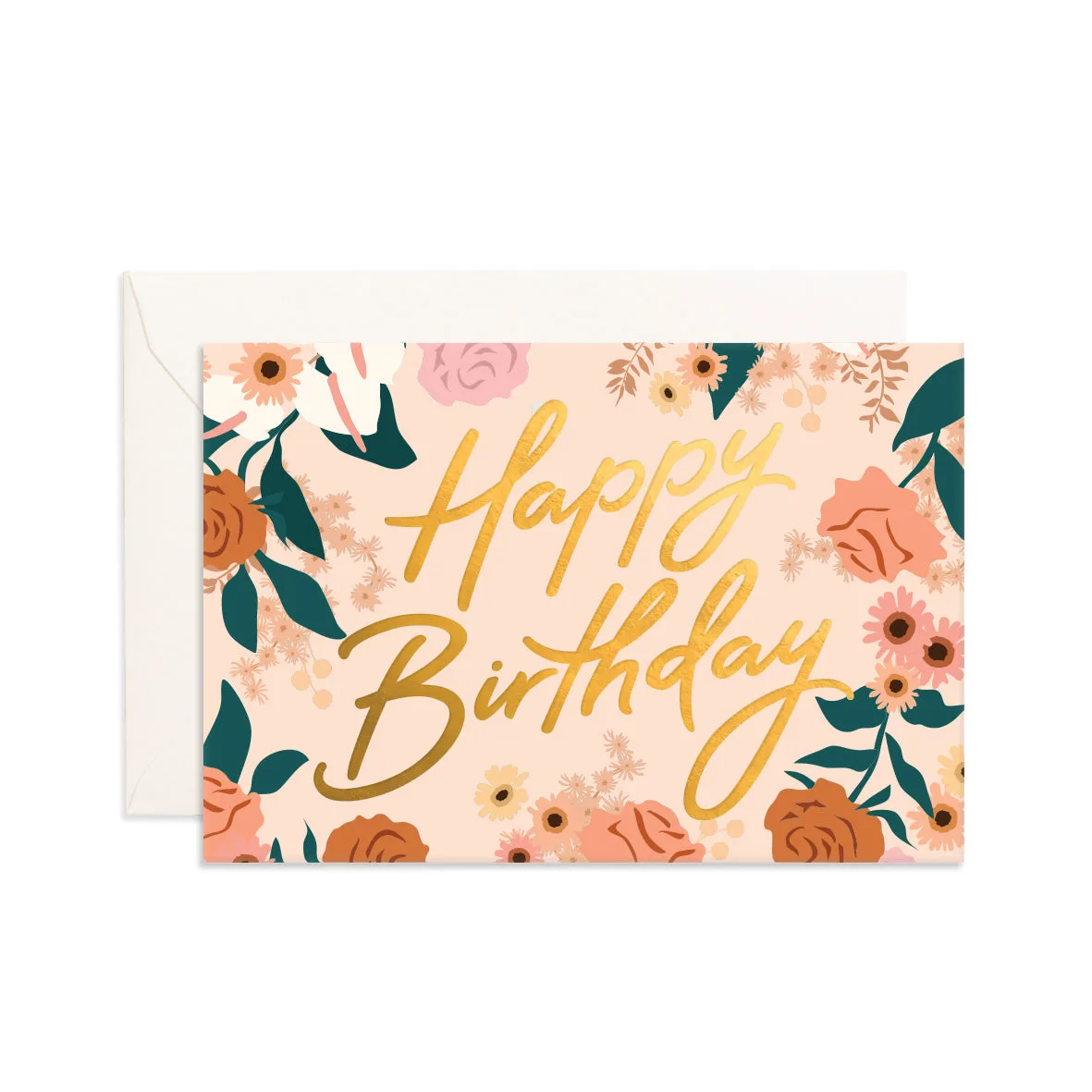
- Birthday Bella Rosa Mini Greeting Card: Format 98 x 67 mm, white uncoated card stock, full-colour with gold metallic foil, blank interior, cream envelope, made in Australia. Uncoated card stock is absorbent, so quick-drying ballpoint or fine liner ink is a safer pairing than slow-drying gel if you want a clean message.
Who this guide is for
Best for
- Journalers who want richer colour and smoother writing and are willing to manage dry time
- Students and professionals who take fast notes and need quick-drying, low-smudge ink
- Planner users with narrow columns who need a fine, legible line
Not for
- Buyers looking for a single pen that works perfectly on every paper type
- People who only write on a phone or tablet and rarely use paper
- Anyone unwilling to test a pen on a scrap page before using it in a notebook
Choose your pen by how you write and what you write on, not by the largest set on the shelf. Start with a 0.5 mm gel pen for feel and a 0.4 mm fine liner for precision, test both on your actual paper, and adjust nib size or ink type only when you see smudging, feathering or hand fatigue.