Two tools, two jobs: sorting out the combo kit
The Mace Pepper Spray and Personal Alarm Combo Kit pairs a pocket pepper spray with a personal alarm that also has a built-in whistle. The point of the kit is not to use both at once, but to give you two different ways to respond depending on what is happening. The alarm draws attention and can startle a threat; the spray is a direct defense option when the alarm alone is not enough. Knowing which to reach for, and in what order, is the core of using the kit well.
This guide walks through the practical decisions: when the alarm makes more sense, when the spray does, and how to carry both so neither slows you down. It stays within what the catalog confirms about this specific kit.
What the Mace combo kit includes
-
Mace Pepper Spray and Personal Alarm Combo Kit - Pink: Personal security kit with a personal safety alarm and Pocket Model Pepper Spray. Confirms the two components you are pairing and that the spray is the pocket size, which affects how you carry it.
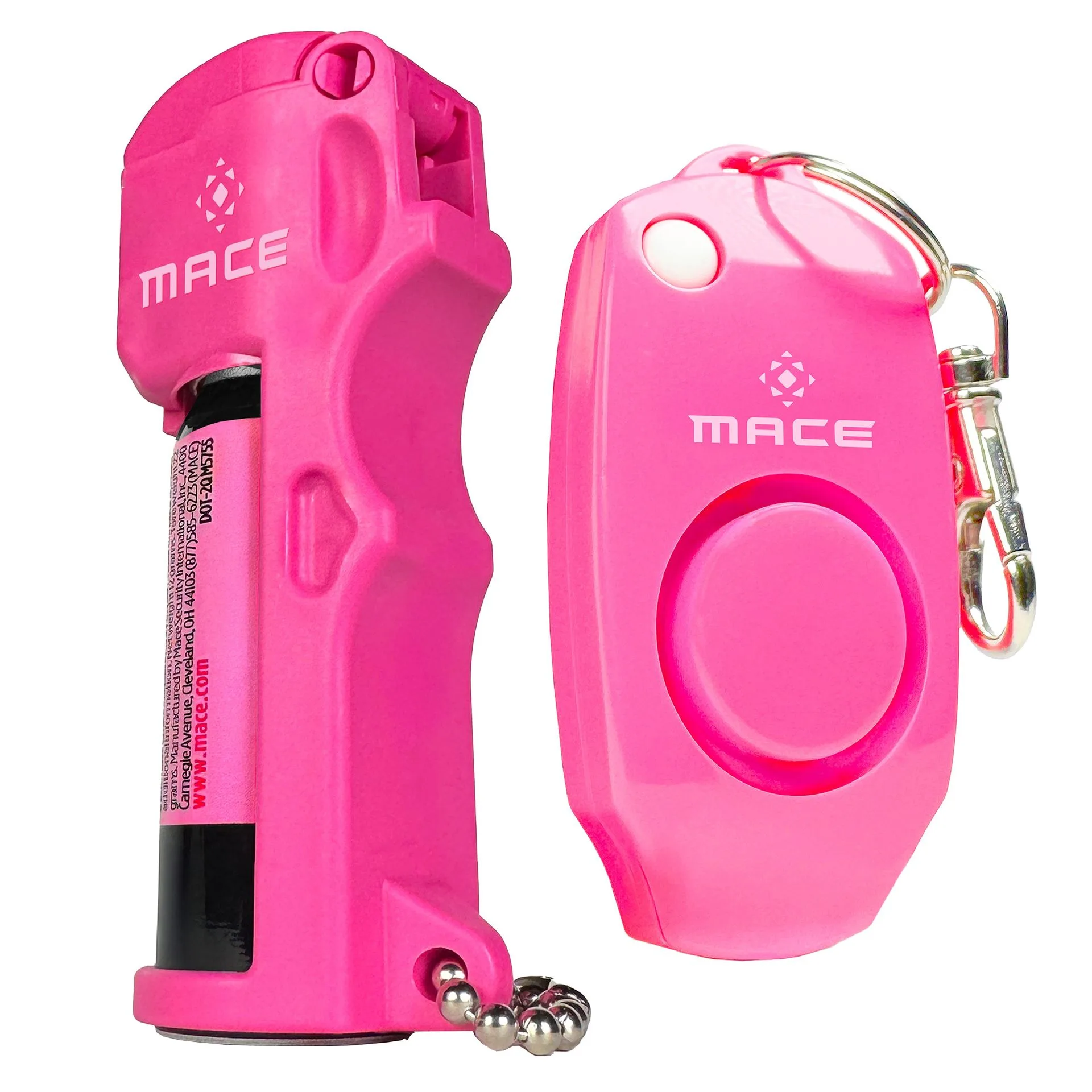
Mace Pepper Spray and Personal Alarm Combo Kit - Pink
-
Mace Pepper Spray and Personal Alarm Combo Kit - Pink: Alarm emits a 130dB siren; batteries are included. The siren is the attention-drawing tool; knowing batteries are included means the alarm is ready to use out of the box.
-
Mace Pepper Spray and Personal Alarm Combo Kit - Pink: Built-in whistle as a backup if the siren fails to engage. Gives you a second way to call for help without needing another item.
-
Mace Pepper Spray and Personal Alarm Combo Kit - Pink: Pepper spray made with 10% OC and UV dye marking. The OC concentration is the active strength; the UV dye is for later identification of an assailant.
-
Mace Pepper Spray and Personal Alarm Combo Kit - Pink: Stream pattern reaches up to 10 feet. Sets a realistic expectation for standoff distance when you choose to spray.
When the alarm is the right first move
The alarm is your attention tool. In situations where you feel uneasy but no one has physically threatened you, sounding the 130dB siren can be enough to make someone back off and bring other people into the area. It is also the safer choice when you are not certain about the threat, because it does not require you to aim or get close.
The built-in whistle matters here too. If the siren does not engage for any reason, the whistle gives you a backup way to make noise and draw help. That redundancy is the main reason the alarm half of the kit is worth carrying even on days you never touch the spray.
When the pepper spray is the right tool
The pepper spray is for a direct, immediate threat when the alarm alone is not enough. The catalog lists a stream pattern with up to 10 feet of range, which gives you a standoff distance to work with. The 10% OC formula is the active ingredient, and the UV dye is there to help with identification afterward, not to stop a threat faster.
The spray is not a substitute for the alarm, and the alarm is not a substitute for the spray. The kit works because you can choose the response that fits the moment rather than defaulting to the most aggressive option.
Carry tips for keeping both tools accessible
- Use the keychain clasps on both items: The catalog states both products come with keychain clasps that attach to keys, purses, belts, or backpacks. Put them where your hands naturally go so you are not digging for either one.
- Keep the alarm and spray on separate anchors: If both are on the same ring, deploying one can tangle the other. Clip the alarm to a bag strap and the spray to a belt loop or purse, for example, so each has its own path to your hand.
- Check the alarm is ready before you leave: Batteries are included, but the alarm still needs to be switched on and functioning. A quick press to hear the siren or whistle confirms it is working before you rely on it.
- Match the carry spot to your routine: The catalog lists walking alone, jogging, and commuting as use cases. A jogging belt or armband may suit the spray better than a purse; a commuter bag strap may suit the alarm. Choose based on what you actually wear or carry.
A simple order of use to practice
Decide in advance that the alarm is your first response when you feel threatened but have not been physically attacked. Sound the siren, and use the whistle if the siren fails. If the threat continues and you cannot get away, the pepper spray becomes the next option. Practicing that sequence—alarm first, spray if needed—keeps you from fumbling between two tools under stress.
The catalog does not provide a specific deployment drill or timing standard, so keep your practice simple: know where each item sits, confirm the alarm works, and be clear about which one you will reach for first.
What the catalog does not settle
The supplied information does not include care instructions, replacement schedules, or a confirmed battery life for the alarm. It also does not specify a spray expiration date or a recommended distance for use beyond the listed 10-foot range. Treat those as open questions to resolve with the manufacturer's documentation rather than assuming a number. The kit's value is in the two-tool pairing; the operating details beyond what is listed here are not confirmed by the catalog.