Quick answer
Yes, if you choose a system tuned for mild interior sound and moderate exterior volume. A performance exhaust can sharpen throttle response and add character without ruining your commute, but a loud, drone-prone system will wear on you. Match the system to your daily route, not just to the sound clip you liked online.
A performance exhaust is one of the few upgrades you feel and hear on every drive, which is exactly why it's tempting for a daily driver. The catch is that the same free-flowing design that adds character can also add highway drone, cold-start volume, and cost you didn't plan for.
This guide answers the questions drivers actually ask before buying: whether a cat-back is worth it, how drone behaves at highway speed, what happens to fuel economy, and how to pick a system you can live with on a Monday morning commute.
What a performance exhaust actually changes on a daily driver
A performance exhaust replaces restrictive factory piping and mufflers with smoother, larger-diameter tubing and a freer-flowing muffler. The practical result is less backpressure, which can improve throttle response and let the engine breathe better at higher rpm. On a stock daily driver, the gain is usually modest, so buy for sound and feel rather than a dramatic horsepower jump.
The biggest daily difference is tone and volume. A well-tuned system gives you a deeper idle and a richer note under acceleration while staying quiet at cruise. A poorly matched one turns every highway merge into a headache. The design of the muffler and resonators, not just pipe size, decides which experience you get.
- Free-flowing tubing and a straight-through muffler reduce restriction, but tone is tuned by the muffler and resonators.
- Expect a subtle responsiveness gain on a mostly stock engine, not a transformation.
Is a cat-back exhaust worth it for a daily driver?
A cat-back is worth it when you want a better sound and a bolt-on system that keeps your factory catalytic converter and emissions equipment intact. Because it replaces everything from the converter back, it's a common choice for daily drivers who want a noticeable change without touching the emissions-critical parts of the car.
It's less worth it if you're chasing maximum power or you're sensitive to noise. A cat-back is a sound-and-feel upgrade first. If your commute is 45 minutes of steady highway speed, prioritize a system described as mild inside the cabin over one marketed purely for maximum volume.
- Choose a cat-back if you want a reversible, bolt-on sound upgrade that keeps emissions hardware in place.
- Skip it if you need absolute silence or you're only chasing peak horsepower numbers.
How bad is exhaust drone on the highway?
Drone is a low, steady resonance that shows up at a specific rpm range, often right where you cruise on the highway. It's the most common reason people regret a loud exhaust. The fix isn't always a quieter system; sometimes it's a system with better-tuned resonators or a different pipe diameter that moves the resonance out of your cruising rpm.
Before buying, think about your typical highway speed and the rpm you sit at. If a system is described as moderate exterior sound with mild interior levels, that's usually the daily-driver sweet spot. If reviews mention cabin drone at 65-70 mph, believe them and look at a different configuration.
- Drone is rpm-specific, so match the system to the rpm you actually cruise at.
- Resonators and muffler design control drone more than overall pipe size.
Does a performance exhaust improve fuel economy?
Reduced backpressure can help an engine breathe more efficiently, but on a daily driver the effect on fuel economy is usually small and easy to erase. The bigger factor is your right foot: a louder exhaust often encourages harder acceleration, which costs fuel. Don't buy a performance exhaust expecting meaningful fuel savings.
If fuel economy matters to you, keep the rest of the system stock and choose a modest, well-tuned muffler rather than a wide-open setup. The real payoff is driving enjoyment and sound, not pump savings.
- Treat any fuel economy gain as a minor side effect, not a reason to buy.
- A louder system can reduce real-world economy by changing how you drive.
How to pick a daily-driver system you won't regret
Start with your commute, not a sound clip. If you spend most of your time at steady highway speed, prioritize mild interior sound and proven drone control. If your driving is mostly around town, you can accept a bit more volume because you rarely sit at the resonant rpm. Also confirm the system is designed for your exact year, make, model, and engine.
Material and finish matter for longevity in daily use. Stainless steel construction resists corrosion better than mild steel, and a powder-coated or polished finish holds up to road salt and weather. Finally, decide whether you want a complete system or just a muffler swap, since that changes both cost and installation effort.
- Match the system to your dominant driving speed and rpm, not to peak volume.
- Verify fitment by year, make, model, and engine before ordering.
- Stainless steel and a durable finish pay off in daily, all-weather use.
Daily-driver exhaust FAQ
Will a performance exhaust wake my neighbors on cold starts?
Cold-start volume is usually louder than warm idle, and it's the first thing neighbors notice. Systems tuned for mild interior and moderate exterior sound keep this in check better than wide-open designs. If you leave early, prioritize a moderate-volume system over a maximum-volume one.
Can I keep my factory catalytic converter with a cat-back?
Yes. A cat-back bolts on behind the converter, so your emissions hardware stays in place. That keeps the swap reversible and avoids touching emissions-critical parts. A cat-back is the lowest-hassle daily-driver upgrade.
How do I know if a system will drone at my cruising speed?
Drone is tied to a specific rpm range. Match the system's tuning description to the rpm you sit at on the highway, and treat any mention of cabin drone at 65-70 mph as a real warning. Match the system to your actual commute rpm before you buy.
Do I need a tune after installing a performance exhaust?
For a cat-back or muffler swap on a mostly stock daily driver, a tune is usually not required. A tune becomes relevant when you change components that affect airflow significantly, such as headers or a different converter setup. Bolt-on sound upgrades generally don't require a tune.
Products that fit daily-driver priorities
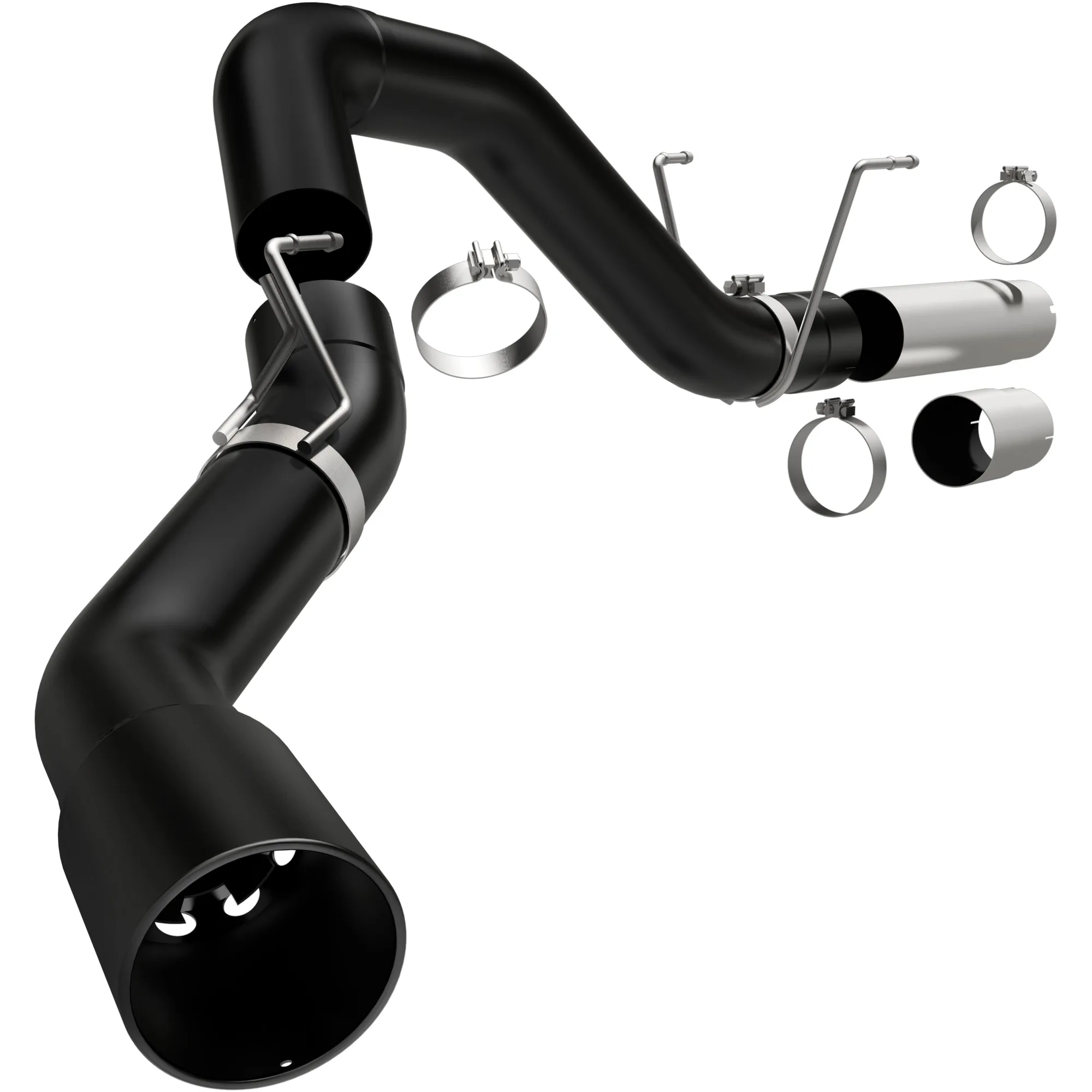
- MagnaFlow 2019-2026 Ram 2500 6.7L / 2019-2026 Ram 3500 6.7L Black DPF Series DPF Back Performance Exhaust System 17071: This filter-back system uses mandrel-bent 5 in. diameter tubing and is tuned for mild interior and moderate exterior sound levels, with a tailpipe that has a premium black powder-coated finish. The mild-interior tuning is aimed squarely at daily drivers who want a deeper note without highway drone, and the powder-coated tailpipe resists road salt and weather.
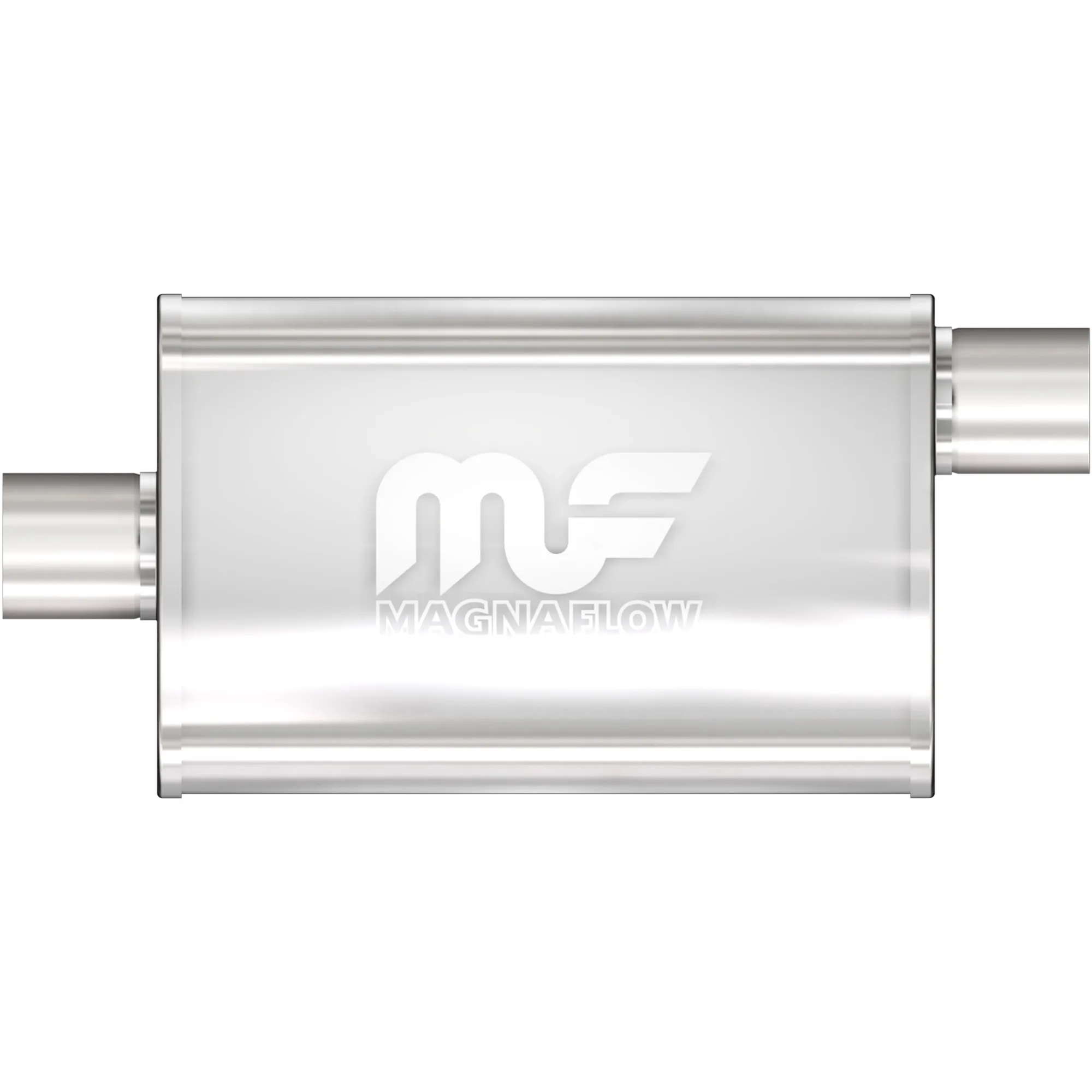
- MagnaFlow 4 in. x 9 in. x 18 in. Oval Straight-Through Performance Exhaust Muffler 11259: This universal muffler has a free-flowing straight-through perforated stainless steel core wrapped in stainless steel mesh and acoustic fiber fill, with a reversible 3/3 in. diameter inlet/outlet layout. If you only want to change tone and flow without replacing the whole system, a straight-through stainless muffler is a lower-cost, weld-on option for a daily driver.
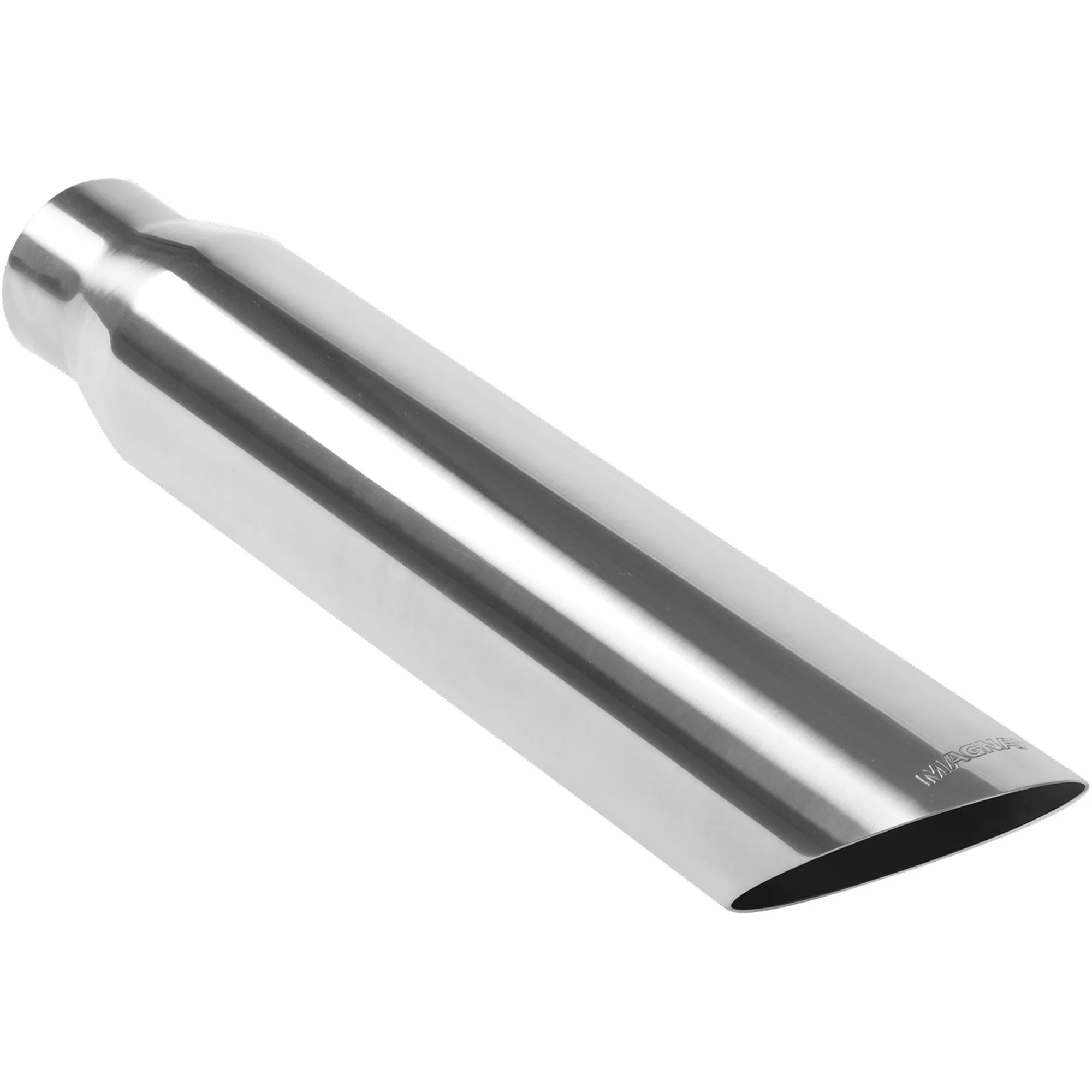
- MagnaFlow 3.5in. Round Polished Exhaust Tip 35216: This weld-on tip is made of durable stainless steel and built using CNC precision robotic manufacturing, backed by MagnaFlow's limited lifetime construction warranty. A stainless tip is an inexpensive way to finish a daily-driven exhaust and hold up to weather without rusting out in a season or two.
A performance exhaust is worth it for a daily driver when you buy for your commute rather than for a sound clip. Prioritize mild interior sound, proven drone control, correct fitment, and durable stainless construction, and you'll get the character you want without the regret.