Quick answer
Clean your exhaust tips every few weeks with a pH-neutral cleaner and a soft cloth, inspect the full system twice a year for loose clamps, cracked hangers, and surface rust, and address small issues immediately. Stainless steel resists corrosion but still collects road grime and heat discoloration, so a simple routine is what actually extends exhaust longevity.
A performance exhaust is a long-term investment, but it does not stay showroom-fresh on its own. Road salt, heat cycling, and everyday grime all take a toll on tips, hangers, and piping. The good news is that a basic care routine takes less time than a car wash and can add years of service life.
This guide walks through an ordered process for performance exhaust care, from cleaning exhaust tips to a full undercar inspection. Whether you run a cat-back system or a universal muffler, the same principles apply. No special shop tools required, just a few supplies and a willingness to get on the ground.
Why stainless steel still needs attention
Stainless steel resists rust better than aluminized or mild steel, but it is not maintenance-free. Heat cycles cause the surface to discolor, and road film traps moisture against the metal. Over time, that combination can lead to pitting, especially on tips and muffler bodies exposed to splash zones.
The goal of routine care is not to make the exhaust look new forever. It is to remove contaminants before they become permanent and to catch mechanical problems while they are still cheap to fix. A loose clamp or worn hanger is a five-minute correction today and a cracked pipe tomorrow.
- Stainless steel resists corrosion but still benefits from regular cleaning
- Heat discoloration is normal; deep pitting is not
- Most damage starts at clamps, hangers, and tip edges
Supplies that actually work
You do not need a cabinet full of specialty products. A pH-neutral car wash soap, a dedicated metal polish for stainless, a soft microfiber cloth, and a nylon brush for textured areas cover most of the job. Avoid abrasive pads and acidic wheel cleaners, which can scratch or etch the finish.
For the undercarriage, a flashlight, a pair of gloves, and a socket set for checking clamps are enough. If you have a torque wrench, keep it handy so you can verify fasteners to spec rather than guessing. A small amount of anti-seize on threaded connections helps future disassembly.
- Use pH-neutral soap, not dish detergent or acid-based cleaners
- Microfiber cloths prevent micro-scratches on polished tips
- Keep a flashlight and gloves with your detailing supplies
How often to do each task
Clean exhaust tips every two to four weeks, or more often in winter if your area uses road salt. A full system inspection makes sense twice a year, ideally before and after winter. If you drive on gravel or live near the coast, shorten that interval to every three months.
After any off-road trip, long road trip, or bottom-out incident, do a quick visual check. You are looking for hanging wires, fresh scrapes, or a change in exhaust note. Catching a problem early is the single biggest factor in exhaust longevity.
- Tips: every 2–4 weeks
- Full inspection: twice a year minimum
- Post-incident check: after any scrape or off-road use
Your step-by-step exhaust care routine
- 1. Cool the system completely: Never start cleaning or inspecting until the exhaust has cooled for at least an hour. Exhaust components can exceed 1,000°F in operation, and touching a hot pipe or tip can cause serious burns. Checkpoint: if you can hold your hand near the tip without discomfort, it is safe to work on.
- 2. Rinse and wash the tips: Spray the tips with a hose to remove loose dirt, then wash with pH-neutral soap and a microfiber cloth. For heavy buildup, use a dedicated stainless polish and follow the grain direction to avoid scratches. Common mistake: using the same abrasive pad you use on wheels, which dulls the finish.
- 3. Clean the muffler and piping: Wipe down visible muffler bodies and piping with soapy water and a soft brush. Pay attention to the area around clamps and hangers, where grime tends to collect and hold moisture. Checkpoint: if you see surface rust blooming around a clamp, remove the clamp, clean the area, and reassemble with anti-seize.
- 4. Inspect hangers and clamps: Grab each hanger and give it a gentle tug. Rubber should be flexible, not cracked or stretched. Check clamps for tightness and look for any missing hardware or broken welds. Common mistake: ignoring a slightly loose hanger until it fails and the exhaust starts banging on the chassis.
- 5. Check for leaks and unusual discoloration: Look for soot trails around joints, which indicate a leak. Black or blue discoloration on piping is normal heat tint, but deep pitting or flaking is a sign of corrosion that needs attention. Checkpoint: a leak at a joint usually means a new gasket or a re-torque, not a new system.
- 6. Address small issues immediately: Replace worn hangers, tighten clamps to spec, and touch up any deep scratches with high-temp paint if the finish is compromised. Do not wait for a rattle or a check engine light to take action. Takeaway: the cost of a hanger and ten minutes now is far less than a cracked pipe later.
- 7. Log your inspection and repeat seasonally: Note the date, mileage, and anything you found. This makes it easy to spot trends, like a hanger that keeps loosening or rust that is spreading. Repeat the full routine at least twice a year. Next step: if you drive in winter salt, schedule your next inspection before the first snow.
Products built for the long haul
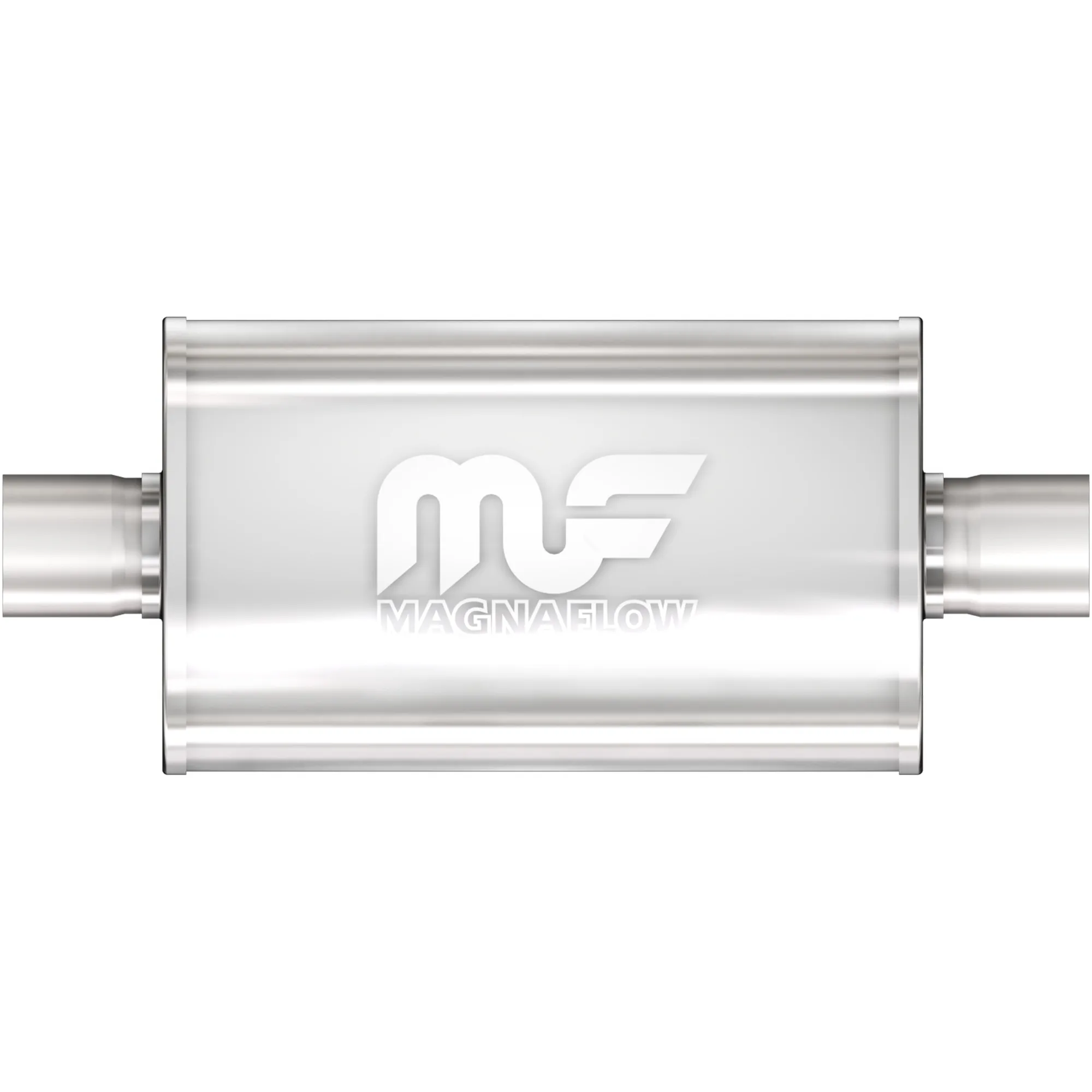
- MagnaFlow 5 in. x 8 in. x 6 in. Oval Straight-Through Performance Exhaust Muffler 14150: The MagnaFlow 5 in. x 8 in. x 6 in. Oval Straight-Through 14150 uses a free-flowing straight-through perforated stainless steel core wrapped in stainless steel mesh and acoustic fiber fill, with a weight-optimized reversible 3.5/3.5 in. diameter inlet/outlet layout. Stainless construction and a reversible design make this muffler a durable, flexible choice for custom exhaust work, and the straight-through core means less restriction than a chambered design.
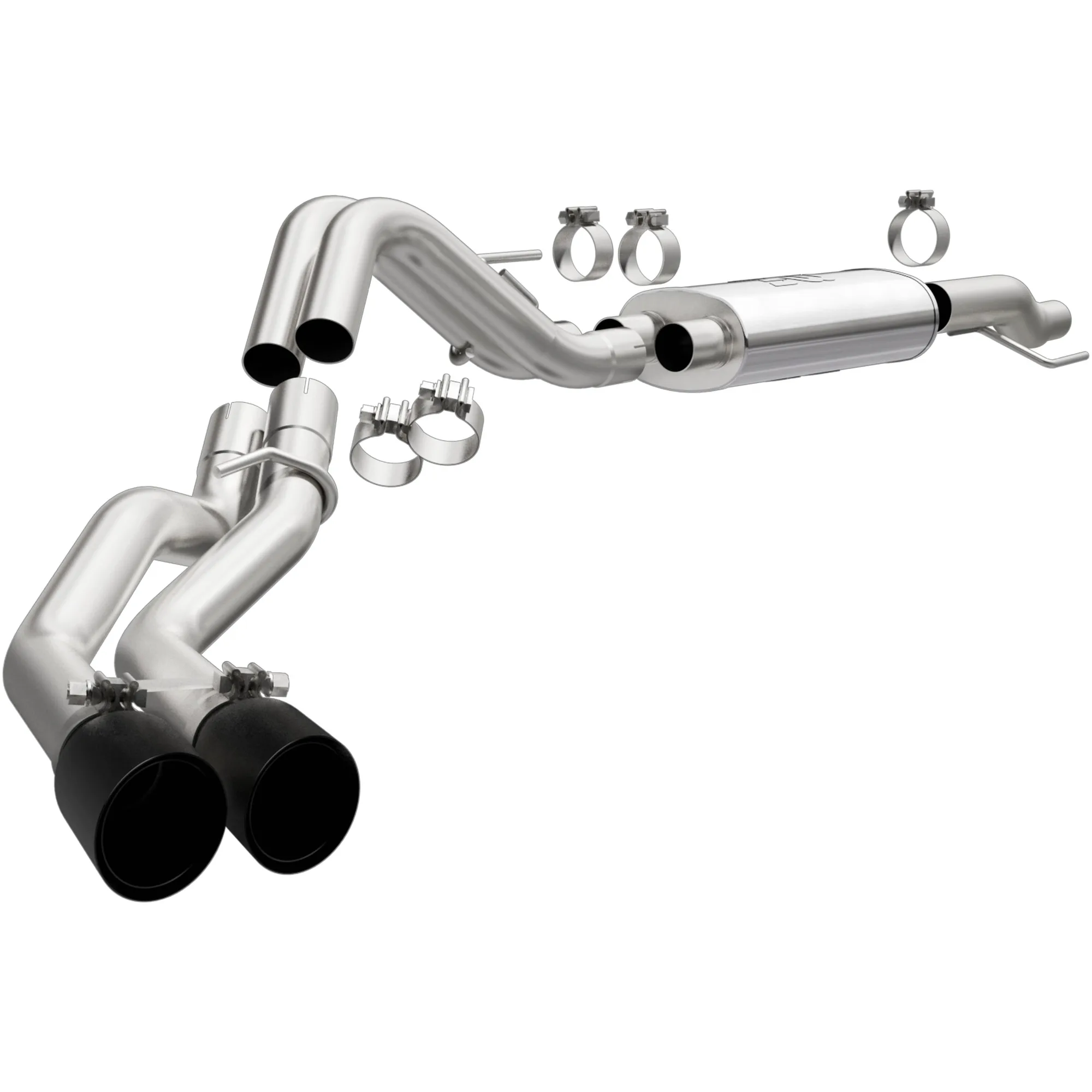
- MagnaFlow 2015-2020 Ford F-150 5.0L Street Series Cat-Back Performance Exhaust System 19506: The MagnaFlow Ford F-150 Street Series Cat-Back Performance Exhaust System 19506 features mandrel bent 3 in. main piping and a dual same-side behind passenger rear tire exit with 3.5 in. black coated clamp-on double wall angle cut tips. The black coated tips on this system need the same regular cleaning as polished tips, but they hide heat discoloration better, which can make maintenance feel less urgent than it actually is.
Performance exhaust care is not about babying your system. It is about removing contaminants before they cause damage and catching mechanical wear while it is still minor. A few minutes with soap, a cloth, and a flashlight every few weeks will keep your cat-back sounding right and lasting far longer than one that is ignored.