Quick answer
For most upgraded basic and better music and film systems, the Transparent Audio Performance Power Cord delivers the high-current, noise-free power connection your components need without overspending.
Why a dedicated power cord matters
Standard power cords bundled with electronics are designed for basic safety, not audio performance. They often lack sufficient conductor gauge and shielding, allowing electrical noise from your home wiring to reach sensitive components.
A purpose-built audiophile power cord like the Performance Power Cord uses heavier gauge conductors and optimized geometry to handle high current demands, especially from amplifiers and powered subwoofers. The result is lower noise floor, tighter bass, and greater dynamic contrast.
Key specifications to compare
When shopping for a high-end power cable, focus on conductor gauge, shielding type, and connector quality. Thicker wire (lower AWG) carries more current with less resistance. Shielding reduces electromagnetic and radio frequency interference. Gold-plated or cryogenically treated connectors can improve long-term reliability.
The Performance Power Cord is designed to work with other Transparent System Companions, ensuring consistent performance across your entire chain. It does not specify exact AWG or shielding type, so if those hard numbers are critical to your decision, consider contacting the manufacturer directly.
Length and flexibility considerations
Power cord length affects both convenience and performance. Too short and you limit placement options; too long and you risk signal degradation or cable clutter. The Performance Power Cord is available in multiple lengths, letting you match your rack or component layout exactly.
Measure the distance from your wall outlet or power conditioner to each component, then add about 12 inches for slack. Avoid coiling excess cable tightly, as this can create inductance that reduces current delivery.
Decision rules for choosing your power cord
- Check your system's current draw: Amplifiers and powered subwoofers need high-current cords. If your system includes a separate power amp or a large AVR, prioritize a cord rated for at least 15A continuous.
- Match connector type to your component: Most components use a standard IEC C13 or C15 connector. Verify your gear's inlet type before purchasing. The Performance Power Cord uses a standard IEC connector compatible with the vast majority of audio components. Check the back of your component for the power inlet shape before ordering.
- Consider your power conditioning setup: If you already use a power conditioner or regenerator, the power cord between the wall and the conditioner is critical. A high-quality cord like the Performance Power Cord ensures clean power enters the conditioner first. For best results, use a performance cord both from the wall to the conditioner and from the conditioner to each component.
- Evaluate your upgrade path: If you plan to upgrade other cables (speaker, interconnect) later, choose a power cord that works well with future components. The Performance Power Cord is designed to complement other Transparent Audio cables, making it a future-proof choice.
Product spotlight
-
Performance Power Cord: The Performance Power Cord is the perfect high-current, low-noise power connection solution for Upgraded Basic and Better music and film systems. It delivers unrestricted, noise-free power that standard cords cannot, making it a meaningful upgrade without jumping to the highest price tier.
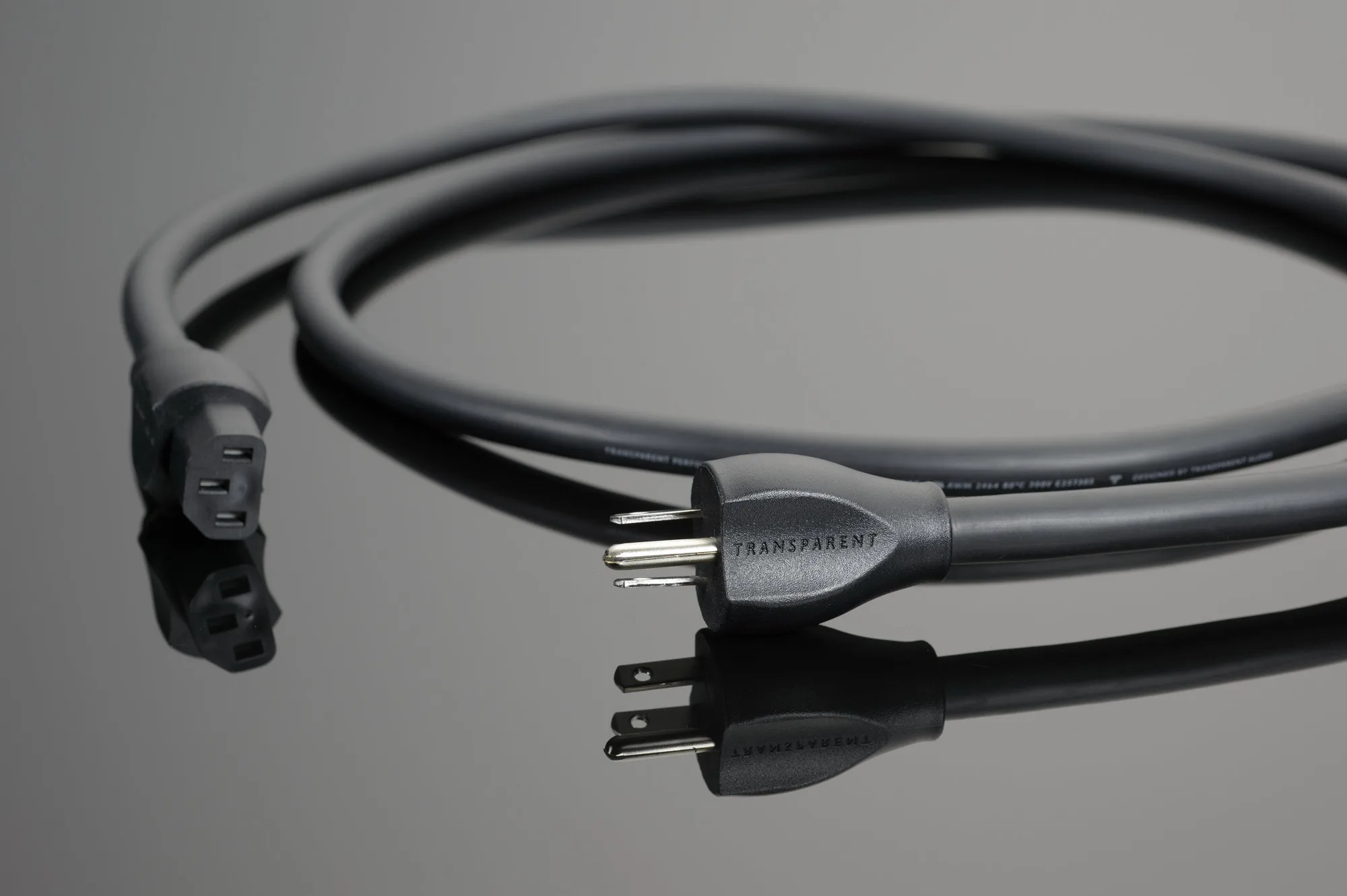
Performance Power Cord
Who should buy this cord?
Best for
- Owners of upgraded basic or better music and film systems looking for a noticeable noise reduction and dynamic improvement
- Audiophiles who want a high-current, shielded power cord at a reasonable price point without stepping into ultra-premium territory
Not for
- Budget systems where the cost of the cord exceeds the component value
- Users who require exact AWG or shielding specifications published before purchase