Quick answer
For most weddings, choose one large welcome sign at 12x18 or bigger, then add smaller direction and table signs in the same material family. Acrylic reads modern and handles outdoor light well, wood suits rustic and barn venues, and paper or cardstock works for tight budgets and short timelines.
Wedding signs do three jobs: they greet guests, they move people through the venue, and they carry your names or monogram. The mistake most couples make is buying signs one at a time without a size or material plan, then ending up with a tiny welcome sign that gets lost in a lobby and a giant direction sign that blocks a doorway.
This buying guide walks through the decisions in the order that matters: material first, then size, then placement. It uses real catalog examples, including acrylic welcome signs, wooden 12x18 signage, and paper signs with lawn pegs, so you can match the sign to the venue instead of guessing.
Start with material, not design
Material decides how your sign handles weather, light, and transport. Acrylic is rigid, glossy, and easy to wipe clean, which makes it a strong pick for outdoor ceremonies and modern venues. Wood has a matte, natural look that fits rustic, barn, and outdoor settings, and it hides minor scratches better than acrylic. Paper and cardstock signage is the lightest and most affordable option, but it needs a frame, easel, or lawn pegs to stand up, and it will not survive rain.
If your ceremony is outdoors, prioritize acrylic or wood and confirm the sign can be anchored. If your venue is a hotel ballroom with soft lighting, paper signage in a frame often looks just as polished at a lower cost. You can mix materials, but keep the finish consistent: glossy acrylic next to matte wood can look accidental rather than intentional.
- Outdoor ceremony: choose acrylic or wood and plan how the sign stays upright in wind.
- Indoor ballroom: paper or cardstock in a frame is usually enough.
- Mixed materials: keep one finish family so the set looks deliberate.
Match sign size to viewing distance
Size should follow how far away guests will read the sign. A welcome sign at the venue entrance is read from 6 to 10 feet, so it needs to be large enough that the headline is legible at a glance. Direction signs are read while walking, often from 10 to 20 feet, so they need bold lettering and simple arrows rather than long sentences. Table numbers and place cards are read from 2 to 3 feet and can be much smaller.
A 12x18 personalized wedding sign is a common middle ground: large enough for a welcome message or a directional poster, small enough to fit on an easel without dominating a small entryway. If your entrance is a wide hotel lobby, size up. If it is a narrow garden gate, a 12x18 sign on a stand may be the practical maximum before it blocks the path.
- Entrance welcome sign: read from 6-10 feet, so keep the message short and the type large.
- Direction signs: read from 10-20 feet, so use arrows and 2-4 words per sign.
- Table and place signs: read from 2-3 feet, so small formats work fine.
Placement rules that prevent clutter
Placement is where most sign sets go wrong. Put one welcome sign where guests first arrive, not two or three competing for the same sightline. Direction signs should appear at decision points: parking, the ceremony entrance, the reception entrance, and the restrooms. If a guest has to stop and think, add a sign; if the path is obvious, skip it.
Height matters too. Welcome signs on an easel should sit so the center of the text is roughly at eye level, around 4 to 5 feet. Direction signs mounted on walls or stands should be above waist height so they are not blocked by crowds. Paper signs with lawn pegs work well for outdoor paths because they sit low and stay out of the way, but they are harder to read from a distance.
- One welcome sign at the first arrival point beats three signs in the same area.
- Add direction signs only at real decision points, such as parking and venue entrances.
- Keep text centered around 4-5 feet high on easels and stands.
Personalization and production timing
Personalized signs need production and shipping time, so order after you have final names, dates, and wording. Acrylic and wood signs are usually printed or engraved to order, and paper signs are printed to order as well. If your wedding is within a few weeks, choose a simpler design and a smaller sign rather than a complex custom layout that risks a delay.
Proofread the exact text before ordering, including spelling of names, the date format, and any ampersand or monogram. Once a sign is printed or engraved, it usually cannot be changed. Order one extra small sign, such as a table number or a favor tag, so you have a backup if a sign is damaged in transit.
- Finalize names, date, and wording before ordering personalized signage.
- Short timelines: choose a simpler design and a standard size like 12x18.
- Order one spare small sign or tag as a backup.
Decision rules: pick your sign in five minutes
- If the sign is outdoors and must survive weather: Choose acrylic or wood, and confirm how it will be anchored or weighted. Paper signs need a frame, easel, or lawn pegs and should not be left in rain. Weather-resistant material first, design second.
- If guests read it from more than 10 feet: Size up to a large format such as 12x18 or bigger, and cut the text to a short headline plus one line of detail. Distance drives size; long sentences do not fit on distant signs.
- If your budget is tight: Use one large welcome sign and paper or cardstock for direction and table signs. Add small personalized stickers or tags to carry the theme at a low cost. Spend on the sign guests see first; save on the rest.
- If your timeline is under three weeks: Pick a standard size and a simple personalized design rather than a fully custom layout. Avoid last-minute changes to names or dates. Simpler and standard beats custom and delayed.
- If your venue has a narrow entrance: Measure the opening before ordering. A 12x18 sign on an easel can block a narrow gate; use a hanging sign or a smaller standing sign instead. Measure the path, not just the sign.
Catalog examples that show the trade-offs
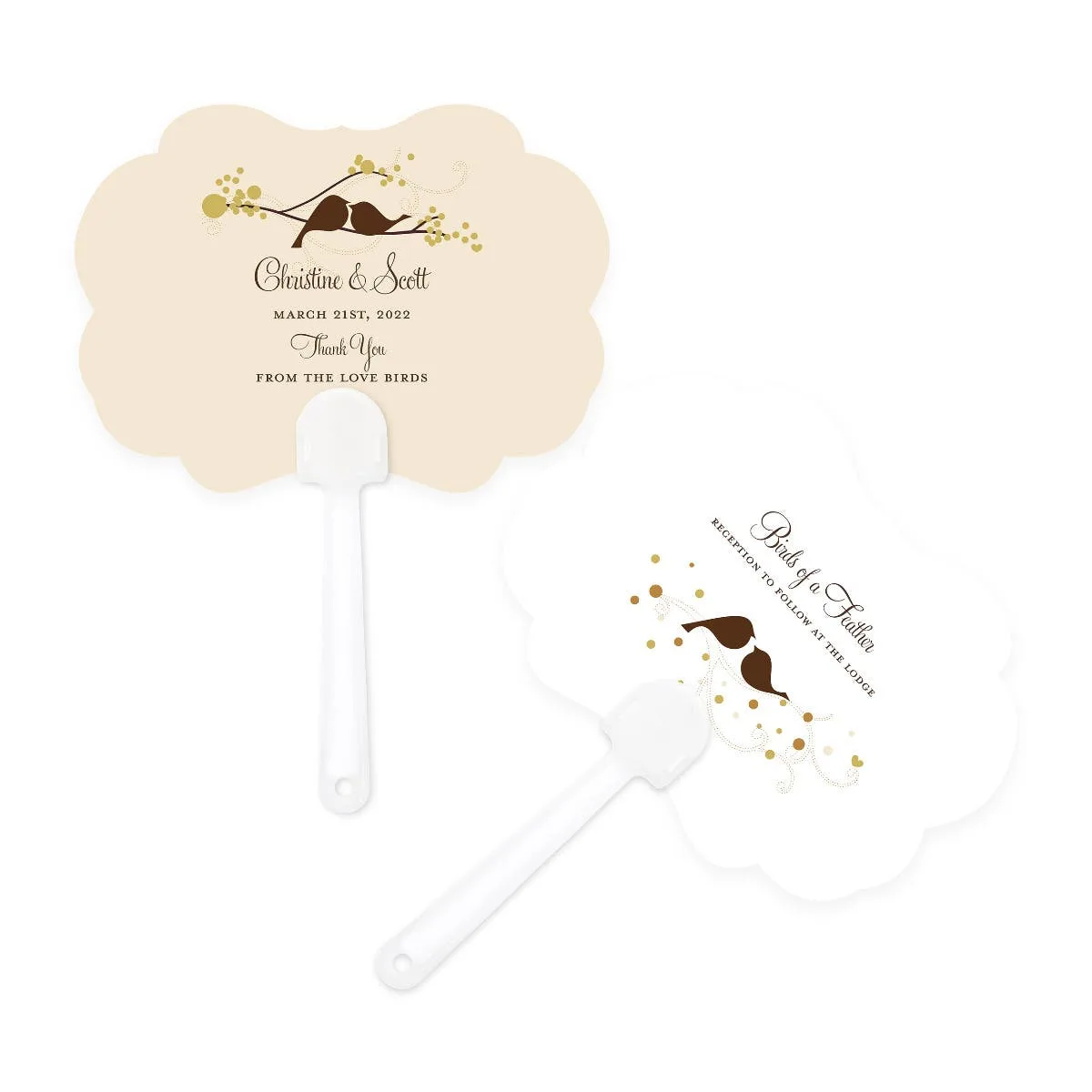
- Personalized Paper Hand Fan Wedding Favor - Love Bird: Custom printed handheld paper fan for guests, designed for summer outdoor or beach weddings, with a die-cut love bird design. Shows how paper signage and paper favors can double as guest comfort at outdoor ceremonies, but they are lightweight and best for short-distance use.
- Personalized 2" Round Favor Sticker - Wanderlust: A small round sticker from the Wanderlust stationery collection, intended to add personality to small tins, favor containers, or envelopes. A reminder that not every personalized sign needs to be large; small stickers and tags can carry your theme at a low cost.
- Custom Printed Fanny Pack for Men & Women - Upload Your Own Design: A personalized black or white belt bag with an adjustable belt fitting waists up to 51 inches, made from 100% polyester. Useful for wedding party gifts rather than signage, but it shows how custom printing works across materials when you upload your own design.
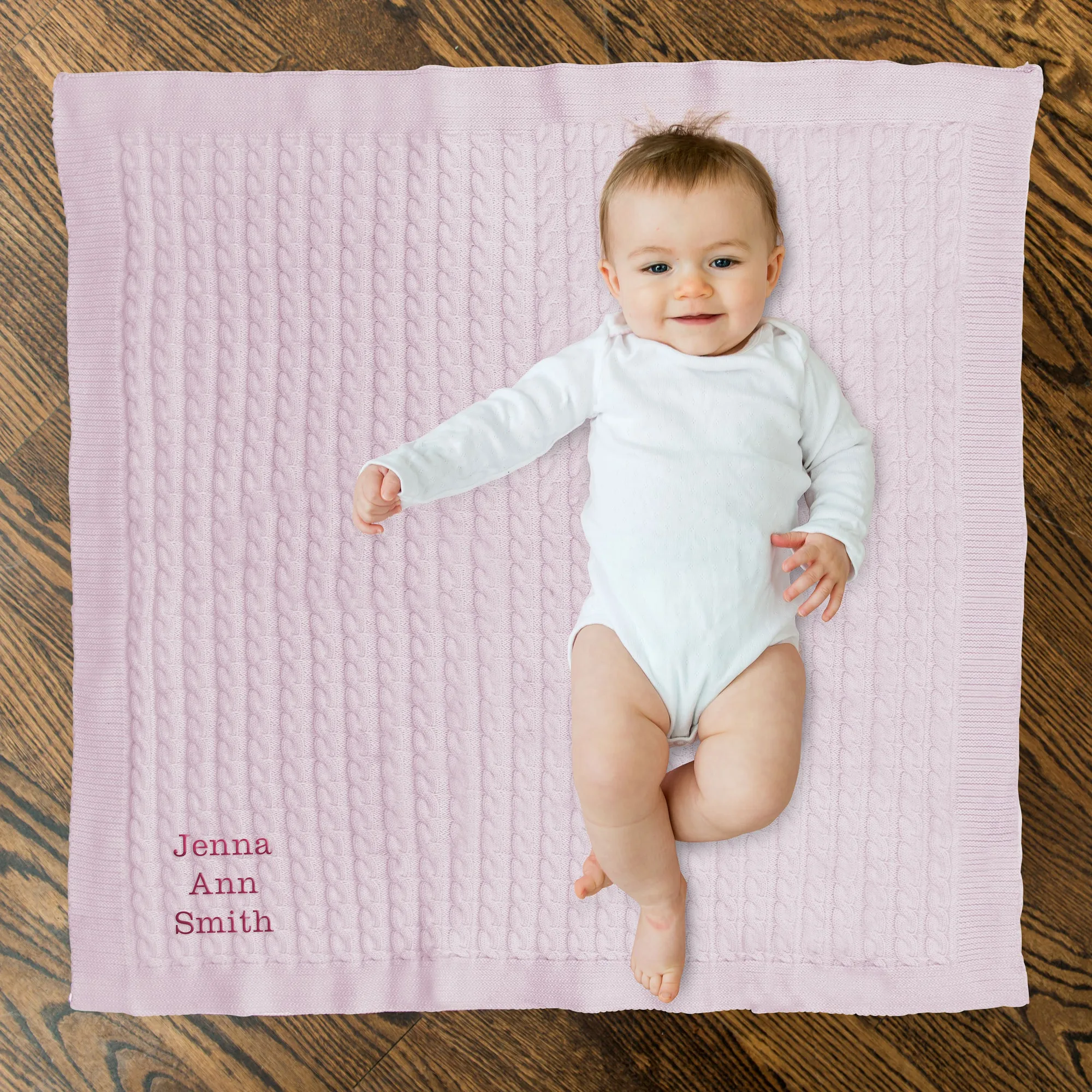
- Personalized Cotton Cable Knit Baby Blanket - Custom Text: A personalized cotton cable knit baby blanket with custom embroidered text, described as soft and versatile for toddlers and kids. An example of custom text on fabric, which is a different path from rigid signage and better suited to keepsake gifts than wayfinding.
Who this guide is for
Best for
- Couples planning a full sign set for a single venue and wanting consistent sizes and materials.
- Outdoor or destination weddings that need weather-resistant welcome and direction signs.
- Planners and helpers who need a simple rule for how large each sign should be.
Not for
- Couples who only need one small table sign and no wayfinding.
- Events with no fixed venue layout, where guests already know where to go.
- Buyers looking for digital signage or projected displays instead of printed signs.
Choose your material based on weather and venue style, size your signs by viewing distance, and place them only at real decision points. One strong welcome sign plus a few clear direction signs will do more for guest experience than a crowded set of small signs.