Quick Answer
For home pet examinations, choose a microscope with at least 40x to 400x magnification, a sturdy build, and easy-to-use controls. The Microscope from thetopdogpetstore offers a standard option that suits basic checks, but consider your specific needs before buying.
Why Magnification Range Matters
The magnification range determines what you can see. For skin scrapings, ear swabs, and fur checks, 40x to 400x is typically enough. Higher magnification (1000x) is rarely needed for home use and can be harder to focus.
If you plan to examine blood smears or bacteria, you might need higher magnification, but that often requires oil immersion and more skill. For most pet owners, a standard range is sufficient.
Ease of Use and Durability
A home microscope should be easy to set up and use, especially if you are not a trained professional. Look for a model with a stable base, clear focus knobs, and a built-in light source.
Durability matters if you have kids or pets that might knock it over. A metal body and quality optics are more robust than plastic alternatives, but they may cost more.
Decision Rules for Choosing a Pet Microscope
- Define your main use: If you mostly check ears, skin, or fur, a 40x-400x microscope is enough. If you need to examine cells in detail, consider higher magnification. List the specific checks you plan to do.
- Check the light source: A built-in LED light is preferable for consistent illumination. Avoid models that rely only on ambient light, as they are harder to use. Test the light source if possible.
- Consider ease of focusing: Look for coarse and fine focus knobs. A fine focus knob helps you get sharp images, which is crucial for small specimens. Try the focus mechanism in the store if available.
- Think about durability and warranty: A metal body and a good warranty are signs of a quality microscope. Plastic may be lighter but less stable. Check the warranty length and return policy.
Product Spotlight
-
Microscope: The Microscope from thetopdogpetstore is offered in a single Standard option, with no additional specifications provided. This means you get a straightforward choice, but you should verify the magnification range and features before purchasing to ensure it meets your needs.
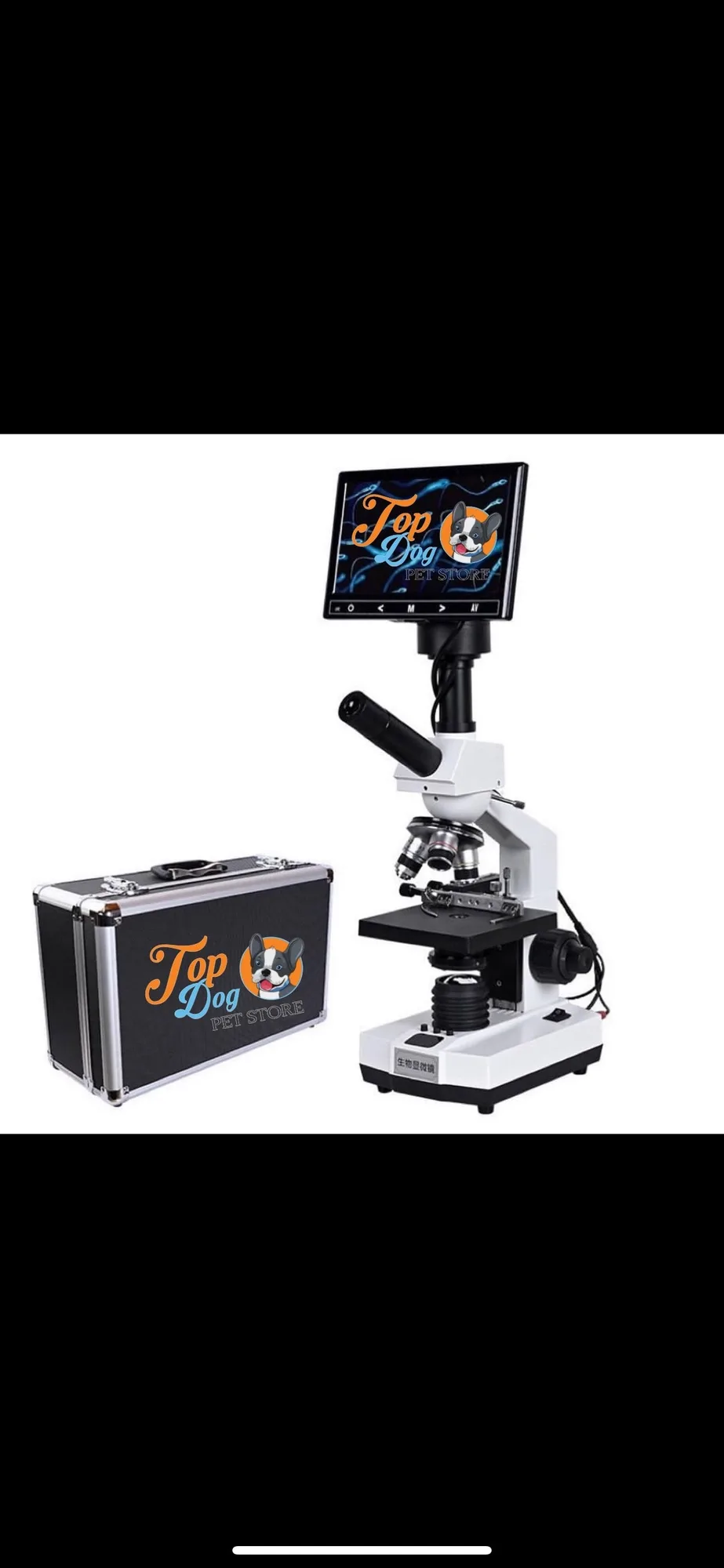
Microscope
Who Should Buy a Pet Microscope?
Best for
- Pet owners who want to do basic health checks at home
- Families with curious kids interested in biology
Not for
- Professional veterinary diagnostics that require lab-grade equipment